

Yes—Singapore offers many STEM enrichment programmes for teenagers, and C-Academy is a practical place to start if you want a structured pathway that builds real-world STEM capability through EDIT Design Thinking® and themed learning journeys (Community, Culture, Reimagining Learning Spaces, Sustainability, and XR Experience).
Singapore’s options range from coding classes and robotics academies to camps, competitions, and research-style opportunities. The real challenge is choosing a programme design that fits a teenager’s goals—confidence-building, stronger technical skills, better learning outcomes, or readiness for higher-level projects—while keeping motivation and student engagement high. C-Academy’s approach focuses on structured learning and a clear teaching methodology, helping teenagers connect STEM education to real-world applications rather than treating STEM as extra tuition.
1. What Do “STEM Enrichment Programmes” Usually Mean for Teenagers in Singapore?
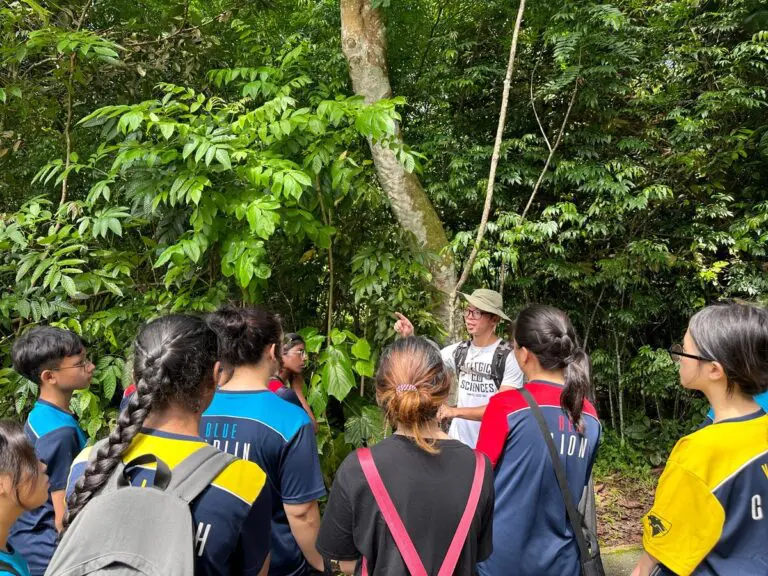
STEM enrichment programmes for teenagers in Singapore typically refer to structured opportunities outside the core curriculum that develop STEM fluency through applied work—projects, experiments, builds, and challenges—rather than only theory. In practice, these programmes can look like robotics and coding tracks, maker education labs, app development bootcamps, or inquiry-based learning workshops that cultivate creative problem-solving and critical thinking.
Most parents and schools are usually searching for one (or more) of these outcomes:
- Future-relevant capability, not just extra worksheets
- Better problem-solving skills and computational thinking
- Visible progress, such as prototypes, presentations, and improved academic achievement
- An age-appropriate curriculum that complements the stem curriculum without overloading the student
A teenager can join many extracurricular activities and still not gain transferable skills if the programme lacks structure. The best STEM enrichment programmes make teenagers practise the full cycle: observe, define, build, test, and improve—so learning becomes durable and repeatable.
2. Why STEM Education for Teenagers Needs More Than Content Coverage
STEM education is often mistaken as “harder science and maths”, but strong STEM enrichment programmes build both technical skills and higher-order thinking so students can solve unfamiliar problems with confidence.
2.1 Core curriculum vs STEM curriculum: what enrichment should add
The core curriculum ensures foundational knowledge. A good stem curriculum extension should add the capability layer: how to apply knowledge in messy, real situations. That is why programmes that emphasise hands-on learning and project-based learning often outperform purely lecture-based enrichment, especially for teenagers who learn best through doing.
2.2 The skills that separate exposure from capability
Teenagers benefit most when STEM enrichment programmes explicitly develop:
- Critical thinking (evaluating evidence and trade-offs)
- Computational thinking (breaking problems into workable steps)
- Creative problem-solving (generating options before choosing)
- Digital literacy (using tools, data, and platforms effectively)
- Science identity (seeing themselves as capable STEM problem-solvers)
When these skills are trained through structured learning, the teenager becomes more resilient and confident—not only in STEM enrichment, but also in classroom performance and independent learning.
3. Why C-Academy Is a Sensible Place to Start for STEM Enrichment in Singapore
C-Academy is positioned around a clear, repeatable methodology that supports applied learning and innovation capability—particularly useful for teenagers who need structure when working on open-ended challenges.
3.1 EDIT Design Thinking®: the framework that makes STEM learning usable
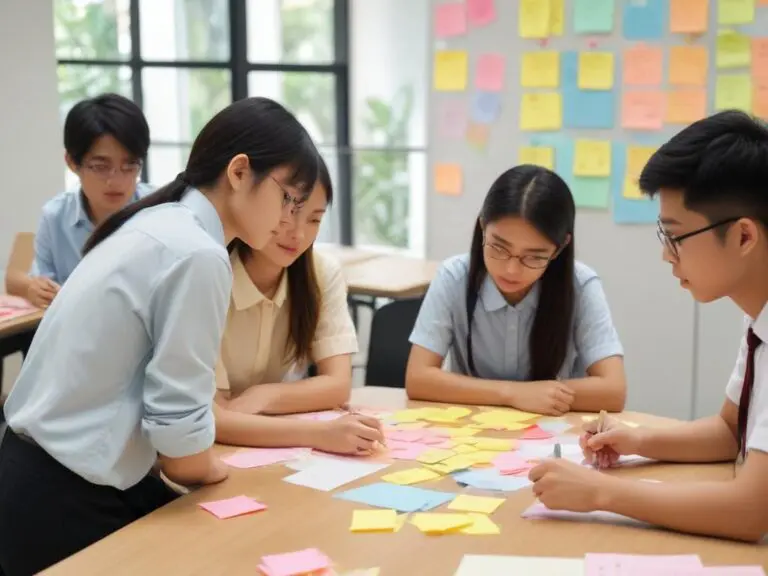
C-Academy’s EDIT Design Thinking® is a practical framework—Empathise, Define, Ideate, Test—that guides learners from empathy to implementation.
For STEM enrichment, this matters because teenagers often know how to “build something”, but struggle to decide what to build and why.
3.2 A teaching methodology that supports real outcomes
Many STEM programmes teach tools, but fewer teach decision-making. C-Academy’s teaching methodology supports learners in:
- framing stronger problem statements
- prioritising constraints and feasibility
- prototyping and testing iteratively
- explaining solutions clearly (not just showing features)
This structure helps teenagers move from activity-based participation to measurable learning outcomes.
4. What Skills Should a Strong STEM Enrichment Programme Build for Teenagers?
If you are comparing STEM enrichment programmes, a practical benchmark is whether the programme builds the skills teenagers will repeatedly need across different domains:
- Technical skills: the ability to use tools, platforms, and systems confidently
- Problem-solving skills: progressing from ambiguity to action
- Data literacy: basic data analytics and reasoning with evidence
- Communication: explaining decisions and results clearly
- Iteration discipline: testing, learning, improving
It also helps if the programme strengthens foundational areas that appear across the stem ecosystem: applied mathematics, engineering concepts, and technology education—without turning the experience into exam tuition. The strongest programmes will create outputs that can be shown (prototypes, demos, posters, presentations), because that is how learning outcomes become visible.
5. Does a Teenager Still Need Coding and Robotics If They Start With C-Academy?
Often yes—but for a different reason than many expect. Coding classes, robotics education, and robotics and coding tracks can be excellent for tool-building. They expose students to programming languages, build confidence with logic, and support technical troubleshooting habits.
Where many teenagers still struggle is translating those skills into real solutions—especially when projects expand into:
- app development and mobile app development
- web development and software development
- data analytics projects
- engineering challenges with real constraints
C-Academy can complement these tracks by strengthening the decision layer: defining the right problem, exploring options through creative problem-solving, and validating with users through testing. This makes technical learning more meaningful, particularly for teenagers aiming to apply skills beyond classroom exercises.
5.1 Coding pathways teenagers often explore
Teen coding journeys may include text-based coding (e.g., Python-style logic), visual programming (block-based logic), or popular entry points like minecraft coding and roblox game design. Each can be useful—if the learning is structured and focused on outcomes, not only entertainment.
5.2 Robotics pathways teenagers often explore
Robotics programmes can include lego robotics for beginners or broader robotics and coding tracks for older students. The key value is hands-on learning with engineering thinking—yet the best outcomes still require strong problem framing, not just building.
6. How Do I Choose the Right STEM Enrichment Programme for My Teenager in Singapore?
A practical selection checklist should cover both learning design and delivery.
Is it an age-appropriate curriculum for lower vs upper secondary?
Teenagers engage more when difficulty and context fit their level. Programmes that are too advanced can reduce student engagement; programmes that are too basic can feel like filler. A good age-appropriate curriculum encourages independence without overwhelming learners.
Are the learning outcomes clear and measurable?
Look for tangible outputs and reflection: prototypes, presentations, testing notes, or improvement cycles. These outputs help schools and parents see progress and reinforce academic achievement over time.
What is the student-to-instructor ratio?
Student-to-instructor ratios influence coaching quality. If teens cannot receive feedback, iteration slows and projects become superficial.
Is it built on inquiry-based learning or only instruction?
Inquiry-based learning builds scientific habits: asking better questions, observing carefully, testing assumptions, and learning from evidence—useful for science fairs and higher-level projects.
Does it connect to the wider STEM ecosystem?
Some programmes build stronger pathways through industry partnerships and exposure to real expectations—helpful for students interested in future study or innovation pathways.
7. What Kinds of STEM Enrichment Directions Can Teenagers Explore Through C-Academy Themes?
C-Academy’s themed learning journeys can serve as practical starting points because the themes create real contexts for applied STEM thinking.
Reimagining Learning Spaces: systems thinking, spatial reasoning, and prototyping
Learning-space challenges naturally involve spatial reasoning, constraints, user needs, and iterative prototyping—making them strong for teenagers who enjoy applied engineering thinking.
XR Experience: exploring augmented reality and virtual reality with purpose
XR Experience creates a relevant context for teenagers interested in augmented reality, virtual reality, and adjacent areas like game development. The key difference is that learning is guided by user needs and experience outcomes—not just building tech for its own sake.
Sustainability: applied mathematics, evidence, and impact
Sustainability projects often require applied mathematics, trade-off thinking, and data reasoning. They also teach how to design within constraints—an essential habit for real-world applications.
Community and Culture: empathy and usability in real-world STEM solutions
Community- and culture-linked work builds stakeholder thinking and usability instincts—important when technology must be accepted, inclusive, and practical.
8. How Does C-Academy Support Teens Aiming for Projects, Science Fairs, or Competition Preparation?
Many teenagers join STEM enrichment programmes because they want to be ready for bigger outputs—science fairs, competitions, or school innovation showcases. Competition preparation can help performance, but teenagers still need a structured process to avoid shallow “last-minute builds”.
C-Academy’s EDIT Design Thinking® approach supports a better progression:
- Define a strong problem statement (instead of guessing)
- Prototype quickly and test early (instead of building too late)
- Improve based on evidence (instead of defending first ideas)
This also supports teenagers who want to develop laboratory techniques and research habits (observation, documentation, iteration), even when the programme itself is not a lab attachment. Over time, this improves STEM confidence and strengthens science identity.
9. A Practical Comparison: C-Academy Vs. Common STEM Enrichment Options in Singapore
| Option type | What teens typically gain | Typical gap | Where C-Academy fits |
| Coding classes | Tool proficiency, logic practice | Skills without strong framing | Adds structured problem definition and testing habits |
| Robotics education | Hands-on building confidence | Build-first mindset | Adds Empathise/Define clarity before building |
| Maker education / 3d printing | Prototyping and making | Can lack real validation | Adds user-led testing and iteration |
| AI / machine learning enrichment | Exposure to artificial intelligence concepts | Hard to apply meaningfully | Adds real-world problem framing and communication |
| Competition preparation | Speed and tactics | May skip depth and evidence | Adds reflective, method-led progression |
| Supplemental elective / school ALP | Curriculum relevance | Quality varies | Provides a consistent process and structured learning backbone |
The strongest pathway is often a combination: technical tool-building through technology education and coding/robotics, supported by a repeatable problem-solving structure that helps teens apply skills across contexts.
10. Key Takeaways: What to Look for in STEM Enrichment Programmes for Teenagers
- STEM enrichment programmes should build STEM fluency, not just content coverage.
- Good STEM education combines technical skills with critical thinking and computational thinking.
- The most reliable programmes use structured learning and inquiry-based learning to make progress visible.
- Projects that include testing improve learning outcomes and student engagement.
- C-Academy is a practical starting point in Singapore if you want a repeatable process that strengthens problem-solving skills across coding, robotics, data analytics, and engineering challenges.
Conclusion: Finding a Practical Starting Point for STEM Enrichment in Singapore
Singapore offers many STEM enrichment programmes for teenagers, but the programmes that create lasting growth are the ones that teach teenagers how to think and work: define the right problem, build with purpose, test early, and improve based on evidence. If you want a clear and structured place to start—especially if your teenager is exploring coding, robotics, AI, 3d printing, or XR—C-Academy provides a method-led pathway that supports real-world applications and meaningful learning outcomes.