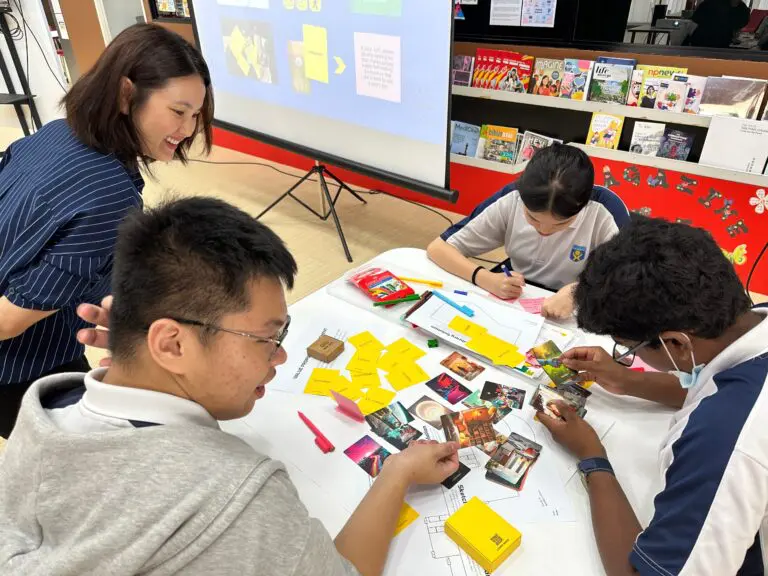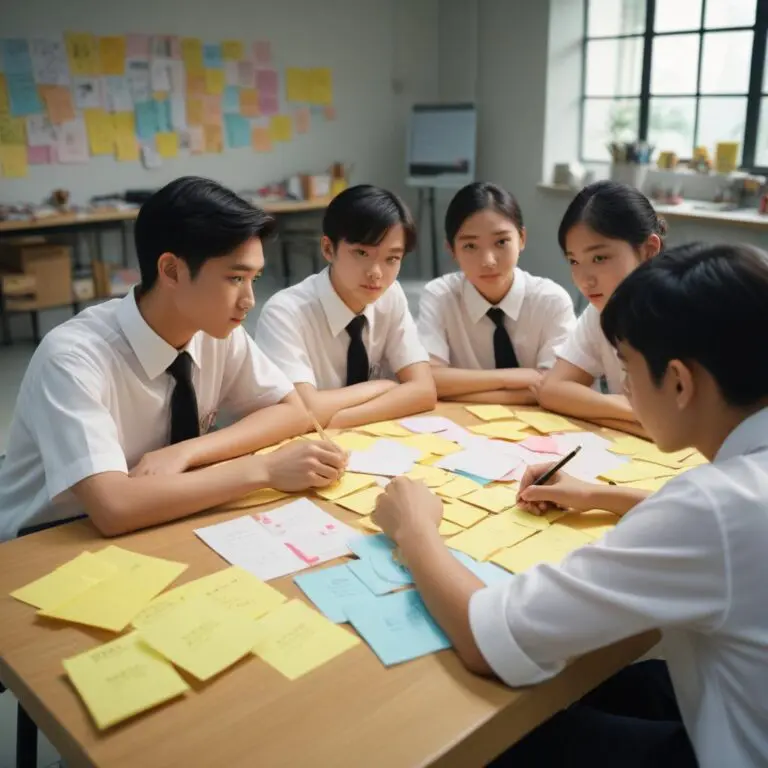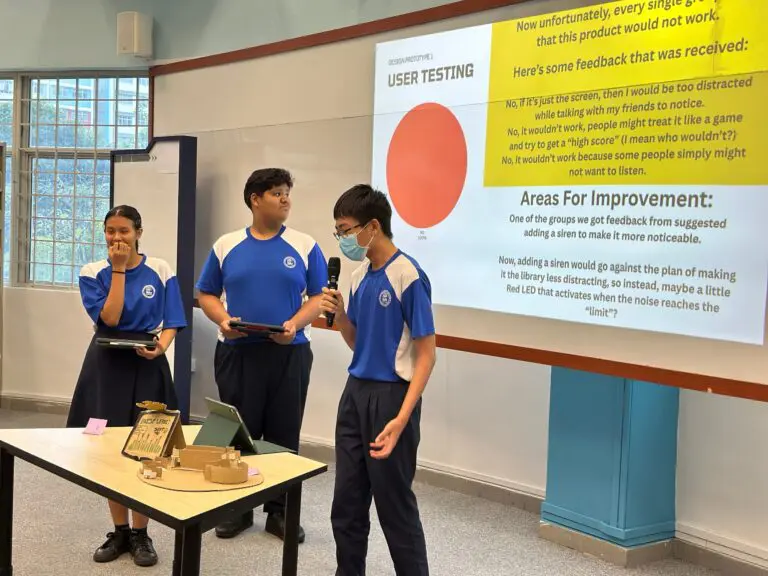





The right design thinking toolkits can transform how students approach creative problem-solving and tackle design challenges. Rather than staring at blank pages or recycling predictable ideas, students equipped with effective tools can generate diverse concepts quickly, think more deeply about user needs, and communicate their solutions with confidence. This guide explores what makes a design thinking toolkit effective for student projects and introduces two proven tools developed specifically for classroom use, Idea Dice and Random Cards.

Why Students Need Dedicated Design Thinking Toolkits
Design thinking is a powerful methodology for developing creative solutions to real-world problems. However, the ideation stage, where students generate solutions, often becomes a bottleneck in the innovation process. Without structure, brainstorming sessions can stall, confident students dominate discussions, and teams default to safe, predictable ideas.
A well-designed design thinking toolkit addresses these challenges by providing scaffolding that makes creativity accessible to all learners. The best toolkits help overcome the “blank page” problem that paralyses many students, create equal participation opportunities for different personality types, introduce structured randomness that pushes thinking beyond obvious solutions, and connect ideation to the human-centred principles at the heart of design thinking.
What Makes a Design Thinking Toolkit Effective for Student Projects?
Not all design thinking toolkits are created equal. When evaluating tools for classroom use, educators should consider these criteria:
Accessibility for non-designers: The best design thinking toolkit requires no prior creative training. Students should be able to pick up the tool and start generating ideas immediately, with clear instructions that make facilitation straightforward for teachers.
Support for different thinking styles: Some students think visually; others prefer words and logic. An inclusive design thinking toolkit accommodates both right-brain (intuitive, imaginative) and left-brain (analytical, language-based) approaches.
Connection to human-centred design: Toolkits should reinforce design thinking principles, particularly empathy and user focus, rather than generating ideas in isolation from user needs.
Classroom practicality: Tools must be durable, easy to transport, quick to set up, and usable by groups of varying sizes. The best design thinking toolkit fits naturally into existing lesson structures without requiring extensive preparation.
Proven outcomes: Look for toolkits that have been tested in real educational settings with documented improvements in student confidence, idea quality, and collaborative brainstorming.
Introducing C-Academy’s Design Thinking Toolkits: Idea Dice and Random Cards
C-Academy has developed two complementary tools that form a comprehensive design thinking toolkit for student projects: Idea Dice and Random Cards. Both tools were created by Creativeans, an award-winning design consultancy with over a decade of real-world consulting experience across 280+ business clients, and have been refined through use in Singapore secondary school programmes.
These tools can be used as standalone design thinking resources to energise creative learning, or as high-impact complements to EDIT Design Thinking® programmes where they strengthen problem exploration, ideation, prototyping, and communication.
Idea Dice: Structured Ideation for Better Ideas, Faster
Idea Dice is a hands-on creative tool developed by C-Academy to help learners move past “blank page” moments and generate stronger solutions with structure, speed, and confidence. Designed specifically for non-designers, this design thinking toolkit turns ideation into an engaging, repeatable classroom experience.
What’s Inside the Idea Dice Kit
The Idea Dice kit includes a storage box for classroom use and easy transport, nine icon-based dice spanning key ideation lenses (grouped into three categories), and an instructions sheet for quick facilitation. Everything students need to start generating creative project ideas is contained in one portable package.
The Three Categories of Idea Dice
Demographics (Who): Three dice covering Users, Occupations, and Society help learners identify who they are designing for. These dice prompt students to consider different groups, roles, and community contexts when shaping solutions—reinforcing the empathy principles central to design thinking.
Psychographics (Why): Three dice covering Senses, Emotions, and Needs guide learners to think about motivations, values, feelings, and human needs. This ensures ideas are not just “cool” but relevant and human-centred—a core design thinking principle.
Things (What/How): Three dice covering Shapes, Platforms, and Resources prompt learners to imagine situations, objects, and constraints. This helps students create more concrete, buildable ideas grounded in real-world context.
How Idea Dice Works: Roll, Interpret, Connect
Using Idea Dice is simple and engaging. Students roll the dice, interpret the icons that appear, and connect them to their project challenge. The process can be facilitated with a structured template, or students can interpret icons freely and justify their thinking—both approaches develop creative confidence.
For example, a student working on a sustainability challenge might roll “elderly person” (Users), “frustration” (Emotions), and “mobile app” (Platforms). They would then generate ideas that address elderly frustration with sustainability through a mobile solution—a combination they might never have considered without the structured randomness of Idea Dice.
How Idea Dice Strengthens Design Thinking
Sharpening focus through prompted perspectives: Idea Dice helps learners move beyond vague problem statements to clear, human-centred frames. Better idea framing leads to stronger concepts and reduces idea dilution during prototyping and testing.
Expanding possibilities with structured randomness: The dice accelerate idea fluency by giving students “idea seeds” that generate richer diversity of ideas, faster ideation cycles, and stronger candidate directions to converge upon.
Clearer concept communication: By grounding ideas in meaningful user contexts before prototyping, Idea Dice enhances empathy and communication, enabling learners to articulate solutions with stronger context, richer empathy, and clearer value to users.
Random Cards: Breaking Creative Blocks Fast
Random Cards is a complementary design thinking toolkit that helps learners move beyond “first ideas” into deeper, more original thinking. By combining image-based and word-based prompts, this tool supports different thinking styles while keeping the ideation process structured and purposeful.
What’s Inside the Random Cards Kit
The Random Cards kit includes four types of cards designed for different purposes and learning styles:
Random Image Cards: Visual stimuli that spark lateral thinking and association. When presented with an abstract or unexpected image, the brain naturally seeks meaning, identifies connections, and forms patterns. These cards are particularly beneficial for students who rely on visual and intuitive thinking, supporting the creative exploration that design thinking process requires.
Random Word Cards: Word-based prompts that provide structured stimuli for students who prefer logical and analytical approaches. Words offer concrete prompts that stimulate critical thinking and problem-solving skills, making Random Cards effective for diverse learner profiles.
Blank Cards: Creativity is limitless, and sometimes ideas emerge independently of external prompts. Blank cards allow students to record their own thoughts freely and introduce their own stimuli into the session.
“What’s Next?” Cards: Ideation doesn’t end with generating an idea. These cards encourage learners to think critically about execution and feasibility, ensuring ideas transition from brainstorming to actionable solutions—completing the design thinking cycle.
How Random Cards Works
Using Random Cards follows four simple steps: First, decide whether to play with images or words depending on preference or learning objective. Second, shuffle the deck thoroughly and place it face down. Third, draw a random card from the deck. Fourth, use the card’s image or word as inspiration to generate creative ideas.
Pro tip: For an added challenge, combine both images and words to generate even more unique ideas. This dual-stimulus approach enhances the design thinking ideation process, making it more dynamic and inclusive.
When to Use Random Cards
Random Cards is highly effective in several scenarios: as warm-ups before ideation sessions to get creative energy flowing, during group brainstorming when ideas plateau and teams need fresh stimulus, to help quieter learners contribute quickly without pressure to “perform,” and for turning abstract themes into concrete directions that can be prototyped.
Using Idea Dice and Random Cards Together
While each tool works independently, combining Idea Dice and Random Cards creates a comprehensive design thinking toolkit that addresses the full ideation journey:
Start with Random Cards to warm up creative thinking and break initial blocks. The visual and word prompts loosen rigid thinking patterns and signal that the session welcomes unconventional ideas.
Move to Idea Dice for structured ideation that connects to user needs. The demographic, psychographic, and contextual prompts ensure ideas remain grounded in design thinking principles.
Return to Random Cards if teams get stuck during ideation. A quick random stimulus can restart stalled conversations and push thinking in unexpected directions.
Use the “What’s Next?” cards to transition from ideation to prototyping. This ensures students don’t just generate ideas but begin thinking about implementation—a critical design thinking skill.
Documented Outcomes: How These Design Thinking Toolkits Impact Student Learning
C-Academy’s design thinking toolkits have been used across Singapore secondary school programmes with documented improvements in student competencies:
Problem-solving confidence: Students reported significant increases in confidence tackling difficult problems after programmes using these tools. Pre-programme assessments at 65% rose to 84% post-programme, demonstrating that the structured approach of these design thinking toolkits builds genuine capability.
Design thinking understanding: Student comprehension of design thinking methodology improved dramatically, rising from 47% to 78% after workshops incorporating these tools. This shows that hands-on toolkits help students internalise design thinking principles more effectively than abstract instruction. This method also enhances experiential learning for students.
Team collaboration: The percentage of participants who found team collaboration easy increased from 57% to 95% by programme end. The structured nature of both Idea Dice and Random Cards creates clear participation opportunities, ensuring all team members contribute rather than deferring to dominant voices.
What Students Say About These Design Thinking Tools
Student feedback reveals how these design thinking toolkits transform their approach to ideation and problem-solving:
“I see myself growing by developing my creativity, as this experience challenges me to think outside the box and generate innovative solutions.” — Shalane W., Student, Ngee Ann Secondary School
“I am more confident in solving a problem in a much more in-depth manner.” — Sembawang Secondary School Students
“Through design thinking, I have learned to put myself in others’ shoes, allowing me to come up with solutions that are more empathetic and responsive to their needs.” — Nor H., Educator, Ngee Ann Secondary School
How to Bring These Design Thinking Toolkits into Your School
Schools can access C-Academy’s design thinking toolkits in two ways:
As standalone toolkits: Purchase Idea Dice and/or Random Cards for use in existing lessons, enrichment programmes, or teacher-facilitated design thinking activities. Each toolkit comes with instructions for quick facilitation.
As part of EDIT Design Thinking® programmes: Experience the tools within C-Academy’s facilitated programmes, where professional trainers model effective use and teachers can observe best practices. This approach builds internal capacity while delivering immediate impact for students.
Frequently Asked Questions
What age groups are these design thinking toolkits suitable for?
Idea Dice and Random Cards are designed primarily for secondary school students (ages 13–17) but can be adapted for upper primary and tertiary levels. The icon-based and visual nature of the tools makes them accessible across different reading levels.
Do teachers need special training to facilitate these tools?
No. Both toolkits include clear instructions for quick facilitation. Teachers can begin using them immediately. However, observing professional facilitation during a C-Academy programme can deepen understanding of how to maximise the tools’ impact.
Can these toolkits be used outside of design thinking programmes?
Yes. While designed to complement design thinking methodology, both tools are effective for any creative brainstorming activity—project work, essay planning, problem-solving exercises, or creative writing warm-ups.
How many students can use a single toolkit?
Each Idea Dice set works best with teams of 4–6 students. Random Cards can be used individually or shared within larger groups. For classroom-wide activities, schools typically acquire multiple sets.
What subjects work well with these design thinking toolkits?
Design thinking is inherently interdisciplinary. These toolkits have been used successfully in science (designing sustainable solutions), humanities (addressing community challenges), art and design (creative projects), and cross-curricular project work. They’re particularly useful for maker projects and collaborative brainstorming sessions.
Where can I see these tools in action?
C-Academy’s website features demonstration videos showing how to use both Idea Dice and Random Cards. Visit the Creative Tools page to watch the tutorials.
About C-Academy
C-Academy brings real-world design thinking into schools and organisations, turning authentic challenges into powerful learning journeys. As an approved Learning by Design industry partner by DesignSingapore Council, C-Academy programmes are facilitated by Singapore-certified consultants and ACTA-qualified trainers.
Our Belief: “Everyone Can Be Creative.” We believe the best way to learn creativity is to apply it to real challenges. Great ideas begin with understanding people’s needs, motivations, and everyday experiences.
Our Heritage: C-Academy is the education arm of Creativeans, an award-winning brand and design consultancy established in 2012 with offices in Singapore, Milan, and Jakarta. The Idea Dice, Random Cards, and EDIT Design Thinking® methodology were all developed through real consulting projects with over 280 business clients.
Ready to bring these design thinking toolkits into your school?
Contact C-Academy to learn more about Idea Dice, Random Cards, and our facilitated design thinking training programmes.
Creative Tools: https://c-academy.org/creative-tools/
Idea Dice: https://c-academy.org/creative-tools/idea-dice/
Random Cards: https://c-academy.org/creative-tools/random-cards/
Email: hello@c-academy.org
WhatsApp: +65 8896 6152
C-Academy by Creativeans | Everyone Can Be Creative
39 Woodlands Close, #08-56, Mega@Woodlands, Singapore 737856