




MOE’s 21st Century Competencies (21CC) framework sets clear outcomes for Singapore secondary schools. What it does not do is tell schools exactly how to develop those competencies, or how to document that they have been developed. That gap — between the framework and the evidence — is where many schools struggle.
This article is a practical design thinking guide for HODs and curriculum planners. It shows, phase by phase, exactly which 21CC competencies the EDIT Design Thinking® methodology develops, what artefacts each phase produces, and how those artefacts can be used for ALP documentation and school reporting.
1. Understanding the 21CC Framework as a Reporting Structure
MOE’s 21CC framework organises competencies into three domains:
– Civic Literacy, Global Awareness and Cross-Cultural Skills
– Critical and Inventive Thinking
– Communication, Collaboration and Information Skills
For HODs preparing ALP submissions or annual school reports, the challenge is not whether students are developing these competencies — most enrichment programmes claim to. The challenge is producing specific, assessable evidence that they are. A structured methodology like EDIT Design Thinking® addresses this because every phase produces a documentable output, not just a general learning experience.
The table below maps each phase of the EDIT Design Thinking® methodology to the corresponding 21CC domain and the specific artefact produced.
| EDIT Phase | 21CC Domain | Student Artefact |
|---|---|---|
| Empathise | Civic Literacy, Cross-Cultural Skills | Empathy map (documented interview insights) |
| Define | Critical and Inventive Thinking | How Might We (HMW) statement |
| Ideate | Inventive Thinking, Collaboration | Ideation board with selected concepts |
| Test | Communication, Critical Thinking | Prototype + pitch presentation |
2. Design Thinking and Civic Literacy: What the Empathise Phase Actually Develops
The Empathise phase is where civic literacy and cross-cultural awareness are developed most directly — and where the evidence is clearest.
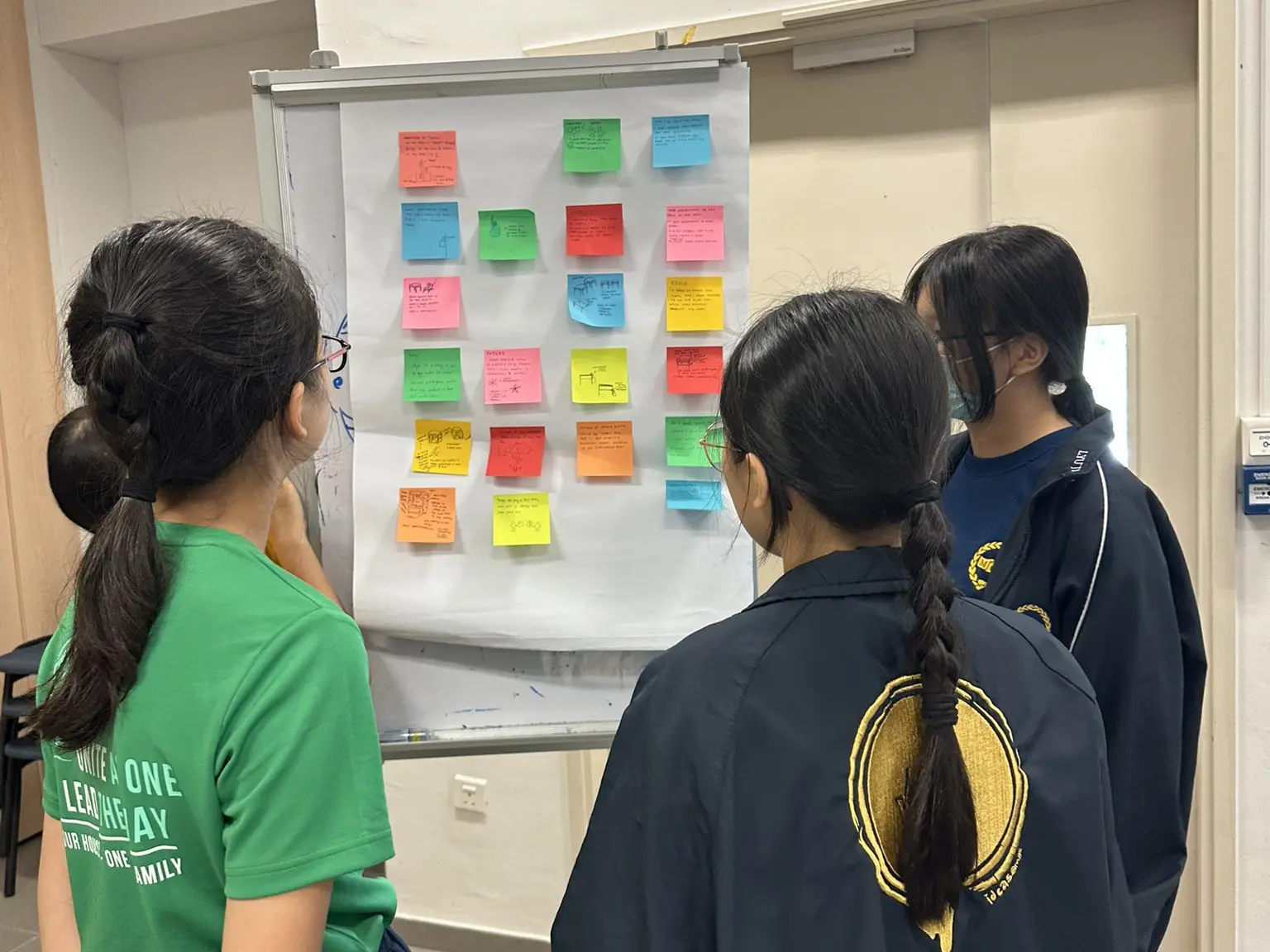
Students conduct structured interviews with real users: a classmate from a different background, a community member from a different generation, a school staff member whose daily experience they have never considered. They use a structured interview guide and document their findings in an empathy map — capturing what the person says, does, feels, and thinks.
For 21CC reporting, the empathy map is a strong artefact. It shows that the student engaged with a real person, processed their perspective, and synthesised it into a structured format. Schools using C-Academy programmes receive a full set of student empathy maps as part of their post-programme documentation package — ready to include in ALP submissions.
The social emotional learning and global awareness dimensions of this phase are also visible in the empathy map: students who surface unexpected insights about people different from themselves demonstrate exactly the cross-cultural competency that the 21CC framework requires.
3. Design Thinking and Critical Thinking: What the Define Phase Produces
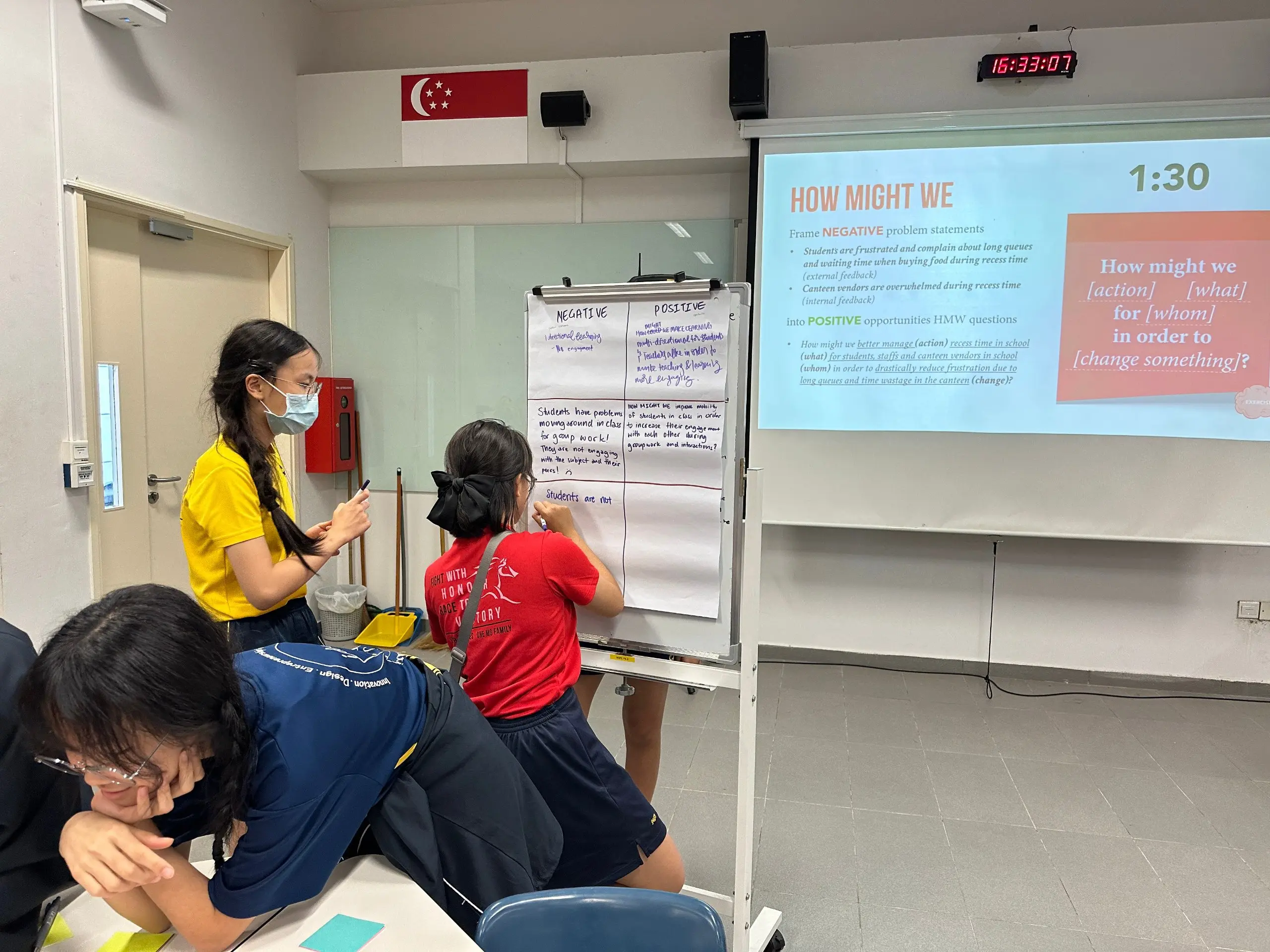
The Define phase asks students to synthesise their empathy research into a How Might We (HMW) statement — a specific, actionable question that reframes the problem from the user’s perspective.
Writing a good HMW statement is a direct exercise in critical and inventive thinking. Students must analyse what they heard across multiple interviews, identify the root cause rather than the symptom, and reframe it in a way that opens up creative possibilities rather than closing them down. This is higher-order thinking with a concrete output.
For HOD documentation, the HMW statement is particularly useful because it is short, clear, and demonstrates a specific cognitive skill. A student who writes “How might we help canteen vendors reduce food waste without increasing their preparation time?” has demonstrated root-cause analysis, empathic reframing, and problem scoping — all visible in a single sentence.
Student voice and self directed learning are also evident here: the best HMW statements come from students who took ownership of the research and drew their own conclusions, rather than following a template.
4. Design Thinking and Collaboration: What the Ideate and Test Phases Develop
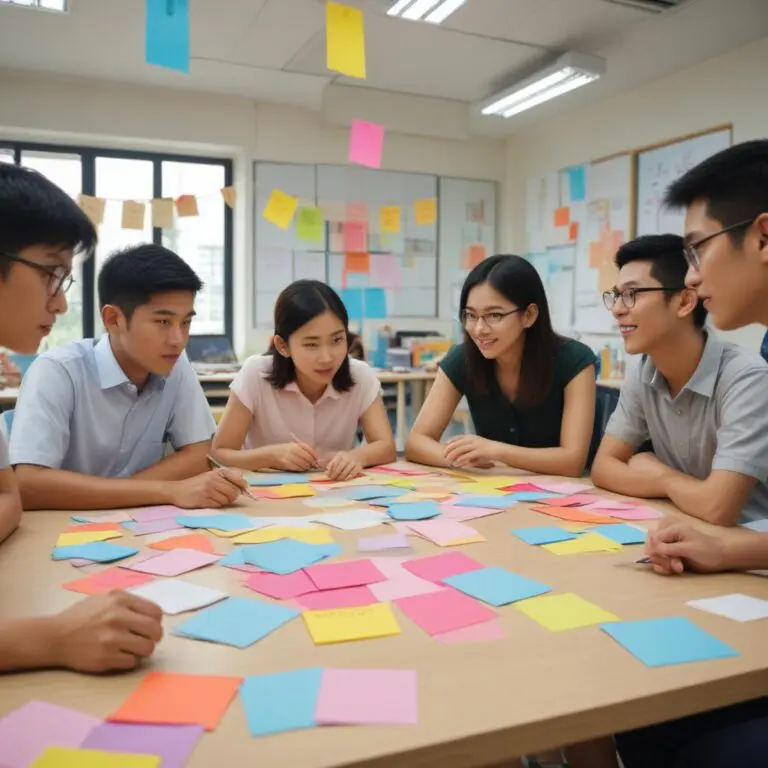
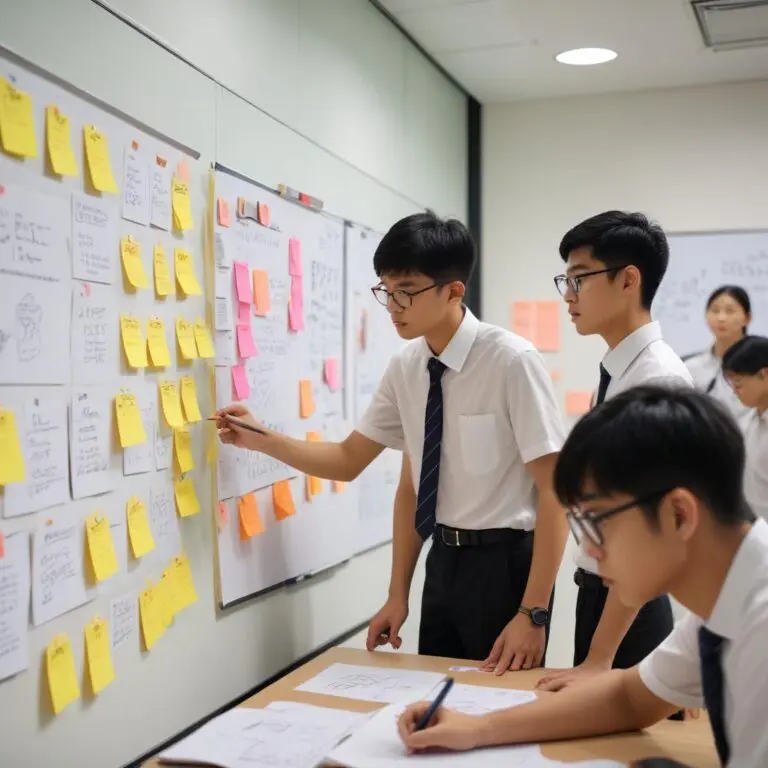
The Ideate phase develops collaboration skills and inventive thinking simultaneously. Using C-Academy’s Random Cards and Idea Dice tools, students generate ideas without self-censorship, then evaluate and select as a group. The process requires active listening, managing disagreement, and building on each other’s thinking — exactly the Communication, Collaboration and Information Skills domain of the 21CC framework.
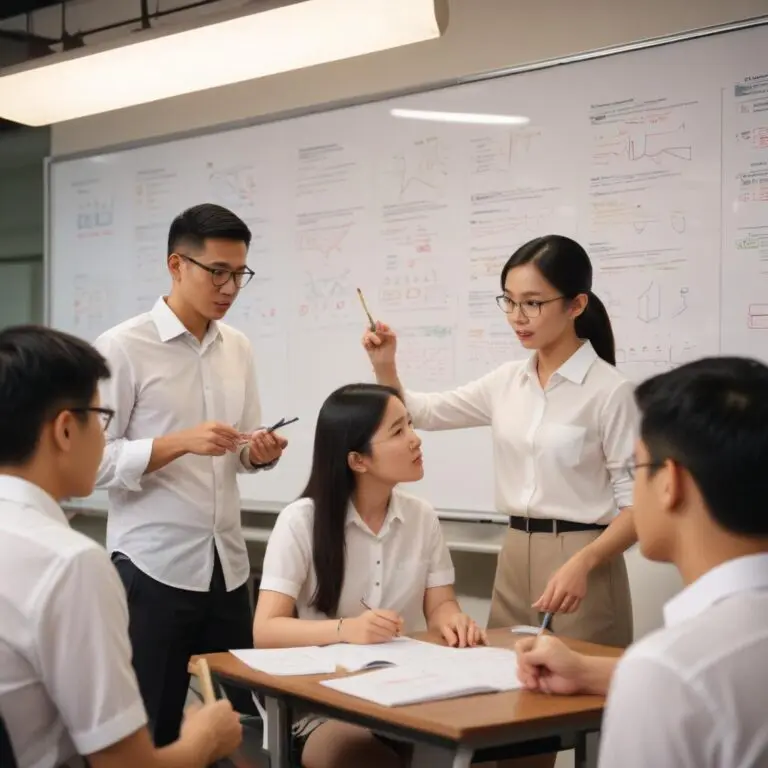
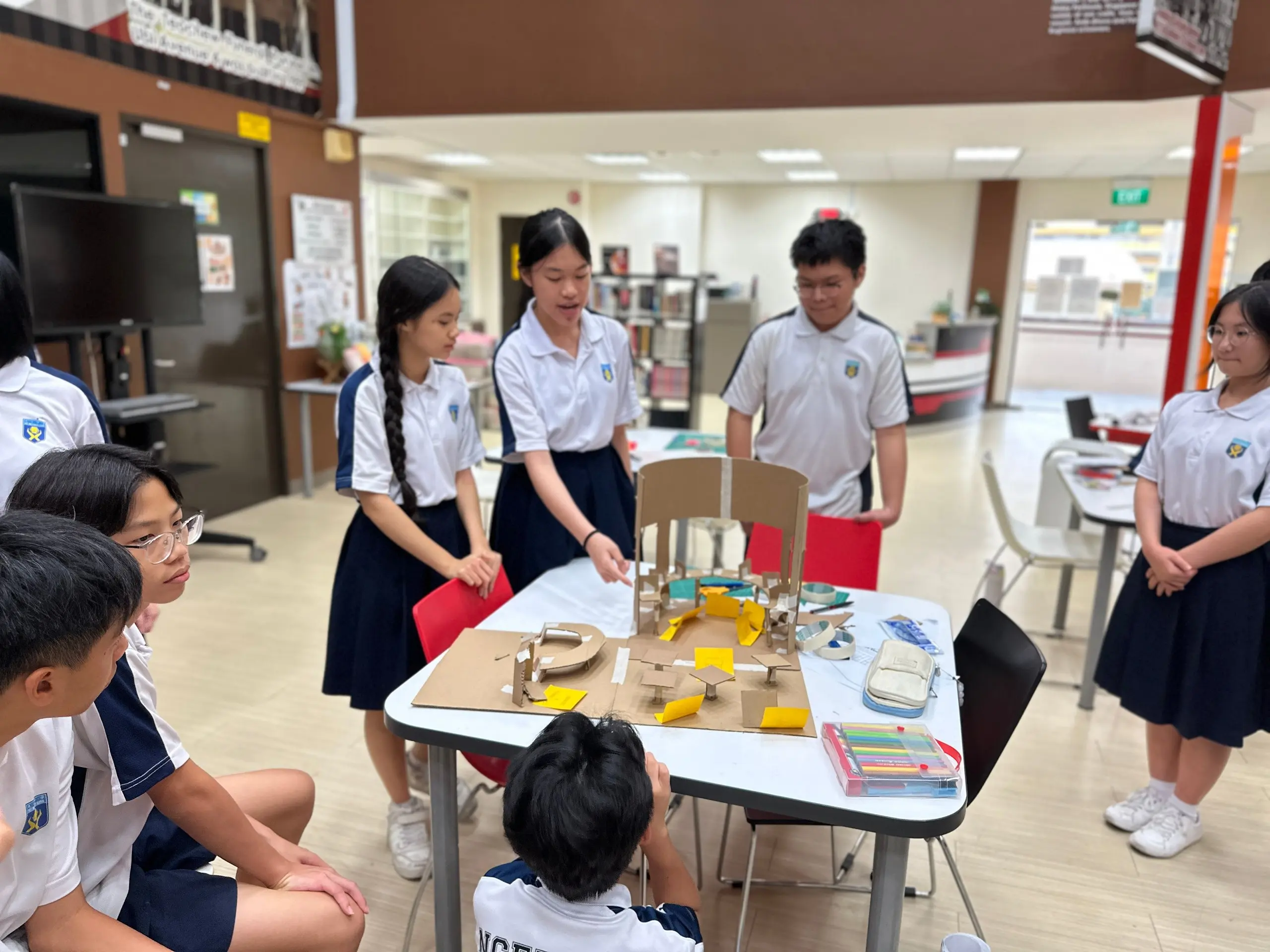
The Test phase completes the evidence picture. Students build a low-fidelity prototype and present it to a real audience, then respond to structured feedback. The pitch requires communication skills in an authentic, higher-stakes context. The response to feedback requires adaptive thinking — the ability to evaluate input objectively and decide what to act on.
For ALP documentation, the prototype and pitch together form the strongest artefact set. They show not just that students learned a process, but that they applied it to produce something real and defended it in front of others.
Independent assessment note: C-Academy’s pre- and post-programme assessments are conducted by assessors external to the facilitating team. Across our programmes, students show an average improvement of 37% in design thinking competence. At Sembawang Secondary School, competence rose from 13.5% to 69.5% — a gain of 56 percentage points. These figures are independently verified and can be cited in school reporting.
5. Using Design Thinking Artefacts for MOE Reporting and ALP Submissions
Schools that run C-Academy EDIT Design Thinking® programmes receive a full documentation package at the end of each cohort:
– Student empathy maps (Civic Literacy evidence)
– HMW statements (Critical and Inventive Thinking evidence)
– Ideation boards and selected concept summaries (Collaboration evidence)
– Prototype photos and pitch recordings (Communication evidence)
– Pre- and post-programme competency assessment report (independent, quantified)
This package is designed to map directly to ALP submission requirements and school annual report 21CC reporting sections. HODs do not need to construct the evidence from scratch — it is produced as a natural output of the programme itself.