




If you’ve been tasked with reviewing your school’s Applied Learning Programme and aren’t entirely sure how it differs from the Applied Learning Module, you’re not alone. The terms ALP and ApLM are frequently used interchangeably in school conversations, but they refer to distinct MOE structures with different funding mechanisms, curriculum implications, and delivery expectations. For HODs navigating curriculum planning in Singapore secondary schools, understanding the ALP vs ApLM Singapore secondary school distinction is the starting point for making sound strategic decisions — including how design thinking can strengthen your applied learning programme, and what to look for when selecting a programme partner.
1. What ALP and ApLM Actually Mean (And Why the Distinction Matters)
The Applied Learning Programme (ALP) and the Applied Learning Module (ApLM) both sit within MOE’s broader applied learning agenda, but they operate at very different scales and serve different purposes within a school’s curriculum architecture.
The ALP is a school-wide programme that applies learning from one or more academic disciplines to real-world contexts. It is typically linked to the school’s niche or distinctive identity, runs across cohorts (most commonly Sec 1 and Sec 2, though some schools extend it to Sec 3), and is formally recognised in the school’s development plan. ALP schools receive dedicated MOE funding and are expected to demonstrate measurable learning outcomes.
The ApLM, by contrast, is a module-level structure — a shorter, more targeted intervention that can be delivered within an existing subject or as a standalone enrichment module. It is less resource-intensive to set up, does not require school-wide commitment, and can be run by individual departments without ALP-level approval processes.
Why does this distinction matter? Because the planning timelines, vendor relationships, staff involvement, and student outcomes expected from each structure are fundamentally different. An HOD who approaches an ALP delivery as though it were an ApLM is likely to under-resource it. Conversely, an HOD running what is effectively a school-wide programme under ApLM branding may be missing out on funding and recognition your school has earned.
2. How MOE Defines ALP vs ApLM: Key Policy Differences HODs Need to Know
MOE’s applied learning framework distinguishes between the two structures along several dimensions that directly affect how HODs plan and budget.
Dimension
ALP
ApLM
Scope
School-wide, often multi-year
Department or cohort level, module-based
MOE Funding
Dedicated ALP allocation, reviewed periodically
Funded through school’s standard enrichment or departmental budget
Approval Process
Formal MOE endorsement required; reviewed against school niche alignment
Approved at school level, subject to HOD/VP sign-off
Reporting Requirements
Structured outcomes reporting to MOE; pre/post assessment expected
Internal reporting; outcomes documentation varies by school
Cohort Coverage
Typically entire year group or multiple cohorts
Can target a specific class, CCA, or student segment
Vendor Engagement
Often involves external programme partner; multi-session delivery
May be internal (teacher-led) or involve a single-session external provider
One question that comes up frequently: does every Singapore secondary school have an Applied Learning Programme? Not necessarily. Not all secondary schools carry ALP status. Schools that do not hold a formal ALP may still run applied learning activities through ApLMs or enrichment programmes — but without the same funding structure or MOE endorsement. If your school is considering ALP status, that is a conversation that begins at the school leadership level, not the department level.
3. What Each Structure Means for Curriculum Planning and Timetabling
The practical implications of running an ALP versus an ApLM show up most clearly in curriculum time and coordination demands.
An ALP requires curriculum time to be ring-fenced — typically across an academic year, often embedded within the Sec 1 or Sec 2 timetable. HODs need to work with the timetabling team early (ideally during the preceding year’s curriculum review cycle) to ensure programme sessions do not clash with major assessment periods. At C-Academy, we have found through our work with schools including Sembawang Secondary and Ngee Ann Secondary that the most successful ALP implementations are those where the HOD has mapped the programme sessions against the school calendar at the planning stage, not after the vendor has been engaged.
An ApLM is more flexible. Because it is module-based, it can often be accommodated within existing curriculum time — a cluster of periods within a subject, a dedicated enrichment slot, or a post-examination programme window. The lower coordination overhead makes it easier to pilot an applied learning approach before committing to full ALP status.
One practical consideration: if you are running a design thinking programme across an entire Sec 1 cohort, you are effectively operating at ALP scale regardless of what the programme is labelled internally. The resourcing, facilitation team size, and outcome documentation should reflect that reality.
4. Choosing the Right Applied Learning Domain: Where EDIT Design Thinking® Fits
Applied learning in Singapore secondary schools spans a wide range of domains: STEM, performing arts, environmental science, food innovation, and increasingly, design thinking and human-centred innovation. Each domain has different learning outcomes, facilitation requirements, and connections to the 21st Century Competencies (21CC) framework MOE expects schools to develop — competencies that are widely recognised as core 21st century skills for future-ready learners.
EDIT Design Thinking® is particularly well-suited to ALP delivery for several reasons:
Cross-disciplinary applicability. EDIT Design Thinking® takes an interdisciplinary approach that can be applied to challenges drawn from any subject area — sustainability, community issues, digital well-being, learning environment design — making it adaptable to the school’s existing niche or values focus. This interdisciplinary approach means it sits naturally alongside the academic curriculum without competing with it.
Direct alignment with MOE 21CC competencies. The process develops Adaptive and Inventive Thinking, Communication, and Collaboration — three of the core 21CC competencies MOE expects secondary school programmes to address. In doing so, it actively builds critical thinking and innovation skills that contribute to students’ long-term career readiness.
Measurable student outcomes. Unlike some enrichment activities, design thinking programmes can be assessed using pre/post competency rubrics that give HODs and VPs quantifiable evidence of student development — the kind of data that supports both internal review and MOE reporting.
Engagement across ability bands. In C-Academy’s experience delivering across mixed-ability secondary cohorts, design thinking challenges consistently generate high engagement because the process rewards creative risk-taking, not subject mastery alone.
EDIT Design Thinking® works best when it is used as a methodology layered within the school’s chosen domain — whether that is STEM, sustainability, arts, or another applied area — enriching and extending the domain rather than operating as a separate strand. Schools with an ALP anchored in a specific domain will find that EDIT Design Thinking® integrates naturally as the process through which students engage deeply with that domain’s real-world challenges and develop the real world application of what they have learnt in the classroom.
5. What to Look for in an ALP Vendor or Programme Partner
How do you choose an ALP programme provider for your school? This is one of the most common questions HODs ask when beginning the vendor selection process, and it is one where the wrong decision is costly — both financially and in terms of student experience.
Here is a practical checklist drawn from the questions schools typically raise when evaluating providers:
- Is the programme delivered by the same team that designed it? Some providers outsource facilitation to freelancers who may not have deep familiarity with the programme’s methodology. This creates inconsistency across cohorts and makes it harder to customise for your school’s context. C-Academy delivers exclusively through its own core team — Kimming Yap, Yulia Saksen, and Mavis Chew — so the facilitators you meet during the briefing are the same people in the room with your students.
- Can the provider demonstrate measurable outcomes from similar schools? Ask for pre/post assessment data, not just testimonials. Verified outcome data from schools in comparable contexts gives you something to reference in your own reporting. Fabricated or unverifiable claims should be a red flag.
- Does the programme align with your school’s applied learning domain and student profile? A provider who offers the same programme regardless of school context is not genuinely customising for your students. Ask how the programme is adapted for your school’s niche, year group, and student profile.
- What is the minimum number of sessions, and what does each session deliver? A credible design thinking ALP programme runs across at least 4 sessions. Any provider proposing meaningful applied learning outcomes in a single half-day should be questioned carefully. The depth of student thinking, empathy development, and prototyping that constitutes genuine applied learning cannot be compressed into one session.
- Is the provider familiar with MOE’s ALP and ApLM frameworks? A provider who cannot speak to MOE policy, 21CC competency alignment, or outcome documentation is unlikely to be a useful partner when it comes to internal reporting or curriculum review.
6. How C-Academy’s EDIT Design Thinking® Workshops Are Structured for ALP Delivery
C-Academy’s Design Thinking Workshops for secondary schools are built on the proprietary EDIT Design Thinking® methodology — a four-phase process of Empathise, Define, Ideate, and Test. The workshop structure is designed to meet ALP delivery requirements: a minimum of 4 sessions, with clearly differentiated learning outcomes at each stage. The programme is grounded in learning by doing — students develop understanding through direct experience rather than passive instruction, which is what distinguishes a genuine applied learning program from a conventional lesson sequence. (Note: whilst MOE uses the Singapore spelling “Applied Learning Programme”, the equivalent applied learning program model is increasingly recognised internationally under both spellings.)
A standard 4-session Design Thinking Workshop for secondary school ALP runs as follows:
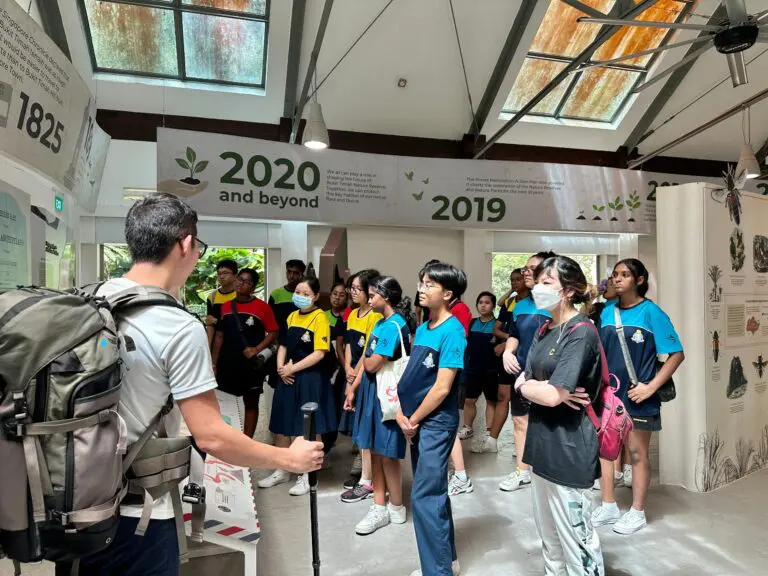
- Session 1, Learning Journey: Students engage with real-world context relevant to the programme theme — sustainability, community, cyber wellness, or another applied domain. This is observation and empathy-gathering in practice, not theory. Through hands-on projects and direct field observation, students begin to connect classroom knowledge to genuine community needs, making the practical application of their learning immediately visible.
- Session 2, Introduction to EDIT Design Thinking®, Empathise, and Problem Definition: Students are introduced to the methodology formally, process their Learning Journey observations into empathy maps, and develop How Might We (HMW) statements that frame a real problem worth solving.
- Session 3, Ideation, Prototyping, and Testing: Using tools including Random Cards and Idea Dice, students generate ideas, build low-fidelity prototypes, and test them with users — completing the full design thinking cycle. Like project based learning, this phase asks students to produce something tangible; where EDIT Design Thinking® differs is its structured emphasis on empathy and user testing before any solution is finalised.
- Session 4, Final Presentation: Student teams present their solutions, including empathy maps, HMW statements, prototypes, and value propositions. Presentations are assessed against a competency rubric used to generate pre/post outcome data.
This structure can be extended to 5 or 6 sessions where timetabling allows, adding depth to the ideation and prototyping phases. The core team has delivered this structure across schools including Sembawang Secondary School, Ngee Ann Secondary, Pei Hwa Secondary, and Methodist Girls’ School (Secondary), adapting the theme and challenge context to each school’s niche and student profile.
For schools running an ALP under one of the six “Let Out Your Creativity” themes — Sustainability, Community, Cyber Wellness, Culture, Reimagining Learning Spaces, or XR Experience — each theme is designed to connect to real-world external partners and community contexts, giving students applied learning experiences that go beyond classroom simulation. Partnerships with external partners such as Jane Goodall’s organisation bring authenticity to student challenges and reinforce the lifelong learning habits that ALP is ultimately designed to cultivate.
7. A Practical Decision Framework for HODs
To bring this together, here is a decision framework you can use when reviewing your school’s applied learning structures or evaluating a new programme partner.
- Step 1: Clarify which structure you are running. Is this programme operating at ALP scale (whole cohort, multi-session, school-niche aligned, MOE-reported) or ApLM scale (module-based, departmental, enrichment-budget funded)? Name it correctly, and resource it accordingly.
- Step 2: Confirm the applied learning domain aligns with your school’s niche. If your school’s ALP is anchored in sustainability, your design thinking programme should be framed within that domain — not as a generic creativity workshop. The applied learning domain should make the connection between the academic curriculum and real world application explicit for students.
- Step 3: Evaluate vendors against outcomes evidence, not pitch decks. Ask every provider for pre/post assessment data from comparable schools. Ask who delivers the sessions. Ask how the programme is customised. Any provider who cannot answer these questions concretely should not be shortlisted.
- Step 4: Map the programme against your school calendar before engaging a vendor. Identify post-examination windows, avoid major assessment periods, and confirm timetabling feasibility with the relevant HOD and VP before any vendor engagement. The most common implementation problem is a programme that is pedagogically sound but logistically impossible to fit into the school year without disruption.
- Step 5: Build outcome documentation into the programme design, not after. If your school is running an ALP, MOE expects evidence of student learning. Work with your vendor to establish what will be measured, how, and by whom before the first session — not after the final presentation.
If you are at the stage of exploring how EDIT Design Thinking® can strengthen your school’s applied learning programme, or assessing whether your current ALP structure is delivering the outcomes it should, the C-Academy team is available to discuss your school’s context. We have delivered Applied Learning Programmes across Singapore secondary schools and are familiar with the practical, policy, and curriculum considerations HODs navigate. You are welcome to get in touch to explore what a programme might look like for your school.