




Singapore secondary schools running VIA projects often find that students log their VIA hours and community service hours, submit a reflection journal, and move on — without deeply understanding the community problem they set out to address. VIA projects, rooted in Values in Action, are designed to be more than community service: they are a vehicle for character education, social responsibility, and experiential learning. For many students, VIA is their most significant exposure to holistic development outside the classroom — but without a structured methodology, it rarely reaches that potential. Embedding design thinking into VIA changes that. C-Academy’s EDIT Design Thinking® methodology gives students a structured, repeatable approach to community problem-solving that maps directly onto MOE’s five-stage VIA process, turning ad hoc volunteerism into genuine, empathy-led social impact.
1. Why VIA Projects and Volunteering in Singapore Benefit From Design Thinking
VIA projects are not simply a community service graduation requirement or a box to tick for CCAs and co-curricular activities. MOE’s Character and Citizenship Education (CCE) framework positions VIA as a service learning opportunity — a structured form of community service learning — that moves students beyond direct service and short-term activities towards service learning projects where they identify real community needs, plan a meaningful response, and reflect on what they have learnt. This mandate aligns almost perfectly with what design thinking does at its core, making VIA projects a natural home for project based learning, moral education, and hands-on experiences with real impact. Community service activities become impact experiences when students understand the problem before they act.
Where many schools fall short is in providing students with a method. Students are told to care about a community issue, but rarely given a structured process for understanding it deeply before acting. The result: projects that replicate what previous cohorts did, solutions that are designed around assumptions rather than observed needs, and reflections that describe activities rather than learning.
Unlike more prescriptive youth volunteers frameworks — such as Youth Corps Singapore, Team Nila, or Rotaract Club — design thinking does not assign students to a cause. It trains them to find one through observation. Design thinking fills this methodological gap. The EDIT Design Thinking® process — Empathise, Define, Ideate, Test — trains students to treat a community challenge with the same rigour a designer brings to a product brief. When students begin the EDIT Design Thinking® process, they start with the Empathise phase — observing and listening to their community before any solution is considered. This is the critical difference between design thinking-led VIA projects and conventional service learning: students are not briefed on a problem and asked to solve it. They go into the community first, gather real observations, and only then define the problem worth solving. What surfaces during Empathise often surprises students: the community’s actual needs are rarely what they assumed. That shift — from assumption to evidence — is what design thinking teaches, and it is precisely what VIA’s community engagement objectives demand.
2. How EDIT Design Thinking® Maps onto Values in Action and Community Service
MOE’s VIA framework moves students through five stages: Initiation, Planning, Action, Reflection, and Celebration. Each stage has a direct counterpart in the EDIT Design Thinking® methodology.
| VIA Stage | EDIT Design Thinking® Phase | What Students Do |
| Initiation | Empathise | Conduct community observation, interviews, and empathy mapping to identify genuine needs |
| Planning | Define | Frame a How Might We (HMW) statement; identify the core problem worth solving |
| Action | Ideate + Test | Generate solution ideas, prototype a response, gather community feedback |
| Reflection | Post-Test Review | Evaluate what worked, what failed, and why — tied to competency rubric |
| Celebration | Pitch Presentation | Present findings and impact to peers, teachers, or community partners |
This mapping is not incidental. C-Academy facilitators specifically structured a Design Thinking Workshop for a secondary school in Singapore around this five-stage alignment, allowing CCE teachers to satisfy VIA documentation requirements and embed design thinking rigour in a single service learning programme. Student engagement and student volunteering quality across both the community observation and ideation phases is measurably higher when students understand that their volunteer work could produce ideas with real community value — an outcome that matters whether they are in secondary school or eventually continue as polytechnic students or beyond. Teachers reported that students’ planning documents became substantially more detailed once they had completed an Empathise phase — because students were documenting real observations, not guesses.
The EDIT Design Thinking® methodology also introduces two practical ideation tools — Random Cards and Idea Dice — that help student groups move beyond the first obvious solution during the Ideation stage, a common sticking point in VIA planning sessions.
3. From Empathy to Action: What Volunteer Activities and Community Giving Back Look Like in Practice
A full C-Academy Design Thinking Workshop for VIA typically runs across four sessions, structured as follows:
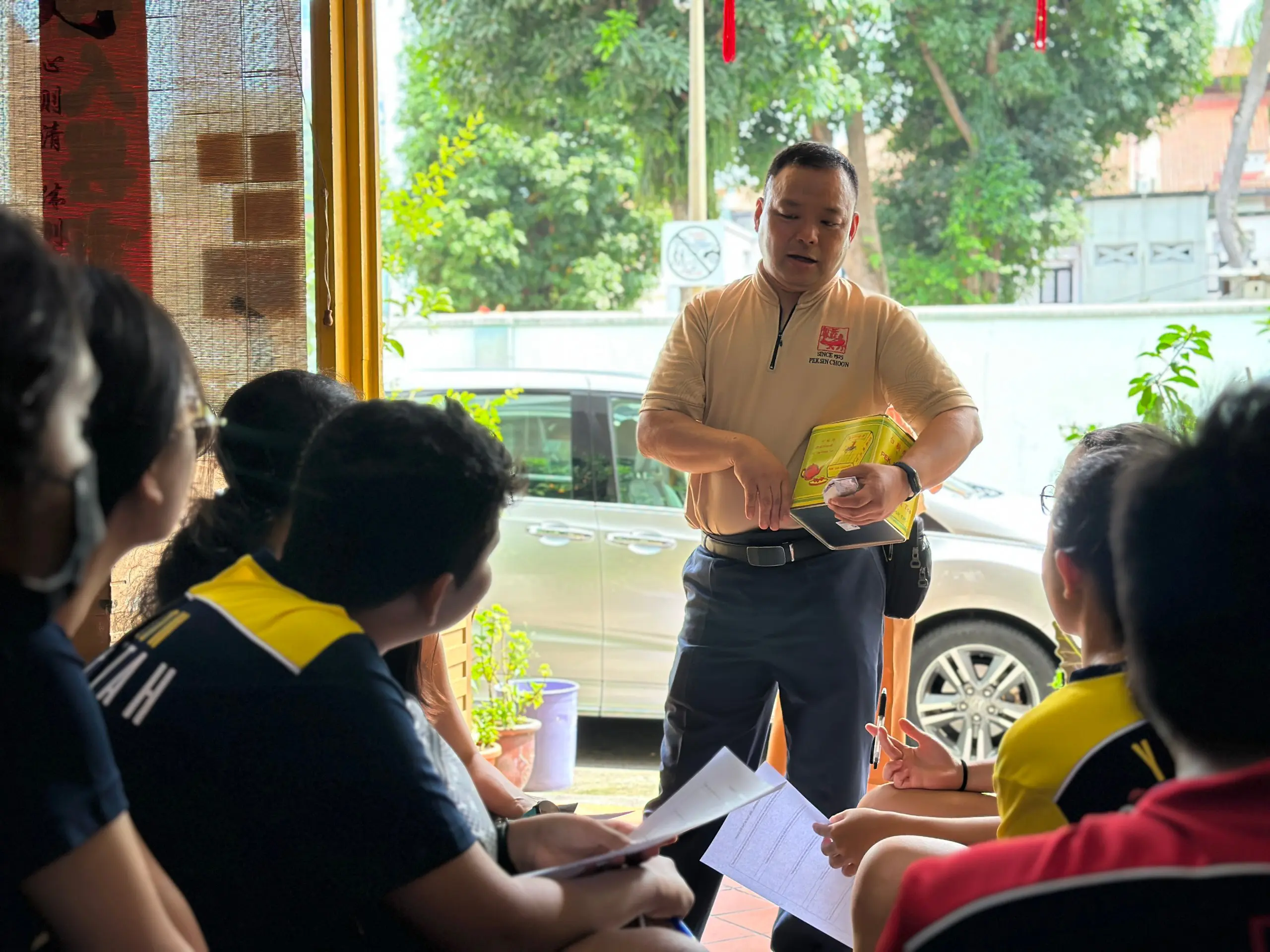
- Session 1, Learning Journey: Students visit a community partner organisation — for example, a social service agency, a heritage institution, or an environmental group — to observe real-world conditions and speak with the people they intend to serve. This is not a tour; students are briefed to listen for pain points and unmet needs.
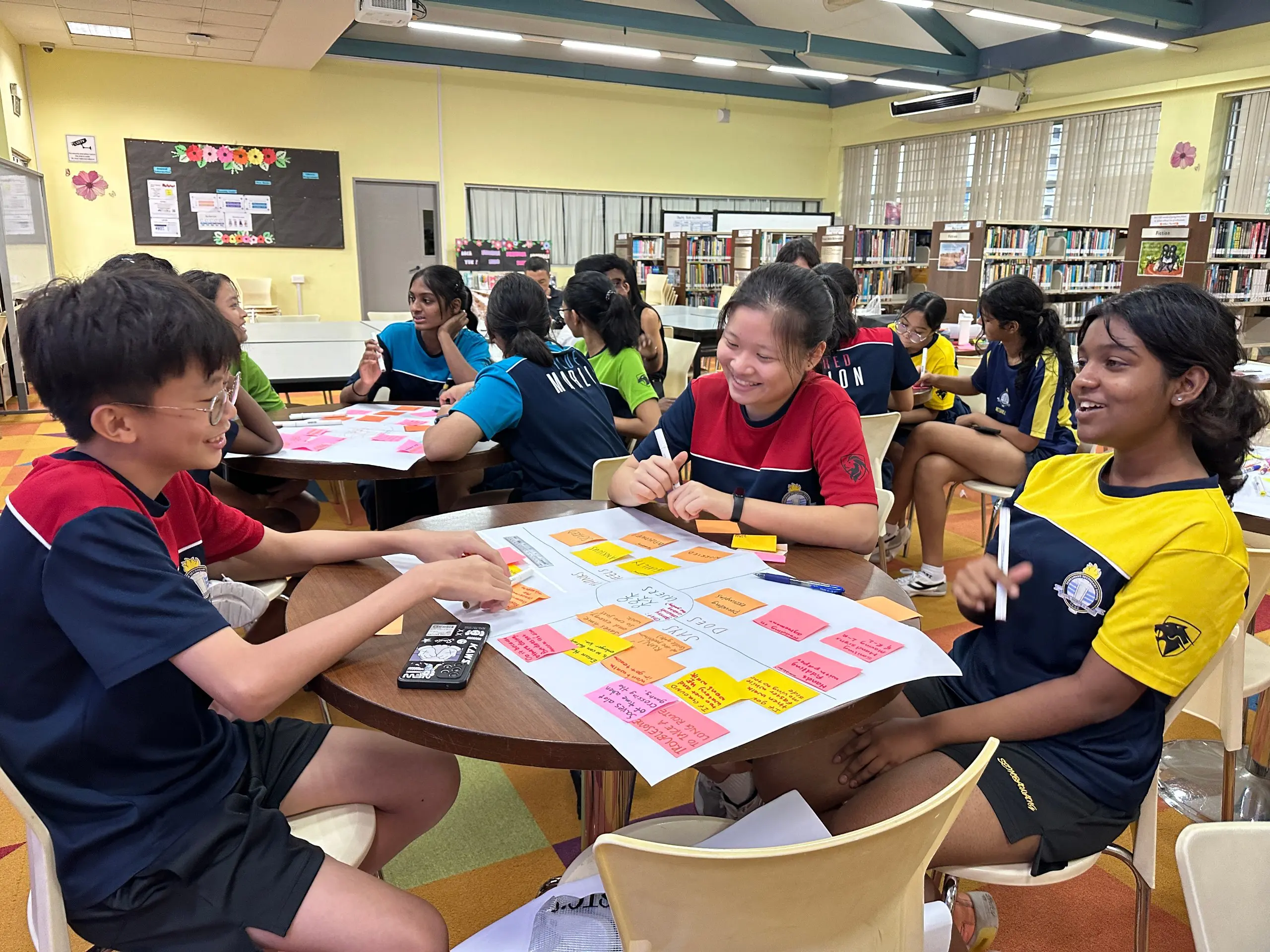
- Session 2, Empathise and Problem Definition: Back in the classroom, students build empathy maps from their field observations. Using the Define phase of EDIT Design Thinking®, they synthesise insights into a focused How Might We statement. Groups of five, in C-Academy’s experience, consistently produce sharper HMW statements than larger groups — small enough for every voice to be heard, large enough for diverse perspectives.
- Session 3, Ideation, Prototyping, and Testing: Students use Random Cards and Idea Dice to generate a wide range of solution concepts before converging on one to prototype. Prototypes are tested with real or simulated community members; feedback is documented and used to refine the solution.
- Session 4, Final Presentation: Each group presents their value proposition and community impact rationale. C-Academy facilitators assess presentations against the Sweet Spot of Innovation framework — the intersection of desirability (community need), feasibility (student capacity), and viability (sustainability of the solution).
This structure gives CCE teachers a clear scaffold while retaining the flexibility to adapt session timing to school timetables and VIA deadlines. For students, it transforms the VIA cycle from a youth volunteer obligation into a genuine design challenge with community stakes.
4. What Singapore Schools Get Wrong About VIA Organisations and Community Involvement Programmes
Three recurring patterns undermine the quality of VIA projects in Singapore secondary schools — and design thinking directly addresses each one.
Jumping to solutions before understanding the problem. Most student groups spend less than one lesson on problem identification before moving to planning. Design thinking’s Empathise and Define phases enforce a slower, more disciplined approach: students cannot write their HMW statement until they have completed community observation. This is the most significant behavioural change C-Academy facilitators observe in student cohorts — and the one that most visibly improves project quality.
Designing for convenience rather than community need. VIA activities are often chosen because they are logistically easy (e.g., donation drives, bake sales), not because they address a specific community gap. When students are trained to ask “What does this community actually need?” before asking “What can we organise?”, the resulting projects are more targeted and more likely to be welcomed by beneficiaries.
Reflection that describes rather than analyses. MOE’s VIA reflection requirement asks students to examine their learning, but without a structured framework, reflections tend to list activities rather than interrogate outcomes. Design thinking’s post-testing review phase — What did we test? What did we learn? What would we change? — gives students a ready-made reflection scaffold that CCE teachers can directly import into VIA documentation.
5. Real Community Impact: How Volunteers and Students Give Back Through VIA Hours
One misconception about design thinking workshops is that they benefit only the students doing the learning. In reality, C-Academy’s approach to VIA projects creates tangible community impact — not just classroom insight.
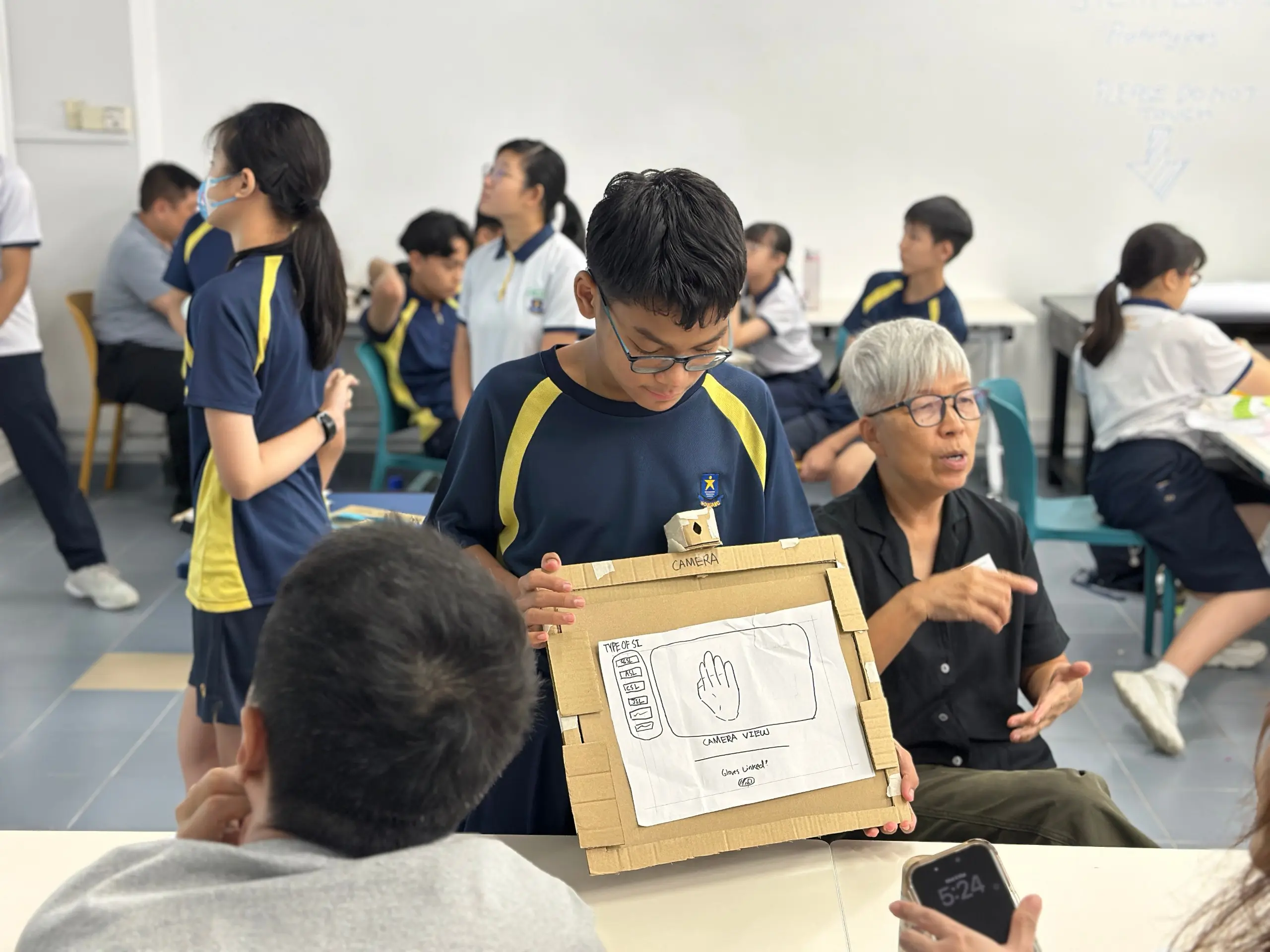
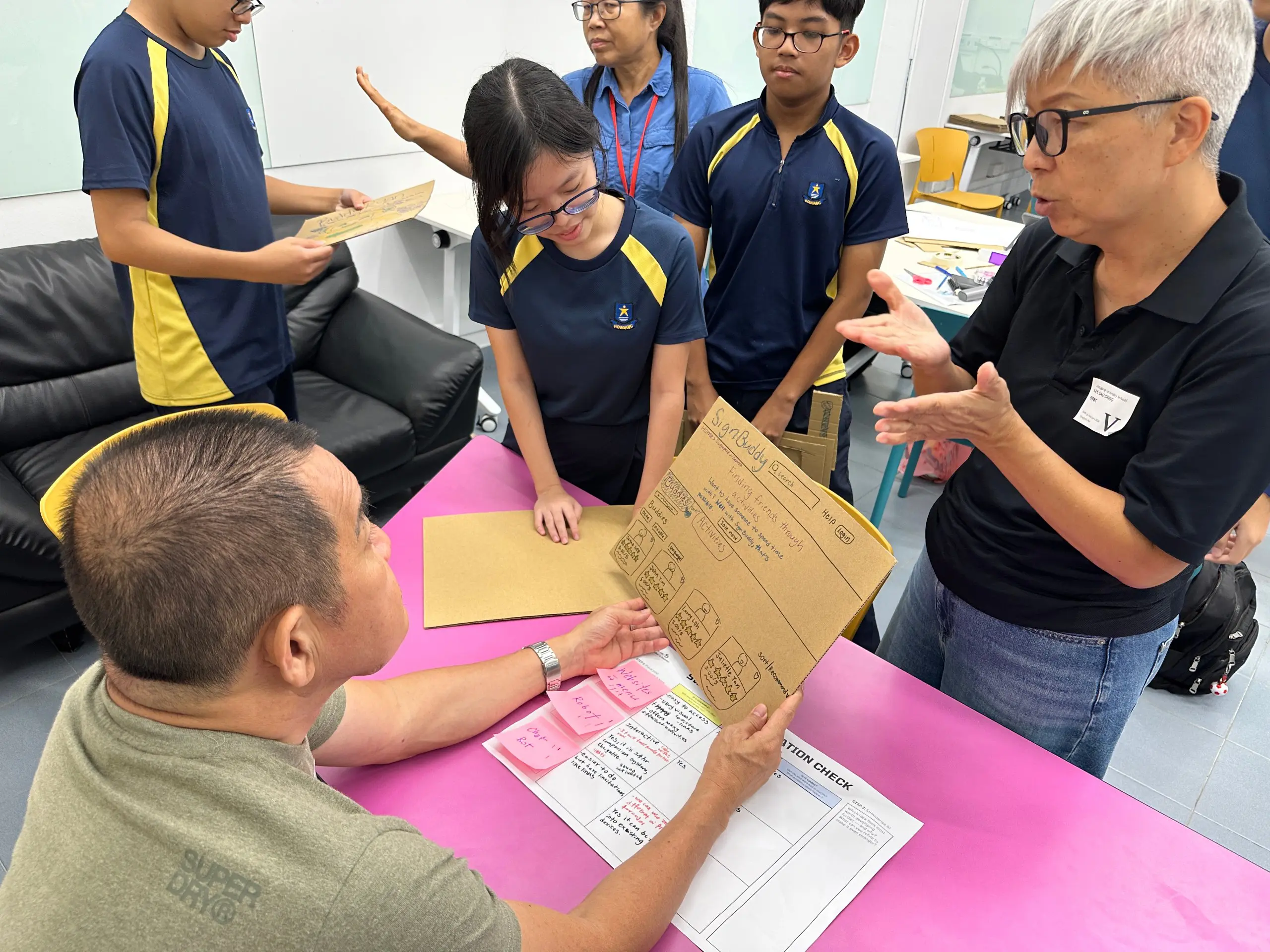
A recent example: C-Academy’s Design Thinking Workshop at Hougang Secondary School brought students together with The Singapore Association for the Deaf and SG Enable to work on real challenges faced by the deaf community. Students were not running a conventional volunteer programme or school volunteer programme — they were engaging in genuine community outreach, working as student volunteers alongside community partners to identify and prototype solutions to real, lived problems.
This kind of community involvement reframes what a VIA project can be. When students work on community projects grounded in empathy and design thinking, their ideas are evaluated against the Sweet Spot of Innovation: desirability (does the community actually need this?), feasibility (can students realistically deliver it?), and viability (is it sustainable?). Ideas that meet all three criteria have the potential to be realised as actual products or services — bridging the gap between student community service and genuine civic responsibility.
For student volunteers, this is a qualitatively different experience from ticking community service hours. It builds student leadership, youth empowerment, and a sense of social entrepreneurship — students learn that their ideas, when grounded in real empathy and rigorous process, can make a measurable difference to the communities they serve. This is values education in action: not taught, but lived.
C-Academy works with schools to identify suitable community partners for VIA design thinking programmes — not just for a single session, but with a view to building long-term partnerships that address genuine operational needs. This approach opens doors to under-served opportunities that a conventional overseas service trip or short-term activity cannot reach, ensuring that the community outreach component is meaningful, the problem is real, and the students’ youth volunteer experience translates into lasting civic education.
6. How HODs Can Structure a VIA Design Thinking Programme Within School Constraints
The most common objection from HODs is timetable pressure. Service learning modules take time — more than a homework buddies programme or a one-day activity. But for schools where community service is a graduation requirement, the investment in a structured design thinking programme produces measurably better outcomes against MOE’s VIA objectives. The key is addressing immediate needs without overloading the CCE calendar.: VIA sits within CCE periods, which are limited, and design thinking workshops take time. C-Academy has worked within these constraints across multiple Singapore secondary schools and recommends the following approach.
Start with the Empathise phase only if time is the binding constraint. Even a single 90-minute community observation session followed by structured debrief produces measurably better project planning. Once teachers see the quality difference, it is easier to build the case for a full four-session programme in the next cohort.
Align with existing VIA calendar milestones. CCE teachers typically have a VIA planning deadline and a submission deadline. Map EDIT Design Thinking® phases to these existing checkpoints rather than adding new ones. The Learning Journey session fits naturally at the start of the VIA cycle; the Final Presentation maps onto the existing assessment submission.
Frame VIA design thinking as a service learning opportunity, not an add-on. Service learning opportunities that combine community involvement opportunity with structured methodology are far more likely to produce self-initiated causes — students who continue giving back beyond the school requirement. Activity ushers and one-time volunteer drives have their place, but they do not build the same depth of community connection.
Use MOE’s 21st Century Competencies (21CC) framework as your internal justification. A VIA Design Thinking Programme directly develops Adaptive and Inventive Thinking, Communication, and Collaboration — three of MOE’s core 21CC competencies. HODs presenting to school leadership have found this framing significantly easier to approve than a request framed purely around design thinking as a concept.
7. Measuring What Students Actually Learn From Meaningful Projects and Volunteer Activities
Schools frequently ask: how do we know if design thinking in VIA is working? C-Academy uses a pre/post competency survey approach, measuring student performance across four domains — empathy, problem-framing, ideation, and prototyping — before and after the programme. Assessments are conducted independently of the facilitation team to ensure objectivity.
Across cohorts, C-Academy has recorded an average 37% improvement in overall design thinking competence. At Sembawang Secondary School, students improved from 13.5% to 69.5% in overall design thinking competence — a 56% gain — after completing the full programme.
For HODs, these figures matter not just as proof of learning, but as evidence to share with school leadership and parents. VIA has sometimes been perceived as a box-ticking exercise; quantified competency growth reframes it as a measurable learning outcome, aligned with MOE’s broader push for applied learning across the curriculum.