









Introduction: Empowering Creative Minds with Real-World Challenges
How C-Academy’s EDIT Design Thinking Methodology Transformed 50 Indonesian University Students’ Approach to Creative Business Challenges
In April 2026, C-Academy, the education arm of Creativeans, took a bold step into Indonesia by conducting a transformative Design Thinking workshop at Universitas Katolik Parahyangan (UNPAR) in Bandung. This workshop was not just a typical theoretical classroom session. It was a practical, hands-on experience where 50 undergraduate students, majoring in Sarjana Terapan Bisnis Kreatif (Creative Business), worked on a live brief from Hovarlay, a mar-tech firm renowned for its Augmented Reality solutions.
The students were tasked with tackling a real-world challenge: designing meaningful, culturally-relevant packaging for Nusantara Oleh-Oleh products as part of the Nusantara Packaging Experience Awards. The workshop lasted just 90 minutes, but it was packed with critical learning moments, creativity, and business acumen. By the end of the session, three teams had pitched their design concepts and received feedback from our lead trainer, Kimming Yap.
In this case study, we will explore how C-Academy’s EDIT Design Thinking® methodology played a crucial role in guiding these students through the process of empathy, defining problems, ideation, and testing. We’ll delve into the challenges and outcomes, sharing insights into how this workshop can inform future design thinking initiatives at international schools across Indonesia.
The Significance of Bandung: A Hub of Creative Potential
Before diving into the workshop itself, let’s first understand why Bandung was the perfect city for this pioneering engagement. Bandung is not only an educational and cultural hub in Indonesia, but it’s also a growing centre for creative industries, making it an ideal place for C-Academy to launch its Design Thinking programme in Indonesia.
With its strategic location, the city has become a magnet for both local and international students. Bandung is also known for its strong creative economy, which includes fashion, design, and digital innovation. This makes it an ideal location for students pursuing creative business degrees to apply cutting-edge methodologies such as Design Thinking.
Universitas Katolik Parahyangan (UNPAR), a leading university in Bandung, is highly regarded for its Sarjana Terapan Bisnis Kreatif programme. The university’s accreditation and strong academic reputation align well with C-Academy’s mission of empowering students to solve real-world business challenges through creativity and strategic thinking. By collaborating with UNPAR, C-Academy was able to expose students to practical challenges while providing valuable experience that would contribute to their future careers in the creative industries.
The Brief: Designing for Nusantara Oleh-Oleh
At the heart of this workshop was a live, real-world design brief from Hovarlay, centered on the Nusantara Packaging Experience Awards. Hovarlay, mar-tech firm renowned for its fastest no-code WebAR platform, set the challenge of designing packaging for Nusantara Oleh-Oleh products, a term used for traditional Indonesian souvenirs and snacks that represent the diverse culture and heritage of Indonesia.
The objective of the brief was not just to create visually appealing packaging. The students were tasked with developing packaging that offered a deeper, more meaningful experience for consumers. This required an understanding of both the cultural significance of the products and the role packaging plays in consumer perception and brand identity.
This challenge was aligned with Hovarlay’s Nusantara Packaging Experience Awards, which celebrates innovative and functional packaging designs that enhance user experiences. The brief was designed to push students to think beyond the aesthetics of packaging and consider how it could tell a story, evoke emotions, and make a lasting impact on consumers.
By tackling this brief, students gained firsthand experience in applying their creative business knowledge to a live project. It wasn’t about theoretical knowledge or hypothetical scenarios, it was about real-world impact. This approach not only helped students connect with the cultural significance of Nusantara Oleh-Oleh products but also provided them with the opportunity to influence the future of packaging design in Indonesia.
The Workshop: A 90-Minute Deep Dive into EDIT Design Thinking
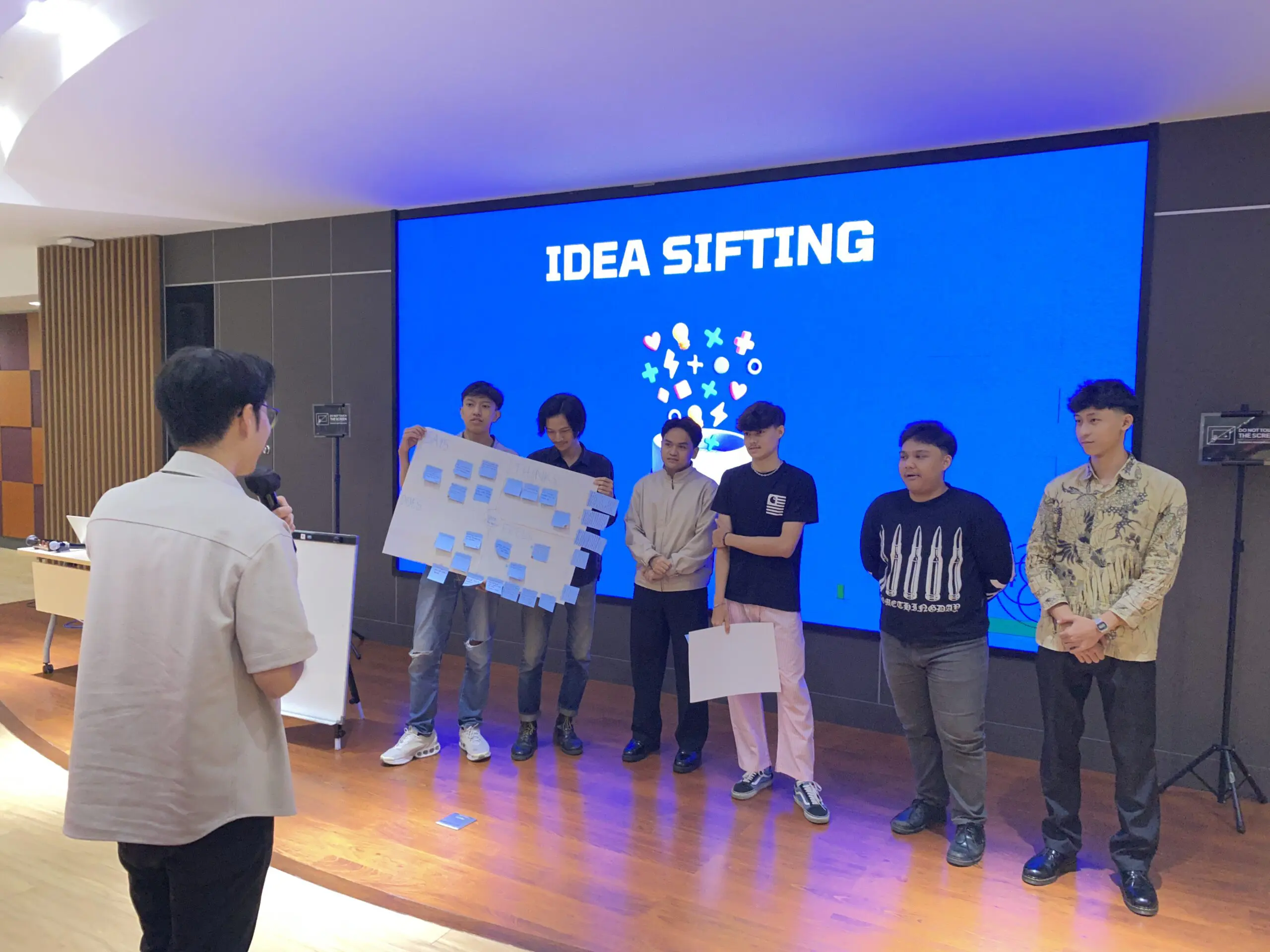
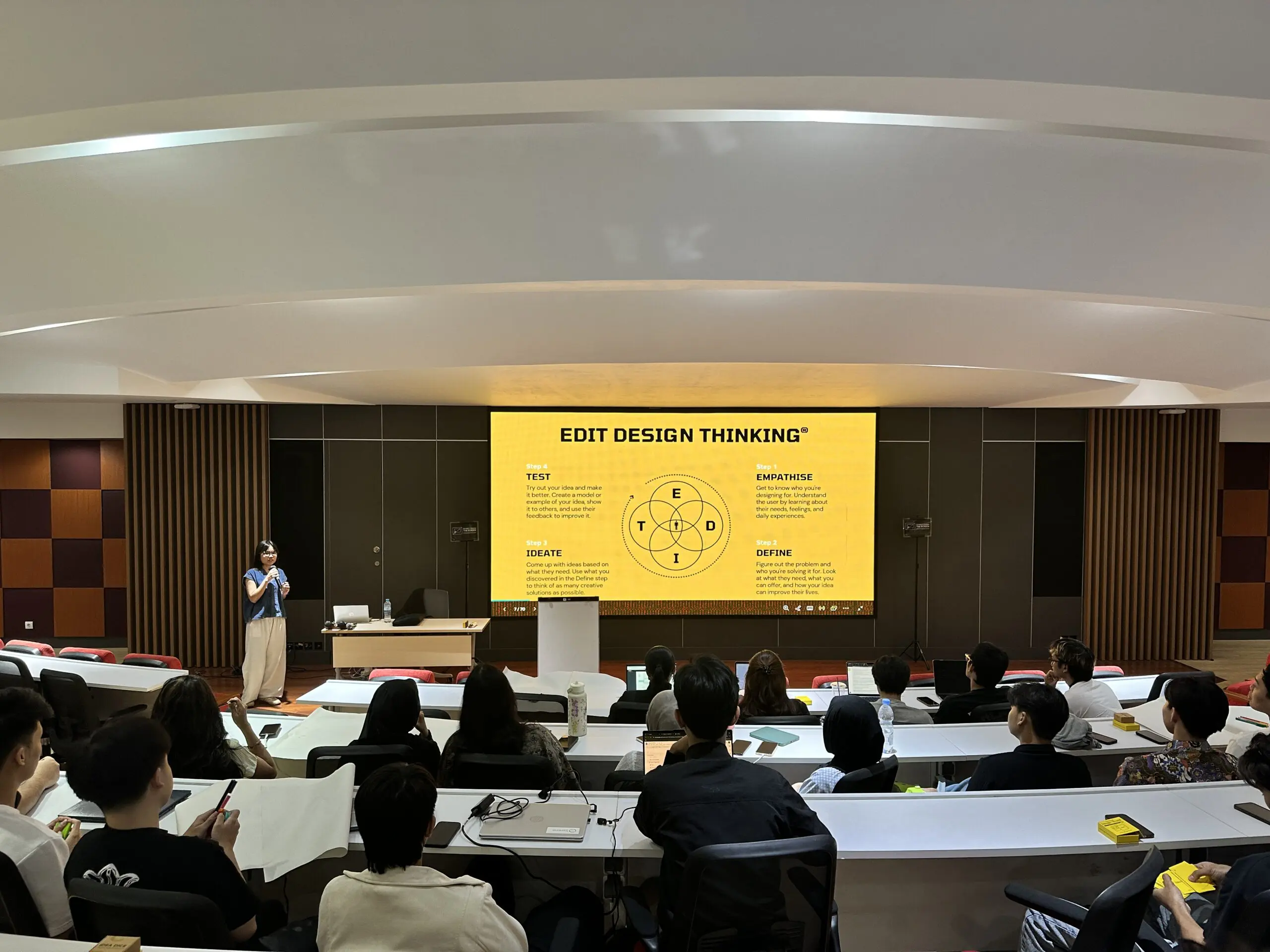
Time was of the essence in this 90-minute workshop. To make the most of the session, we used the EDIT Design Thinking® methodology, a structured process that guides participants through the five key stages: Empathize, Define, Ideate, and Test.
Here’s a breakdown of the workshop flow:
1. Empathy: Connecting with the User
Empathy is the first and most critical stage in the Design Thinking process. During this phase, students learned to step into the shoes of the users and understand their needs, desires, and pain points. To keep the session engaging and interactive, students were encouraged to actively participate in group activities, such as creating empathy maps.
Rather than simply discussing abstract concepts, students were encouraged to identify real users of Nusantara Oleh-Oleh and explore their motivations. They worked in groups, each selecting a specific user persona based on their interests. The goal was for the students to connect emotionally with their users, which would later influence their design decisions.
Through this exercise, students began to understand that packaging is not just a functional product but a tool for emotional connection. This deep understanding of the user formed the foundation for the next stages of the workshop.
2. Define: Turning Problems into Opportunities
Once the students had a clear understanding of their users, it was time to define the problem. This stage focused on transforming insights from the empathy phase into concrete problems that needed to be solved.
Students identified key challenges faced by users when interacting with packaging. These ranged from packaging that was difficult to open to designs that lacked a connection to the product’s cultural heritage. Students then turned these problems into “How Might We?” questions, which framed the problem as an opportunity for innovation.
For example, a negative problem stratement such as “Caca struggles to find souvenirs that are compact, aesthetic, and have a local feel, making her feel guilty if she doesn’t buy anything, but frustrated when she has to carry something heavy, large, and unworthy of showing to others.” was reframed into a clear question: “How might we design Nusantara souvenir packaging that is compact, meaningful, and aesthetic for solo travelers like Caca, so they can proudly bring and give souvenirs without compromising the comfort of their journey?”
By framing problems in this way, students were able to focus their creativity on tangible solutions that aligned with the users’ needs.
3. Ideate: Generating and Sifting Ideas
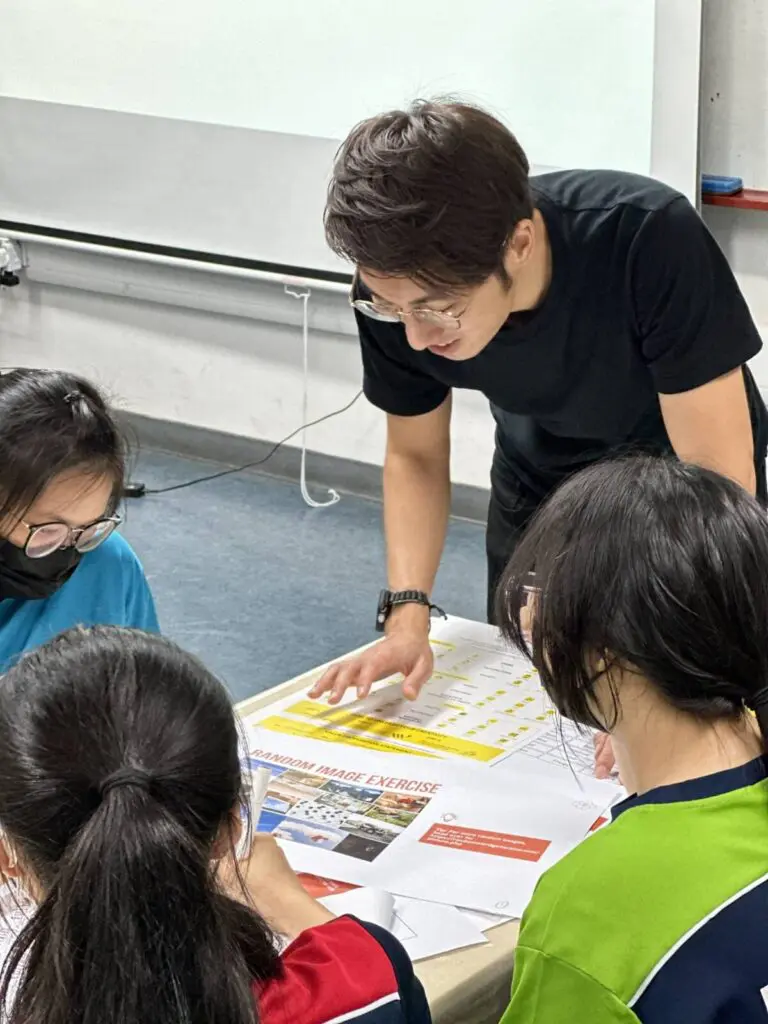
With the problem clearly defined, it was time to generate ideas. The ideation phase used fun and interactive tools such as Random Cards and the C-Academy Idea Dice. These tools helped the students think outside the box and produce as many ideas as possible, without worrying about quality. This phase embraced the concept that “quantity leads to quality.”
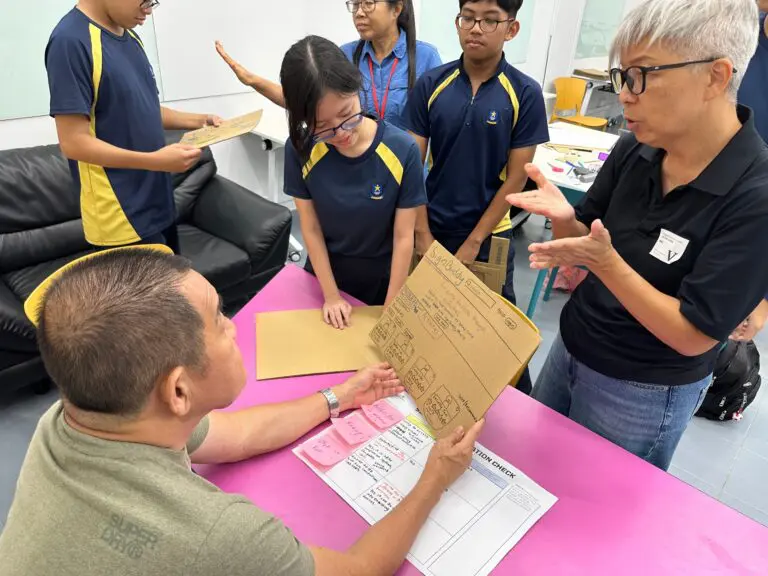
The ideation process was intentionally fast-paced and collaborative. Students worked in groups to generate ideas, no matter how wild or unconventional they seemed. This was followed by the “convergent” phase, where they sifted through their ideas using a Sweet Spot Innovation table, a tool that helped them evaluate which ideas best aligned with user needs, business goals, and feasibility.
By encouraging rapid ideation and idea refinement, C-Academy ensured that students were thinking creatively while remaining grounded in real-world constraints.
4. Test: Presenting Ideas to the Experts
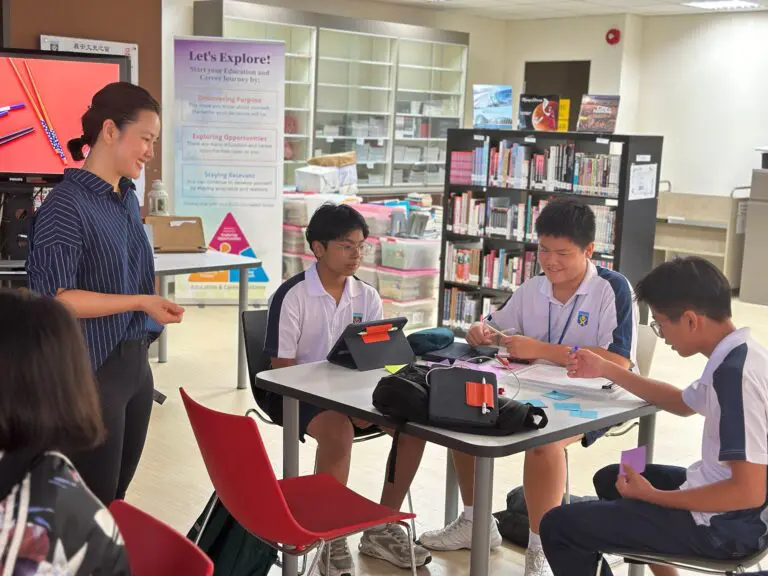
After ideating and refining their concepts, students presented their ideas to the group. This was an opportunity to showcase their designs and receive feedback from Kimming Yap, co-founder of Creativeans and an expert in branding and design.
Kimming provided valuable insights into the desirability, feasibility, and viability of each idea, helping students refine their concepts and gain a deeper understanding of the design process. His feedback helped students understand the critical importance of aligning design with both user needs and business objectives.
Prototyping and Testing: Taking the Designs Further
Due to time constraints, the workshop focused on the first three stages of Design Thinking. The final stage, Prototyping and Testing, was conducted the following day with Hovarlay’s hands-on AR workshop. This session allowed students to bring their designs to life by integrating augmented reality into the packaging. Hovarlay’s expertise in phygital (physical + digital) design added an exciting layer to the student’s work, allowing them to see how packaging could engage consumers in innovative ways.
Implications for International Schools in Jakarta: A Model for Creative Education
This workshop in Bandung serves as a case study for how international schools in Jakarta, and beyond, can incorporate Design Thinking into their curricula. The success of the session demonstrates that Design Thinking is not just for design students but can be a valuable tool for students in business and creative disciplines. By applying this methodology, students learn to approach problems with empathy and iterative process of Design Thinking for success in today’s fast-evolving business world.
C-Academy’s Jakarta Capability: Bringing Design Thinking to the Next Level
C-Academy is now offering EDIT Design Thinking workshops in Jakarta, extending our reach to international schools and universities across the city. Our programmes are tailored to both Bahasa Indonesia and English speakers, ensuring that students from diverse backgrounds can benefit from this structured approach to creative problem-solving. With Jakarta’s growing emphasis on design and innovation, our workshops are designed to prepare the next generation of business leaders and creative thinkers for the challenges of tomorrow.
Conclusion: Empowering Students to Shape the Future
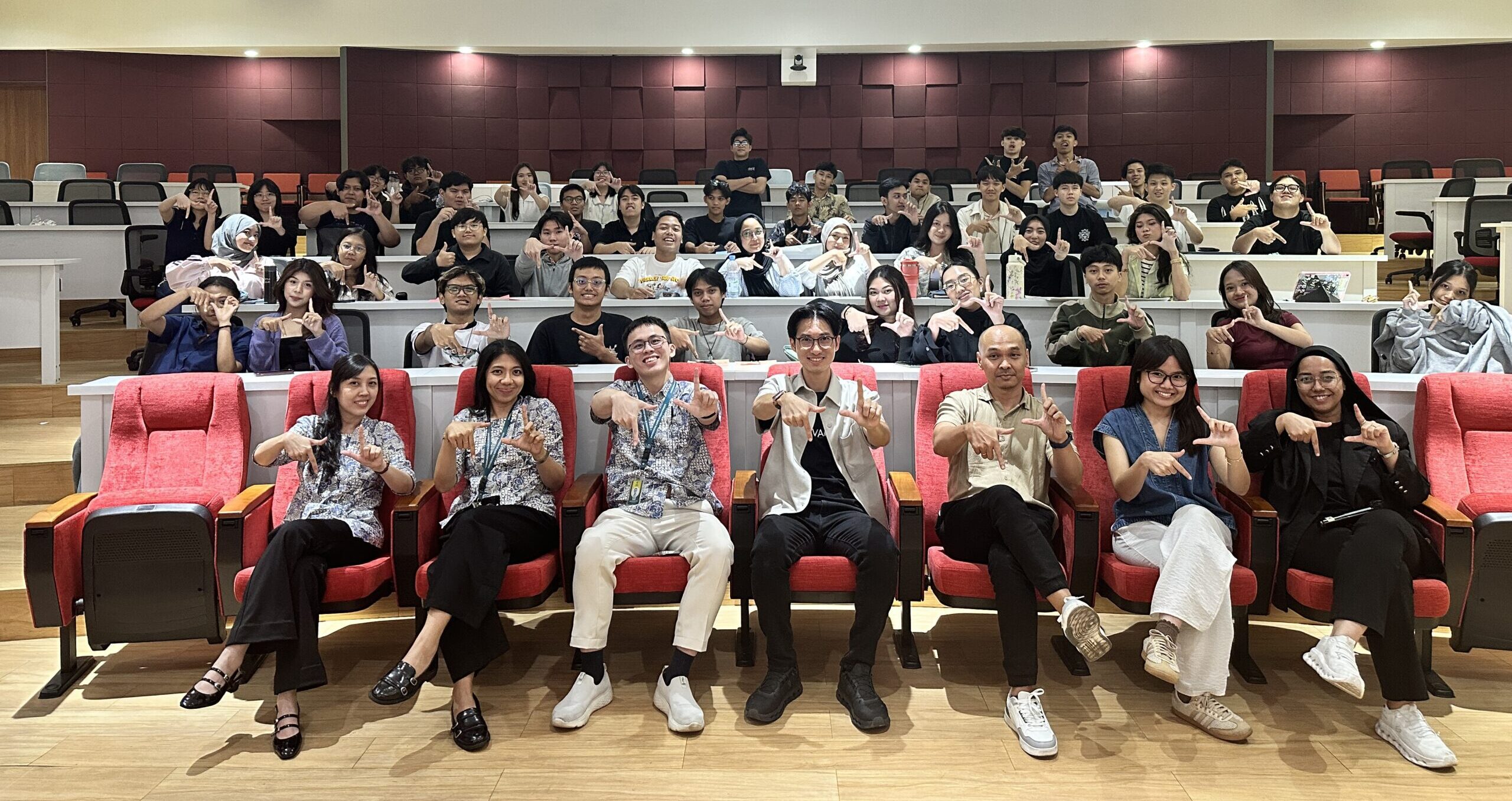
By introducing 50 students at UNPAR to the transformative power of Design Thinking, C-Academy have made a lasting impact on the creative business landscape in Indonesia. The workshop was not just a lesson in packaging design; it was an introduction to a new way of thinking, one that encourages empathy, innovation, and user-centered design.
As C-Academy continues to expand its reach in Jakarta and beyond, we are excited to see how Design Thinking will shape the future of education and business in Indonesia.
Learn More About Our Jakarta Programmes
Learn More