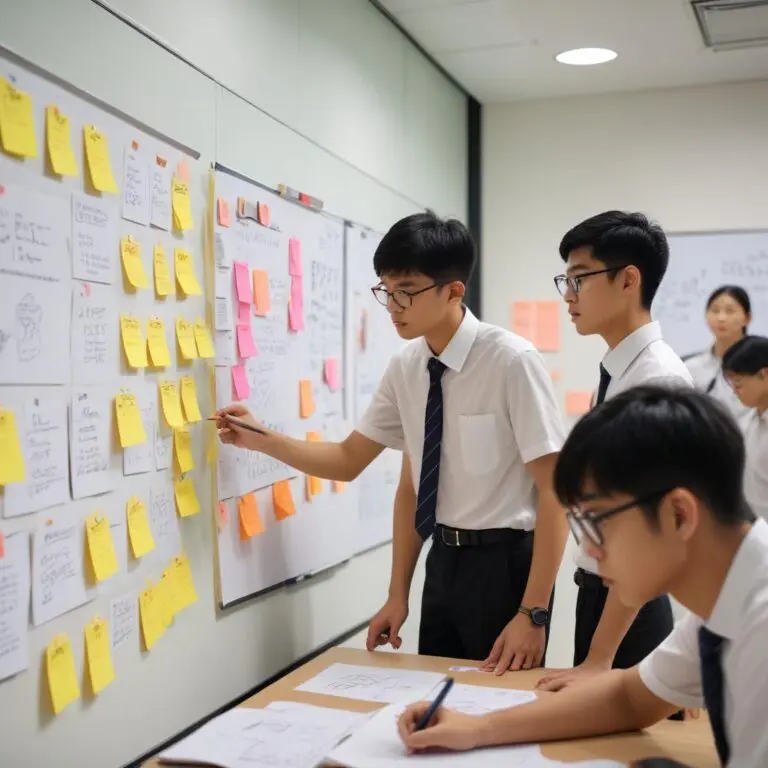





Many people still assume that design thinking is mainly for designers, product teams, or innovation departments. In practice, some of the strongest outcomes from design thinking courses Singapore happen when the participants are non-designers — educators, school leaders, HR teams, operations staff, managers, and cross-functional teams.
For leaders, the real opportunity is not simply to teach a new method. It is to help teams build confidence in creative thinking, improve problem-solving skills, and work together more effectively when facing complex challenges. That is why interest in design thinking courses Singapore continues to grow across schools and organisations.
The key, however, is choosing the right format and facilitation approach. Non-designers do not need jargon-heavy theory. They need practical, structured learning that helps them think clearly, collaborate well, and apply what they learn in real situations.
1. Why Design Thinking Matters for Non-Designers
Non-designers solve problems every day. Teachers shape learning experiences, school leaders make decisions across stakeholders, and business teams improve services, operations, and customer touchpoints. In all of these contexts, the challenge is often not a lack of ideas, but a lack of structure.
This is where design thinking courses Singapore become useful. A strong programme helps non-designers approach challenges through a clear design thinking process, supported by practical design thinking tools and guided reflection. Instead of jumping straight to solutions, participants learn to understand the problem, explore options, and test ideas before committing resources.
For leaders, this matters because it improves day-to-day decision-making. Teams become more capable of creative problem solving, more comfortable discussing assumptions, and more focused on building human-centric solutions based on real needs rather than internal guesswork.
2. What Often Holds Non-Design Teams Back
When leaders introduce a design thinking course to non-design teams, the first challenge is usually mindset. Many participants quietly assume they are “not creative”, or that design thinking will be too abstract for their work.
These concerns are common and valid. They usually come from previous experiences where “innovation” was discussed in broad terms but never translated into practical skills or action. Without the right facilitation, participants may leave inspired for a day but unsure how to apply anything.
A good programme addresses this by making the learning feel relevant and usable. Rather than presenting design thinking as a specialist discipline, it should be framed as a repeatable way to improve collaboration, build empathy-driven insights, and make better decisions. This helps non-designers see design thinking as a working method, not a creative performance.
It also helps to recognise that many teams are already doing parts of design thinking informally. The value of training is in giving them a shared language, a stronger design thinking mindset, and a more consistent design thinking practice.
3. What Good Design Thinking Courses for Non-Designers Should Include
Not all design thinking courses Singapore are equally suitable for non-designers. Some are more theoretical, while others are designed to be immediately applicable for schools and organisations.
A good programme should balance clarity, structure, and hands-on participation. It should introduce design thinking fundamentals and design thinking principles, but also move quickly into practice so participants can build confidence through doing.
What to look for in the learning design
- A simple, memorable design thinking process that non-designers can reuse
- Clear examples linked to school or workplace challenges
- Strong interactive learning instead of lecture-heavy delivery
- Practical use of design thinking tools (not just slides and definitions)
- Opportunities for creative collaboration across different roles
- Activities that build problem-solving skills and creative thinking
- Hands-on exercises such as rapid prototyping and iterative testing
This combination is important because non-designers often learn best through structured action. When the course includes realistic challenges and guided facilitation, participants are more likely to leave with real practical skills instead of only concepts.
A strong programme should also support a fuller design thinking journey, even if the training is short. Participants should understand not only ideation, but also empathy, framing, testing, and learning from feedback.
4. Design Thinking Courses, Workshops, and Certification: Which Format Works Best for Non-Designers?
When leaders search for design thinking courses Singapore, they are often comparing different formats without realising how much this affects outcomes.
4.1 Public design thinking course
A public design thinking course can be a good starting point when you want to expose a small number of people to the method. It is often useful for individuals or small teams who need a foundation in design thinking fundamentals before a larger rollout.
4.2 In-house design thinking workshops
For schools and organisations, customised design thinking workshops are often more effective because they can be tailored to real challenges. In-house workshops make it easier to build shared understanding across a team, which is especially important for non-designers who need context to engage fully.
This format is also better for building:
- team confidence
- shared language
- stronger design thinking culture
- immediate application to real innovation opportunities
4.3 Programmes with design thinking certification
Some leaders specifically look for design thinking certification because it seems easier to justify internally. Certification can be helpful, but it should not be the only criterion.
For non-design teams, the more important question is whether participants can apply what they learned after the session. A certificate is useful, but the real value comes from stronger design thinking practice, better collaboration, and a clearer approach to creative problem solving.
In many cases, the best option is a programme that combines practical learning with a structured pathway for application, whether or not design thinking certification is included.
5. A Practical Learning Path for School and Business Leaders
Leaders usually get better results when they treat design thinking as a capability-building journey rather than a one-off event. This does not mean every team needs a long programme, but it does mean the learning should be staged.
5.1 Start with a shared foundation
Begin by introducing design thinking fundamentals in a way that feels accessible to non-designers. The goal is to build confidence, not overwhelm participants with theory.
This stage should help teams understand:
- what the design thinking process is
- how it supports better decision-making
- why user understanding matters
- how design thinking principles apply in school and business settings
5.2 Move quickly into guided application
Once the basics are clear, participants should use the method on a realistic challenge. This is where interactive learning becomes essential. Through facilitated exercises, teams can practise problem framing, ideation, and testing with support.
This stage is often where non-designers begin to enjoy the process because they can see how creative thinking and structure work together.
5.3 Build confidence through small experiments
Leaders do not need teams to launch perfect solutions immediately. It is often more effective to encourage small tests using rapid prototyping and iterative testing. This helps teams build momentum and reduces fear of getting it wrong.
In schools, this might mean testing a lesson or activity improvement. In organisations, it could mean trying a new process, communication flow, or service touchpoint before scaling.
5.4 Support internal champions
If the goal is longer-term adoption, identify people who can continue the method internally. These may be educators, HODs, project leads, managers, or team facilitators. Over time, this helps strengthen design leadership and creates the conditions for a healthier design thinking culture.
6. How Design Thinking Helps Non-Design Teams in Real Work
One reason leaders invest in design thinking courses Singapore is that the benefits extend beyond brainstorming. When done well, design thinking improves how teams work together and how they make decisions under uncertainty.
For schools, the method can strengthen classroom and project-based learning by helping educators and students frame challenges more clearly, test ideas, and reflect on outcomes. It also supports more thoughtful discussions and better collaboration across different abilities and perspectives.
For organisations, design thinking helps teams move beyond internal assumptions and focus on real user needs. This is particularly valuable in areas such as customer experience design, service improvement, and cross-functional planning. Teams become better at identifying innovation opportunities, shaping human-centric solutions, and turning ideas into more focused innovation projects.
In more mature organisations, design thinking can also support strategic innovation by improving how leaders explore uncertainty, evaluate possibilities, and involve teams in solution development. In that sense, design thinking is not only a creativity tool; it becomes part of how the organisation learns.
7. How Leaders Can Choose the Right Provider for Non-Designers
Choosing among design thinking courses Singapore is not only about brand name or course title. The best provider for non-designers is usually the one that can make the learning practical, relevant, and transferable.
A helpful way to evaluate providers is to look at both content and facilitation quality.
What leaders should assess
- Can the provider teach non-designers without overcomplicating the content?
- Does the programme include real interactive learning and not only lecture delivery?
- Are participants guided through a complete design thinking journey, not just ideation?
- Will they build reusable practical skills and confidence in design thinking practice?
- Does the format support creative collaboration across mixed teams?
- Can the provider adapt the programme for schools, managers, or leadership groups?
- If needed, is there a pathway for deeper development, such as a design thinking bootcamp or a more executive education-style format?
These questions help leaders avoid choosing programmes that look good on paper but are too abstract for day-to-day use.
8. Final Thoughts
For schools and organisations, design thinking courses Singapore are not only for designers. They are a practical way to help non-design teams think more clearly, collaborate more effectively, and solve real problems with greater confidence.
The most useful programmes are those that combine structure with participation: they teach design thinking fundamentals and design thinking principles, while also giving teams a chance to practise with real challenges through interactive learning, rapid prototyping, and iterative testing. Over time, this builds stronger problem-solving skills, a healthier design thinking mindset, and more consistent design thinking practice across teams.
If you are exploring design thinking courses Singapore for educators, school leaders, or non-design teams in your organisation, C-Academy can help you identify a training approach that is practical, engaging, and aligned to your goals.