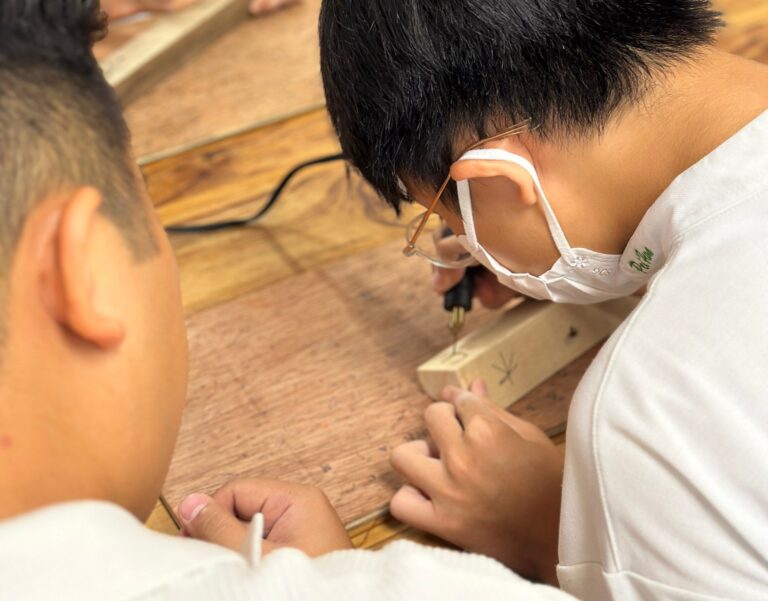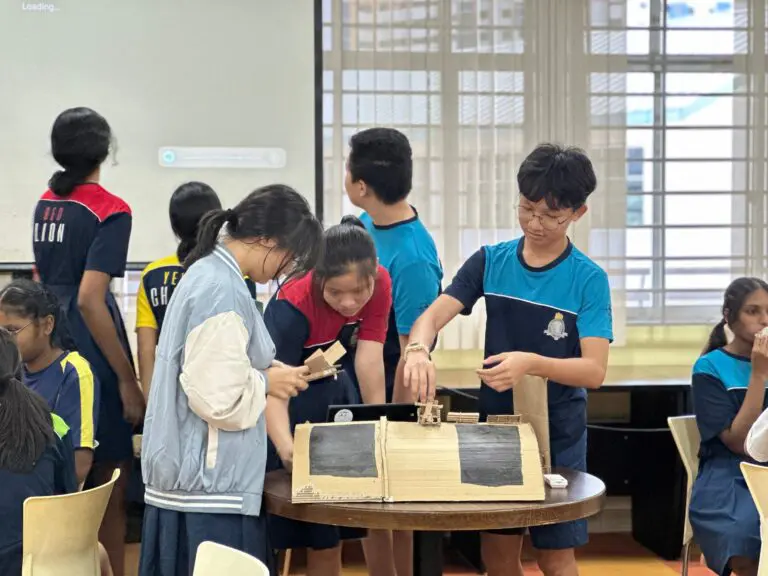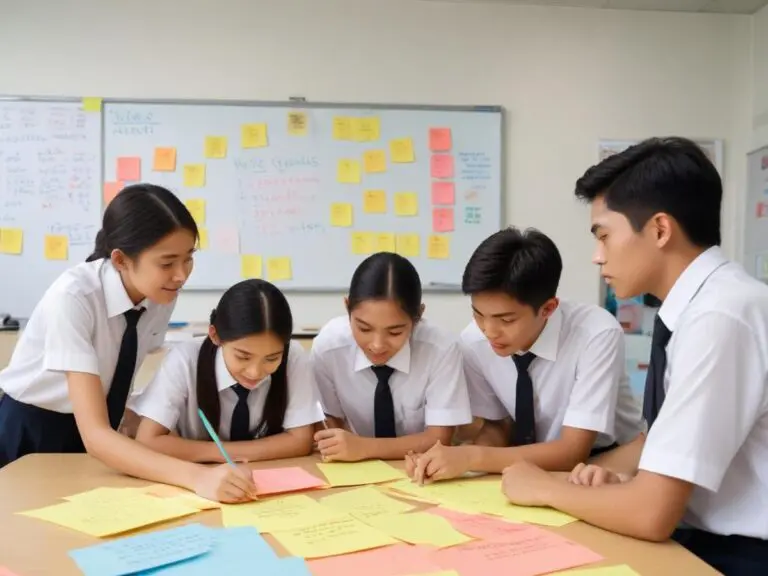





An Eco Stewardship Programme can be a highly effective way for secondary schools in Singapore to turn sustainability into student-led action, and Pei Hwa Secondary School’s Design Thinking workshop shows how clear design goals, real-world learning journeys, and structured prototyping can strengthen both environmental responsibility and student competencies.
In Pei Hwa Secondary School’s programme, students used the Design Thinking process to identify and address real-world environmental issues within the school by empathising with stakeholders, defining problems, ideating solutions, prototyping, and testing—so sustainability was not only taught, but practised. The school’s design goals focused on responsibility, cleanliness, and sustainability across school areas—specifically improving waste management (including recycling and food waste reduction), hygiene in toilets and the canteen, and building habits through reminders and duty systems, so students take ownership of their environment.
1. What Is An Eco Stewardship Programme In A Secondary School Context?
An Eco Stewardship Programme is a school-based sustainability initiative that develops students as active caretakers of their environment by giving them responsibility, real problems to solve, and a structured pathway to create solutions that can be implemented.
In practice, that means the programme is not just about awareness talks or posters. It is about shaping behaviours and systems—such as recycling habits, food waste reduction, and hygiene routines—so students contribute to a cleaner and more sustainable school community.
1.1 What Makes An Eco Stewardship Programme “Real” Instead Of Symbolic?
A strong Eco Stewardship Programme becomes “real” when students work on issues that are visible in daily school life and when the school sets specific improvement areas to guide student-led innovation.
For Pei Hwa Secondary School, the goals were explicit: better waste management (including recycling and food waste reduction), improved hygiene in toilets and the canteen, and a culture of cleanliness supported through reminders and duty systems. That clarity matters because it moves sustainability from values to actions.
2. Why Use Design Thinking For An Eco Stewardship Programme?
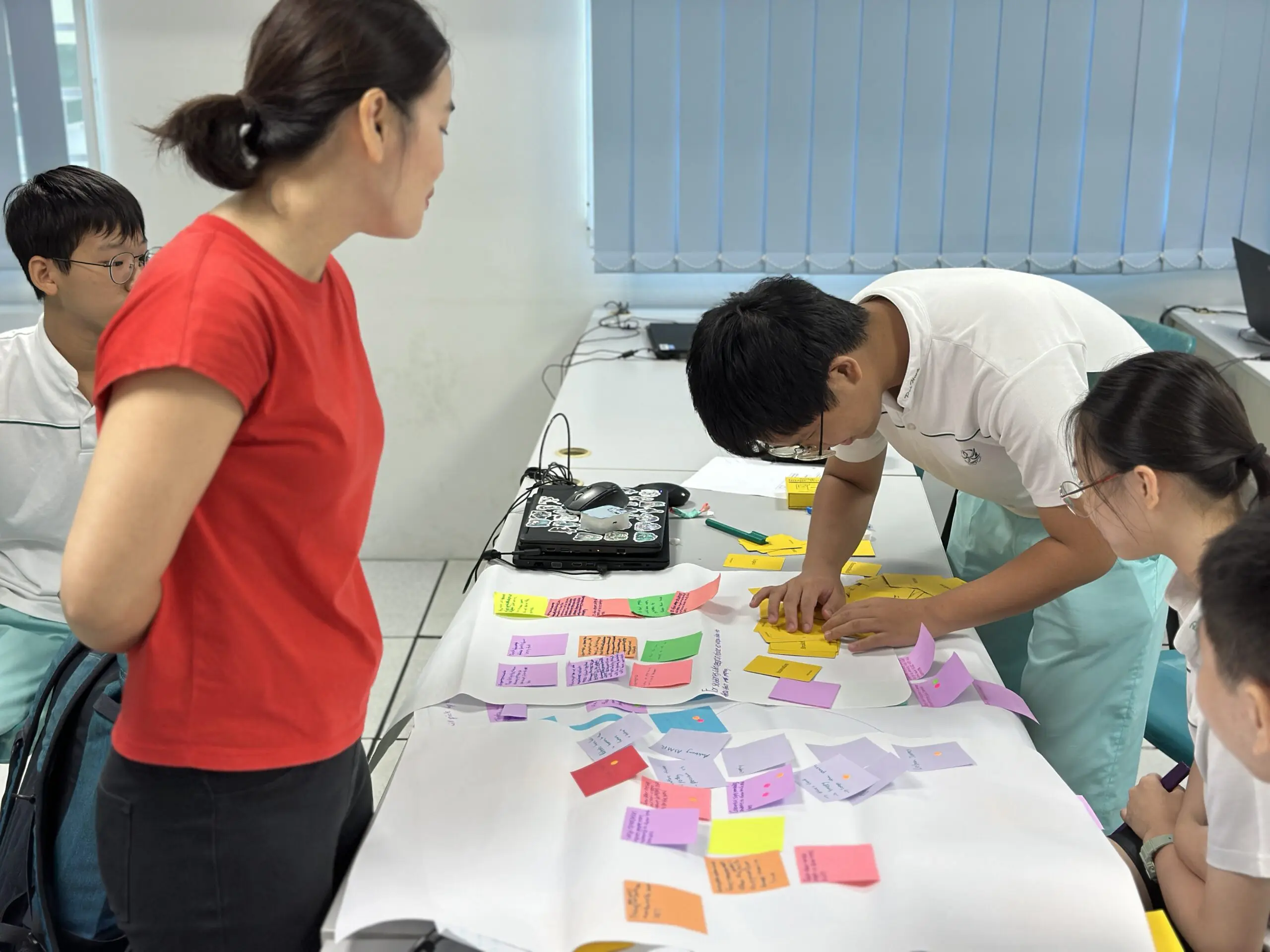
Design Thinking is well-suited to an Eco Stewardship Programme because it trains students to solve sustainability problems with empathy, evidence, and iteration—rather than jumping straight into “nice ideas” that do not stick.
Pei Hwa Secondary School’s programme engaged students in the Design Thinking process specifically to identify and address real-world environmental issues within the school, using empathising, defining, ideating, prototyping, and testing as the learning structure.
2.1 What Does The Design Thinking Process Look Like In Sustainability Work?
In sustainability contexts, Design Thinking helps students move through four practical shifts:
- From assumptions → to stakeholder insight (empathy)
- From broad complaints → to focused problem definitions
- From single solutions → to multiple testable options
- From “one-off campaigns” → to iterated improvements that fit how people actually behave
This is the difference between “telling people not to litter” and redesigning the environment, prompts, and routines so littering becomes less likely in the first place.
3. Pei Hwa Secondary School Eco Stewardship Programme: What Was The Focus?
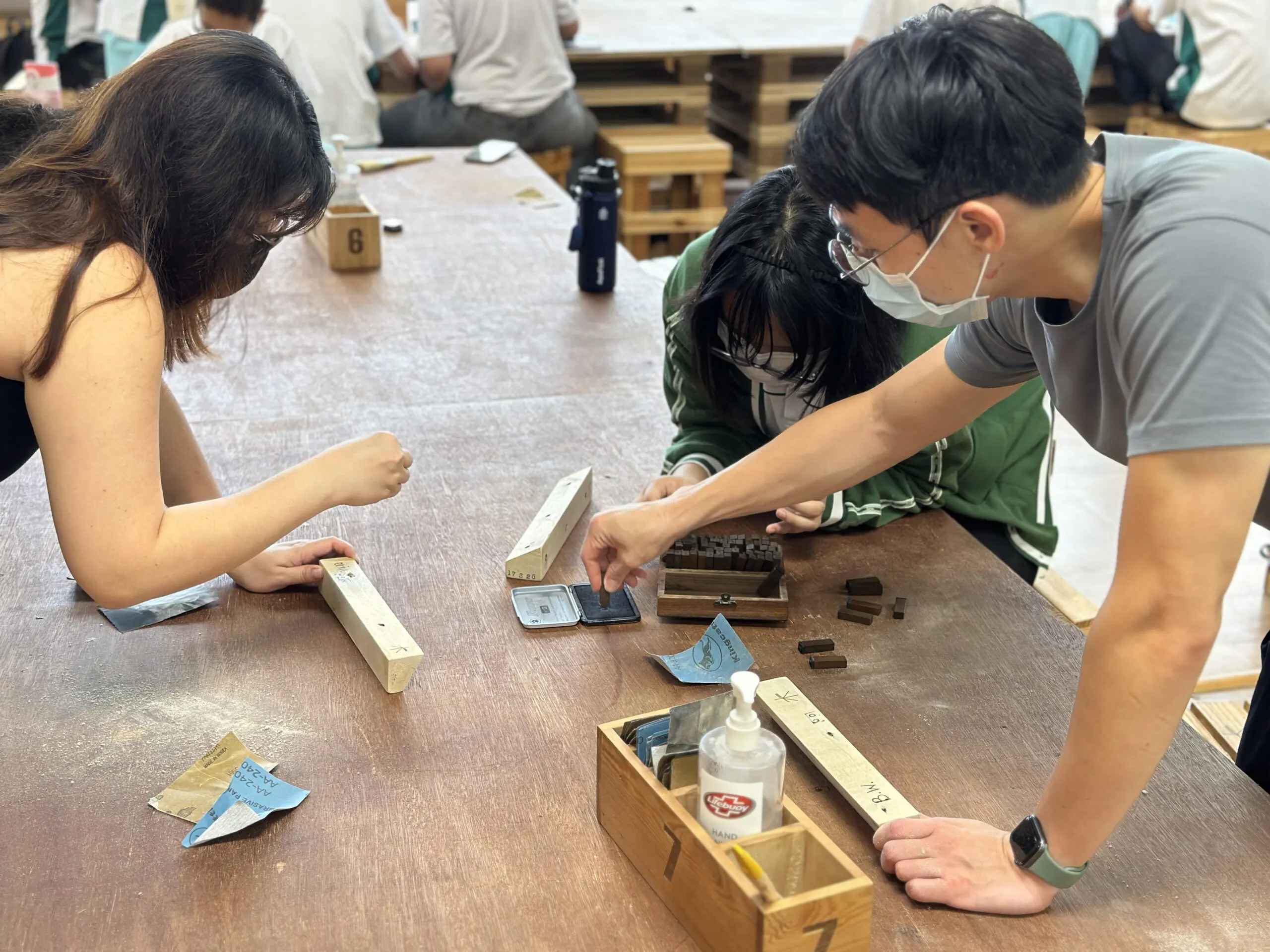
Pei Hwa Secondary School’s Eco Stewardship Programme focused on sustainability in the school environment by directing students towards responsibility, cleanliness, and practical improvements across school areas.
The school’s stated design goals included improving waste management through recycling and food waste reduction, promoting hygiene in toilets and the canteen, and fostering a culture of cleanliness through reminders and duty systems—so students take ownership and contribute to a more sustainable school community.
3.1 What Real-World Sustainability Context Did Students Experience?
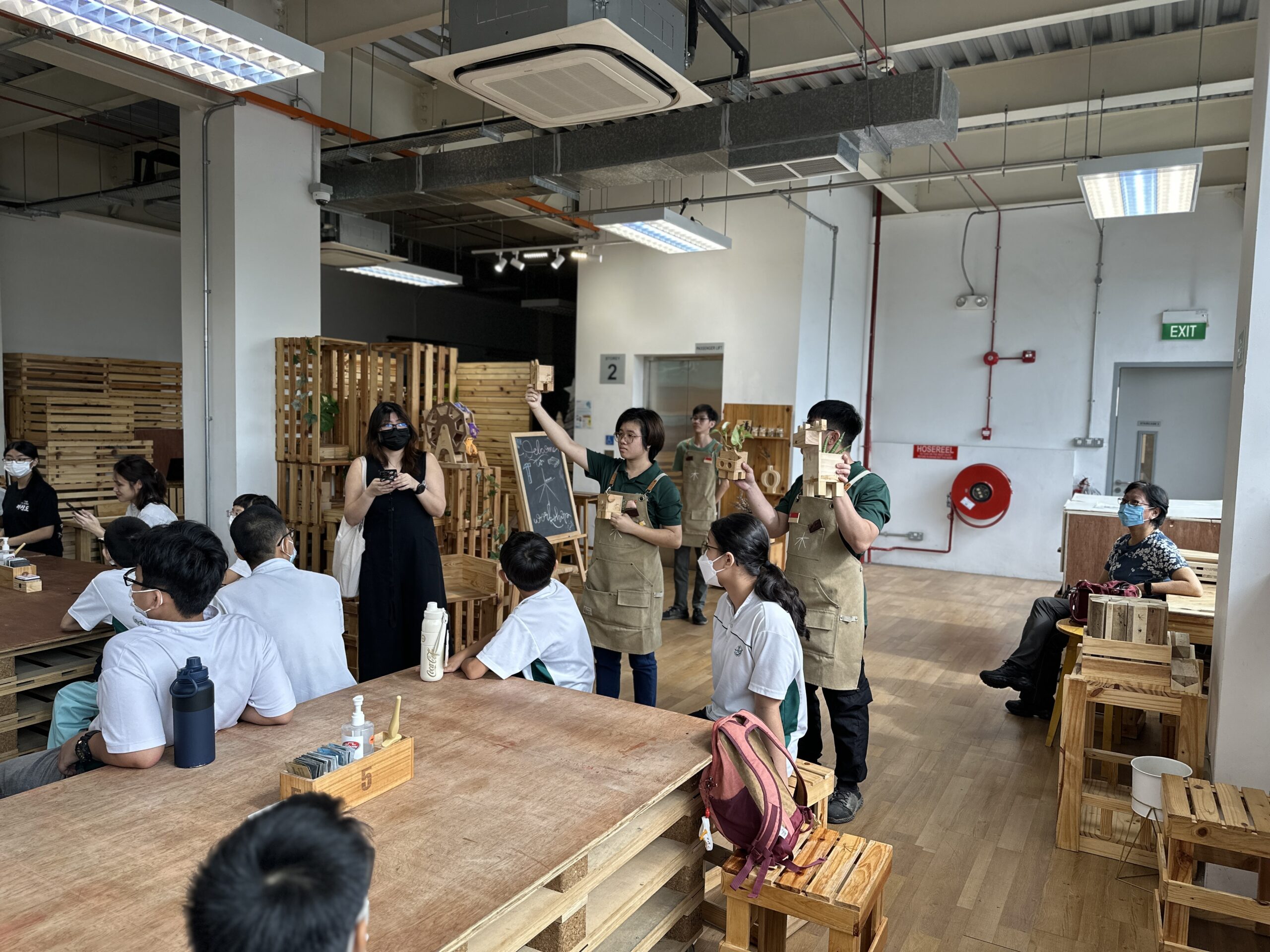
A key highlight of the programme was a learning journey to CREUSE, a company described as exemplifying sustainability through the innovative use of recycled pellet wood, designed to deepen students’ understanding and inspire them to apply sustainable practices back in their school environment.
This matters in an Eco Stewardship Programme because “sustainability” can feel abstract to teenagers until they see real material choices, real processes, and real outcomes.
4. What Did Students Actually Do During The Programme?
Students worked through the Design Thinking stages to address real-world environmental issues in school, developing both creative and critical thinking while producing solutions through prototyping and testing.
From the school’s perspective, students went through empathising with stakeholders, defining problems, ideating solutions, prototyping, and testing—so the programme built the habits needed to tackle environmental issues rather than only learning facts about them.
4.1 How Many Participants Were Involved?
The programme recorded direct participation of 56 students and 8 educators, for a total of 64 participants.
That scale is important for Eco Stewardship Programme design because environmental change is social—habits spread faster when participation is visible across classes and teacher teams.
5. What Were The Outcomes Of The Eco Stewardship Programme?
The Eco Stewardship Programme outcomes at Pei Hwa Secondary School included stronger teacher confidence to apply Design Thinking in education, and measurable improvements in student mindsets such as empathy, experimentation, collaboration, and creative confidence.
The school reported that teachers involved in the Future Learning Programme (FLP), anchored on Design Thinking, gained deeper understanding and confidence, becoming better equipped to integrate aspects of Design Thinking into subject curriculum lessons. The school also observed that students developed 21st-century competencies—inventive thinking, collaboration, and confidence to take initiative in solving real-world issues—supporting a stronger spirit of innovation and problem-solving.
5.1 What Changed For Students (Measured Pre- And Post-Survey)?
Students showed notable improvements across several Design Thinking mindset indicators, based on pre- and post-survey results:
- Empathy increased from 59% to 78%
- Experimentation increased from 55% to 68%
- Collaboration (working with others) increased from 44% to 68%
- Creative confidence (solving difficult problems without clear solutions) increased from 44% to 68%
- Understanding of what Design Thinking is increased from 48% to 78%
In an Eco Stewardship Programme, these shifts are not “soft”—they directly affect whether students persist with sustainability initiatives when the first version fails or when peers are not immediately supportive.
5.2 What Changed For Educators (Measured Pre- And Post-Survey)?
Educators also showed strong gains, especially in understanding and confidence:
- Understanding what Design Thinking is increased from 33% to 100%
- Collaboration indicators improved (e.g., working with others to solve challenges: 66% to 100%)
- Educators agreed more strongly on the relevance of Design Thinking for interdisciplinary learning (66% to 100%)
This is a practical win for any Eco Stewardship Programme because teacher confidence affects continuity—whether the work becomes a one-off workshop or a repeatable school capability.
6. Why This Case Study Helps You Design A Strong Eco Stewardship Programme
This Pei Hwa Secondary School case study shows that a strong Eco Stewardship Programme works best when it has (1) clear design goals tied to daily school realities, (2) a structured methodology for student-led problem-solving, and (3) evidence of outcomes beyond “participation”.
Pei Hwa’s design goals were concrete (waste, hygiene, canteen/toilets, reminders and duty systems). The programme structure used Design Thinking end-to-end (empathise → define → ideate → prototype → test). And outcomes were captured both qualitatively (school feedback on competencies) and quantitatively (pre/post survey shifts such as empathy 59% → 78%).
6.1 What Did The School Suggest As A Next Step?
The school noted the programme’s potential for interschool collaboration, grouping schools with similar themes (such as environment, heritage, inclusivity) and culminating in a joint sharing session so students and teachers can showcase solutions, reflect on learning journeys, and build a community of practice.
For an Eco Stewardship Programme, this is a powerful scaling idea: sustainability becomes a shared movement rather than a single-campus initiative.
7. How To Start An Eco Stewardship Programme Like This In Your School
A practical way to start an Eco Stewardship Programme is to begin with one defined sustainability theme (e.g., waste and recycling, canteen hygiene, or food waste reduction), then run a Design Thinking cycle that ends with student prototypes and testable improvements.
Use Pei Hwa’s goal framing as a template: focus on specific areas (toilets, canteen, waste systems), build routines (reminders, duty systems), and aim for student ownership—not just compliance.
If you want a programme that can be implemented as a coherent learning journey (rather than a talk or activity), the Pei Hwa example shows the value of structured facilitation, real-world exposure (like the CREUSE learning journey), and outcome measurement.
Conclusion: Eco Stewardship Programmes Work Best When Students Build The Solutions
An Eco Stewardship Programme becomes meaningful when students do more than learn about sustainability—they practise sustainability by solving real problems in their own school environment through a structured, evidence-led process.
Pei Hwa Secondary School’s Design Thinking programme demonstrates this approach clearly: it targeted practical school-based sustainability goals (waste, hygiene, routines, ownership), used a full Design Thinking cycle, included real-world sustainability exposure, and produced measurable mindset gains for both students and educators.