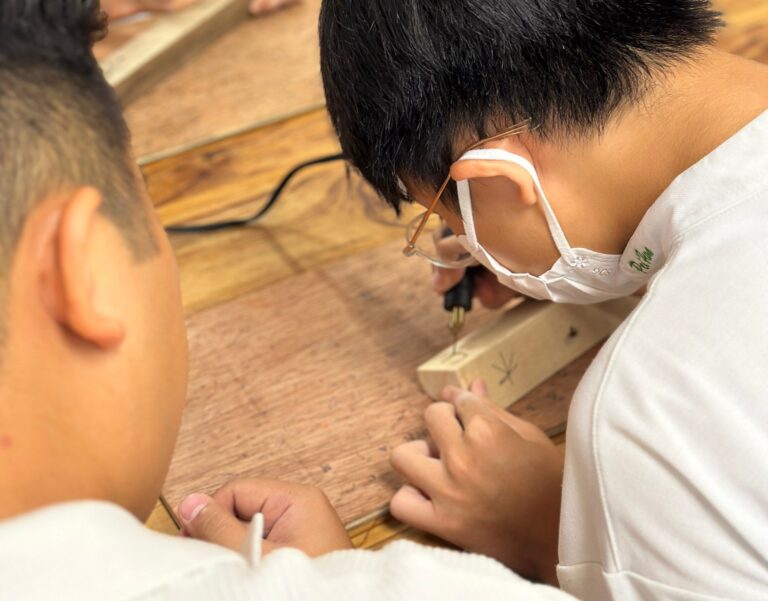





Singapore secondary school students often arrive at a design thinking workshop with a familiar instinct: plan thoroughly, then present. Rapid prototyping in schools disrupts that instinct in the best possible way — it asks students to build something rough, put it in front of a real user, and learn from what breaks. This rapid prototyping design thinking approach to design prototyping draws from the same innovation process used in design sprints, agile development, and lean startup methodology — adapted here for the secondary school context. Prototyping in design thinking is not a final step but an early one: a means of making design concepts tangible before committing to them. The result is a shift in how students understand the design thinking process and creative problem solving that no amount of classroom discussion can replicate. It is hands-on learning at its most direct: a prototyping process that builds design thinking skills, critical thinking skills, and student engagement simultaneously.
1. Why Prototyping Early Changes How Students Think About Solutions
Most students are conditioned to treat “the answer” as something they arrive at after careful deliberation. Introduce rapid prototyping early in a design thinking workshop and that assumption collapses — usefully.
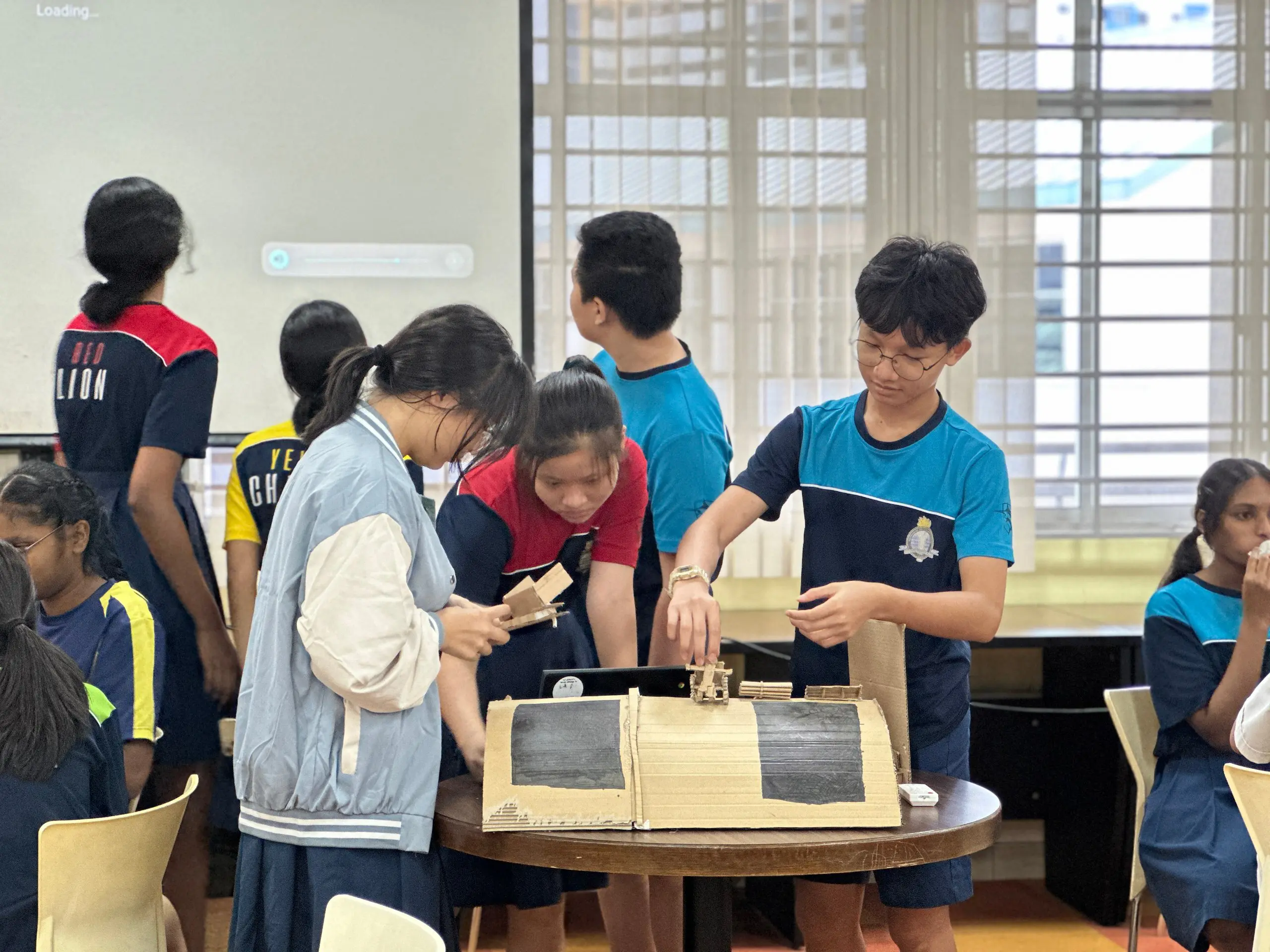
When a student team at Sembawang Secondary School built their first prototype within Session 3 of C-Academy’s design thinking workshop, the physical model immediately revealed a flaw in their core assumption. No amount of planning had surfaced it — but a rough cardboard mock-up in front of a real user did.
This is the pedagogical value of early prototyping within a design thinking framework: it externalises thinking. Once an idea exists as a physical or digital artefact, it can be critiqued, questioned, and improved. Students who prototype early stop defending ideas and start interrogating them — a shift in mindset rooted in learning by doing and a bias towards action that underpins adaptive thinking across all subjects.
The shift also addresses a common secondary school challenge: the tendency to over-invest emotionally in a single idea. Rapid prototyping, by definition, produces something disposable. When students understand that the prototype is meant to be discarded or revised, they hold their ideas more lightly and iterate more willingly.
2. What Design Prototyping Actually Looks Like in a Secondary School Workshop
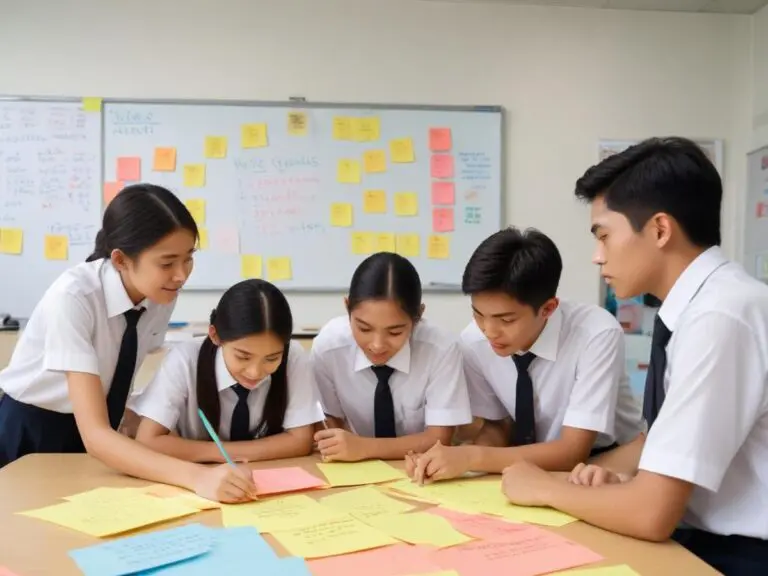
Rapid prototyping in a secondary school context is not about polished models or expensive materials. In C-Academy’s workshops, Session 3 (Ideation, Prototyping, and Testing) typically runs within a half-day to full-day block. Students work in groups of four to five — a group size that C-Academy’s facilitators have found produces stronger outcomes than larger groups of seven or eight, because accountability per person is higher and quieter students are less easily sidelined.
Materials are deliberately low-fidelity: cardboard, sticky notes, string, markers, paper cups, rubber bands, and tape. These simple prototyping tools are chosen intentionally. A tangible representation — even one made of cardboard — is more useful than a perfect idea that exists only in someone’s head. For older or more advanced cohorts, digital prototypes and interactive prototypes built in tools like Canva or Google Slides can also be used, provided the focus remains on user interactions and user experience design rather than visual polish. Equally important is the user testing process: students gather user feedback through structured peer review, not just informal comments. Low-fidelity materials reduce the emotional investment students place in their prototype’s appearance, making it easier for them to accept critical feedback from testers and revise quickly.
What students actually build varies by workshop theme. In a Reimagining Learning Spaces theme, students build 3D scaled mockups of their reimagined learning spaces using cardboard and low-fidelity materials. One group recreated their full reimagined classroom within the space of a cardboard box packaging; another built a life-size improved table and chair. In a Sustainability theme, some students made a cardboard prototype of an interactive recycling unit, testing it with peers to see whether the sorting interface was intuitive.
This iterative design cycle — build, test, revise — mirrors the engineering design process and maker education principles used in STEM education contexts. The approach also reflects professional product design and product development practices, where rapid prototype testing and design iteration are standard before committing to a minimum viable product. The test phase is equally practical. Student teams present their prototype to a small group of classmates acting as real users. Facilitators prompt testers with structured questions — “What is confusing?” “What would you change first?” “What works well?” — rather than open-ended feedback, which secondary school students often find difficult to give constructively.
3. How the EDIT Design Thinking® Methodology Sequences Prototyping and Testing
C-Academy’s proprietary EDIT Design Thinking® methodology, a structured design thinking methodology and design thinking framework built for student innovation, — Empathise, Define, Ideate, Test — is specifically designed so that the Test phase is not an endpoint but a feedback loop. In a standard four-session Design Thinking Workshop for secondary schools, prototyping and testing sit in Session 3, but the findings feed directly back into Session 4’s Final Presentation, and often back into the Define or Ideate phases if time permits.
Empathise
Students conduct real-world observation and empathy mapping during the Learning Journey (Session 1) and the Empathise component of Session 2. This grounds later prototypes in genuine user insight rather than assumption.
Define
How Might We statements, developed in Session 2’s define phase, act as the brief for the prototype. This structured prototype design brief surfaces design assumptions early and ensures that user research and user experience considerations are embedded from the outset — not added as an afterthought. A well-scoped HMW statement prevents teams from building solutions that are too broad to test meaningfully.
Ideate
During the ideate phase, using C-Academy’s Random Cards and Idea Dice ideation tools in Session 3, students generate multiple solution directions — a project-based learning approach that ensures collaborative learning and broad creative exploration before selecting one to prototype. Facilitators observe that teams who skip ideation and jump straight to prototyping — without going through rapid prototyping techniques such as sketching, wireframing, a basic wireframe, paper prototypes, or scenario walkthrough — typically build the first idea that came to mind — often the most obvious one — rather than the most promising.
Test
The test cycle within Session 3 is structured as two rounds: a quick concept test (5 minutes per team, feedback captured on sticky notes) followed by a refined prototype test (10 minutes, structured feedback form). The two-round structure is important: it gives students experience of prototype testing and design iteration within a single session. This mirrors professional user testing cycles, where user interface feedback, user experience insights, and concept validation are gathered iteratively rather than treating testing as a one-time event. It is also central to C-Academy’s design methodology: the design thinking methodology is only complete when tested ideas feed back into revised design solutions.
4. What Students Learn From Testing That They Cannot Learn From Planning
Kimming Yap, Co-Founder and Managing Director of C-Academy, often frames this for schools: “You can plan for six weeks and still not know if your idea works. You can prototype in thirty minutes and find out.”
Testing teaches students three things about design thinking skills and problem-solving skills that planning cannot:
- Assumption exposure. Every prototype contains hidden assumptions about users. Testing surfaces them explicitly and quickly.
- Failure literacy. In a test cycle, a prototype that fails is not a disappointment — it is data. Students who experience this repeatedly develop a healthier relationship with failure, which is directly relevant to MOE’s emphasis on resilience and adaptive thinking.
- Communication under pressure. Presenting a prototype to peers and receiving live feedback requires students to articulate their intent clearly and respond to challenge without defensiveness. These are applied communication and collaboration skills — two of MOE’s 21st Century Competencies.
C-Academy facilitators have observed that students who initially struggle to give constructive peer feedback become noticeably more specific and useful in the second test round — not because they were taught feedback theory, but because they experienced being the recipient of vague feedback and understood its limitations firsthand.
5. Common Mistakes Student Teams Make During Prototyping (and How Facilitators Address Them)
Across deliveries at schools including Ngee Ann Secondary, Hougang Secondary, and Northbrooks Secondary, C-Academy’s facilitators have identified four recurring pitfalls:
- Over-building. Teams spend so long perfecting the prototype’s appearance that they run out of time to test. Facilitators address this with a hard time constraint — typically 20 to 25 minutes for the first prototype build — and by reminding students that a working sticky note sketch counts as a prototype if it communicates the idea.
- Testing within the team. Teams test their prototype only among themselves, which produces agreement rather than insight. Facilitators require each team to test with at least two people from outside their group.
- Ignoring negative feedback. Students sometimes discount critical feedback as “they just don’t understand it.” Facilitators prompt reflection: “If three testers said the same thing, what does that tell you about the design — not the testers?”
- Conflating prototype with final solution. Some students present a prototype in the Final Presentation (Session 4) as if it is the finished product. Facilitators clarify the distinction: the prototype demonstrates the concept; the pitch communicates the value proposition and the journey of learning.
6. How Rapid Prototyping Supports MOE 21st Century Competencies
MOE’s 21CC framework explicitly includes Adaptive and Inventive Thinking as a core competency — defined as the ability to generate new ideas and adapt solutions in response to changing circumstances. Rapid prototyping is one of the most direct classroom-applicable methods for developing this competency, because it requires students to act on incomplete information, receive contradictory feedback, and adapt their solution in real time.
The collaboration competency is equally activated. Because each team member takes ownership of a prototype component — structure, user journey, visual communication — design teams must coordinate, negotiate, and revise together under time pressure — making real design decisions and arriving at design solutions collaboratively. The test phase adds a communication layer, requiring students to present and defend their design choices to an audience that did not share their process.
For HODs and Heads of Department looking to evidence 21CC outcomes against MOE’s Applied Learning Programme goals, rapid prototyping produces visible, documentable outputs — empathy maps, prototype iterations, feedback sheets, and pitch presentations — that can be used as assessment artefacts.
7. Bringing Rapid Prototyping Into Your School’s Design Thinking Programme
Rapid prototyping works best when it is embedded within a structured design thinking programme rather than delivered as a standalone activity. Innovation in education happens most durably when students experience the full cycle of problem-framing, ideation, and prototype testing — not just a single maker session. A single prototyping session without the prior Empathise and Define phases produces solutions that are creative but disconnected from real user needs — a common outcome when schools run one-off “maker” activities without the full methodology.
C-Academy’s four-session Design Thinking Workshop is sequenced so that every stage builds towards a prototype that students can meaningfully test and present. Schools that have run the full programme — including the Learning Journey site visit in Session 1 — consistently report stronger student engagement in the prototyping phase, because students are solving a problem they have personally observed rather than one assigned to them.
If your school is considering how to build rapid prototyping into an existing ALP framework or design-based enrichment programme, C-Academy works with schools to align the workshop structure with their specific goals, student profile, and available time blocks.