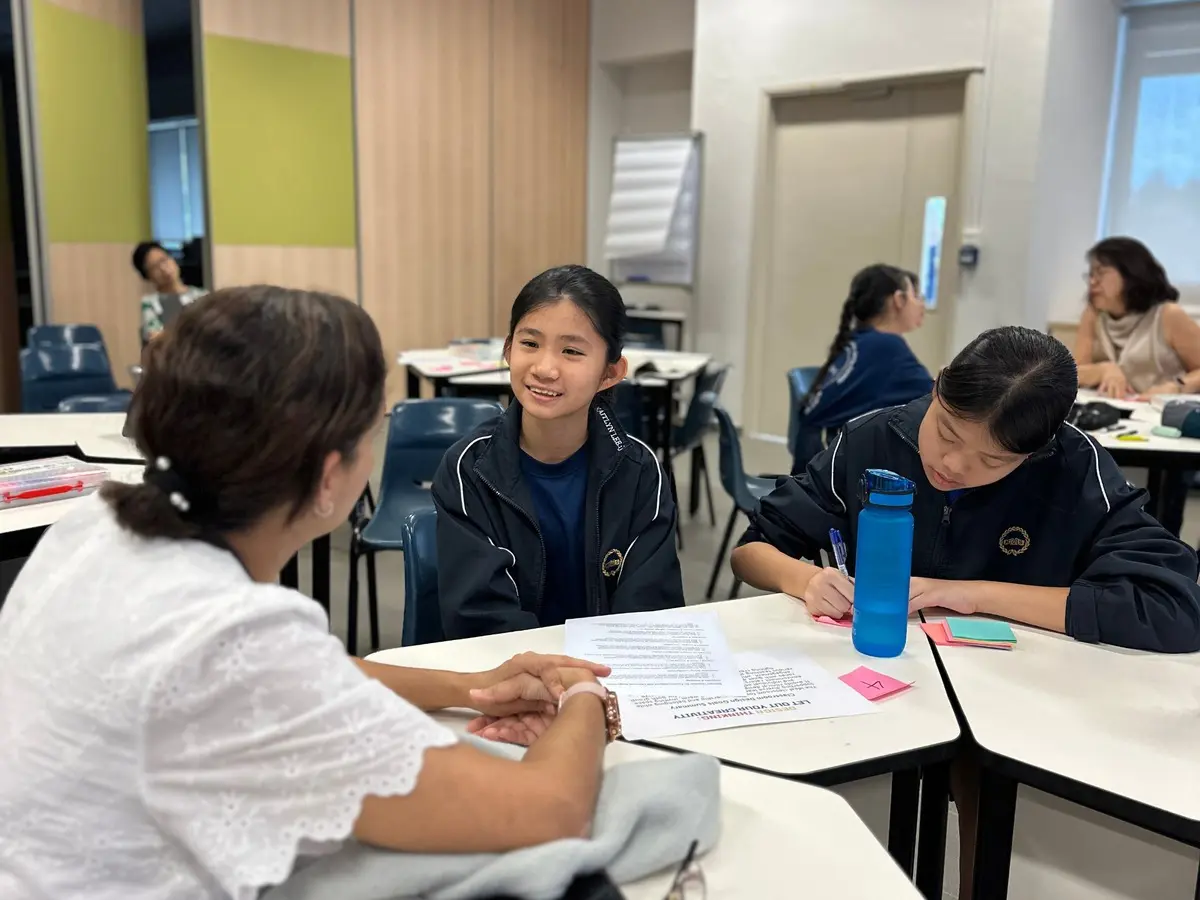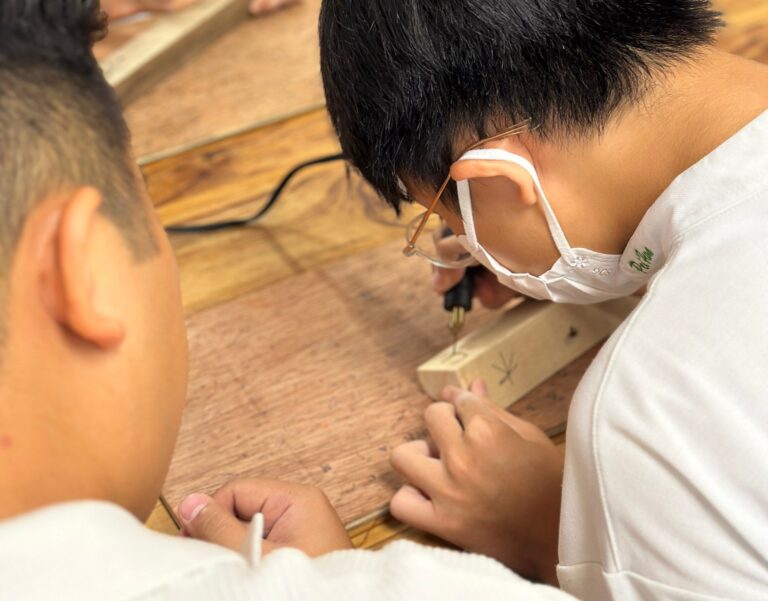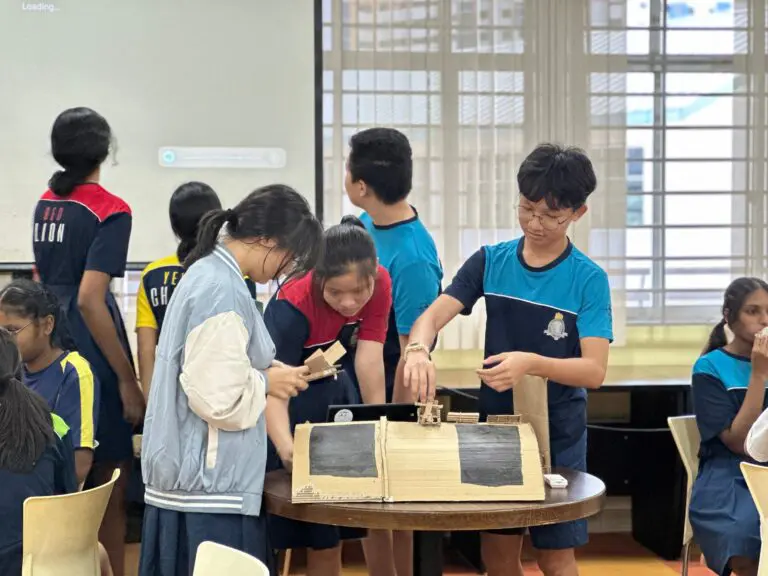





When Singapore secondary school students run their first empathy interview, the most common mistake is launching straight into a list of questions before they have genuinely listened. Facilitating a productive empathy interview design thinking workshop requires preparation, structure, and active coaching — not just a question sheet and a willing interviewee. Here is a practitioner-tested guide from C-Academy on how to make the Empathise phase land well with students aged 13 to 16.
1. What Is an Empathy Interview and Why It Matters in Design Thinking
An empathy interview is a structured, open-ended conversation designed to surface a person’s real experiences, feelings, and motivations — not just their stated opinions. In the EDIT Design Thinking® methodology, it sits at the heart of the Empathise phase, the first step before students attempt to frame any problem or generate solutions.
The empathize phase matters in a secondary school context precisely because students are not naturally inclined to pause and understand before acting. MOE’s 21st Century Competencies framework identifies Adaptive and Inventive Thinking as a core outcome — and empathy interviews train exactly this: the ability to suspend your own assumptions and engage deeply with another person’s perspective through active listening and qualitative research.
Empathy in design thinking is not a soft exercise. It is the quality control mechanism for everything that follows. In C-Academy’s experience across schools including Sembawang Secondary School, students who skip or rush the empathy interview consistently produce problem statements that reflect their own assumptions, not real user problems. The downstream effect is predictable: prototypes that users do not connect with, and presentations that fail to demonstrate genuine insight.
2. How to Prepare Secondary School Students Before the Interview
Preparation is where most school facilitators underinvest. Students need three things before they walk into an empathy interview: a clear purpose, a listening mindset, and a practical briefing.
Purpose first. Tell students explicitly: “You are not here to solve anything yet. You are here to understand.” This reframe is essential. Secondary school students, especially high achievers, are conditioned to move to answers quickly. Naming the goal — understanding over solving — gives them permission to slow down and engage in genuine primary research.
The active listening briefing. At C-Academy, facilitators use a short roleplay exercise before live interviews: one student acts as interviewee and shares a frustrating school experience, while the other practises listening without interrupting or offering solutions. Debriefing this roleplay surfaces habits students did not know they had — finishing sentences, nodding performatively without tracking content, redirecting the conversation towards their own experience rather than the interviewee’s emotional responses.
Logistics and role clarity. Every interview team should have a designated interviewer and a note-taker. The note-taker’s job is not to transcribe verbatim but to capture pain points, unexpected comments, and direct quotes. In a half-day sprint format, C-Academy typically runs groups of four, with two students conducting the interview and two observing — observers often catch non-verbal signals and user behavior cues that the active interviewers miss.
3. Structuring the Interview: Question Frameworks That Work for Teenagers
What questions do you ask in a design thinking empathy interview? The most useful empathy interview guide for secondary school students uses a three-tier structure: open questions, probing questions, and reflection questions.
- Open questions establish context and invite storytelling. Examples: “Tell me about a time you felt frustrated with [topic].” / “Walk me through what a typical [experience] looks like for you.”
- Probing questions go deeper on what the interviewee has already shared. Examples: “What did you mean when you said that felt unfair?” / “Why did you do it that way rather than another?”
- Reflection questions surface values and motivations. Examples: “What matters most to you about how this works?” / “How did that make you feel at the time?”
What does not work is a pre-scripted list of ten empathy interview questions that students tick off one by one. C-Academy’s facilitators coach students to treat the framework as an empathy interview guide — a compass, not a script. The goal is to follow the interviewee’s lead through contextual inquiry rather than the question sequence.
When given too many interview questions upfront, students feel anxious about “completing” the interview rather than listening. Reducing the starter list to three open questions, with permission to go wherever the conversation leads, consistently produces richer qualitative data and more confident interviewers.
4. What Good Facilitation Looks Like During the Interview Itself
How do you conduct an empathy interview with students? The facilitator’s role during the live interview is to stay out of the way — but to observe closely enough to intervene when needed.
Signs of a productive empathy interview:
- The interview participants are talking more than the interviewer (aim for a 70/30 split)
- Follow-up probes come from what the interviewee just said, not from the question list
- Students are using silence deliberately — pausing after an answer to let the interviewee continue sharing emotional responses
Signs that intervention is needed:
- Students are offering suggestions or validating ideas mid-interview (“Yes, I think that too!”)
- The interviewee has gone quiet and students are filling the silence with their own commentary
- The interview has become a survey — closed questions, yes/no answers, no probing
C-Academy facilitators use a light-touch intervention protocol: a brief pause-and-reframe. If a student starts suggesting solutions, the facilitator steps in quietly and redirects: “Interesting — ask them why that would matter to them.” This keeps the student in the learner role without shutting down the interview.
For shy interview participants — a real consideration in Singapore secondary school culture, where students may be reluctant to express critical opinions openly — facilitators brief interviewers in advance to normalise candour: “There are no wrong answers. We are not testing you. We want to understand your real experience.”
5. How to Debrief and Convert Interview Insights Into Problem Statements Through Empathy Mapping
The debrief is where the empathy interview becomes useful. Raw interview notes must be processed before they become design inputs — and this processing step is where students typically need the most scaffolding.
C-Academy uses a two-step debrief structure built around empathy mapping:
Step 1: Build an empathy map. Students organise their notes into an empathy map — a four-quadrant framework capturing what the user said, did, thought, and felt. The quadrant structure forces students to separate direct observation from inference, and surfaces emotional responses that might otherwise be buried in raw notes. Aggregated across the whole team’s empathy maps, recurring themes and tensions become visible.
Step 2: Identify patterns from the aggregated data. Across the team’s empathy maps, what themes recur? What surprised you? What contradicted your expectations? These tensions are usually where the most useful user problems live. From Sembawang Secondary School’s design thinking programme, one student group discovered through careful empathy mapping that their interviewees did not actually want shorter canteen queues — they wanted more control over their break time. That distinction produced a substantially different and more original problem statement than the team’s initial assumption.
The “How Might We” (HMW) statement is the output of this step: a brief, opportunity-framed question that guides ideation. “How might we help secondary school students feel less stressed during recess breaks?” is a different design challenge from “How might we reduce canteen queue time?” — and only the first emerged from genuine empathy work and rigorous empathy mapping.
6. Using Empathy Map to Synthesise User Interviews
Empathy maps are one of the most powerful tools in the design process for making user interviews actionable. A well-facilitated empathy mapping session turns raw qualitative data from multiple user interviews into a shared team understanding that guides problem framing.
The four-quadrant structure — Says, Does, Thinks, Feels — is designed to make empathic design visible. Each quadrant draws on different types of evidence: direct quotes from empathy interview questions belong in “Says”; observed user behavior belongs in “Does”; inferred beliefs and attitudes belong in “Thinks”; and emotional responses, fears, and aspirations belong in “Feels.”
For secondary school students new to empathic design, the quadrant structure also solves a common problem: students conflate what someone said with what it means. By physically separating observations into quadrants, the empathy map makes this conflation visible — and correctable — before it contaminates the problem statement.
C-Academy facilitators introduce empathy maps in the Define phase, immediately after user interviews, as the bridge between raw empathy data and the HMW statement. Schools that skip this step often find their students jumping to solutions based on a single memorable quote rather than aggregated insight from across all interview participants.
7. Common Mistakes Secondary School Facilitators Make (and How to Avoid Them)
Skipping the preparation phase. Handing students an empathy interview guide and pointing them at an interviewee without an active listening briefing produces transactional interviews, not empathy in design.
Letting students self-select interviewees. Friends interview friends, which produces socially safe but data-poor conversations. C-Academy recommends facilitators assign interview participants from outside each student’s immediate social circle where possible.
Racing to the HMW statement. Under time pressure, facilitators sometimes shortcut the debrief — students produce a HMW statement before they have genuinely processed their qualitative research. The result is a problem statement dressed in “How Might We” language that still reflects the students’ original assumptions.
Treating empathy as a one-shot activity. In a full EDIT Design Thinking® workshop, the Empathise phase is not completed after one interview round. C-Academy builds in iterative empathy checks — students return to users at the prototype and testing stages to validate whether their understanding of user problems has held.
8. Integrating Empathy Interviews Into Your School’s Design Thinking Workshop
What is the empathy stage in design thinking? It is the foundational phase of the design process from which all subsequent work derives its direction and credibility. Without genuine empathy data gathered through structured user interviews, every stage that follows — problem definition, ideation, prototyping, testing — risks being built on assumption rather than insight.
For schools running a design thinking workshop aligned with MOE’s Applied Learning Programme (ALP) goals, the empathy interview is also a natural demonstration of the Communication and Collaboration competencies within the 21CC framework. Students are not just practising a design method — they are developing active listening, contextual inquiry, and qualitative research skills that transfer directly to academic, co-curricular, and future workplace contexts.
C-Academy’s four-session design thinking workshop structure for secondary schools builds the full empathy sequence across Session 2, covering both the Empathise and Define phases, with the Learning Journey in Session 1 providing real-world context that students draw on during interviews. If your school is considering how to structure a design thinking programme that produces genuine student outcomes — not just activity completion — the empathy interview is the place to start.