




When Singapore secondary school students are asked what they would change about their school, learning spaces consistently top the list. Yet most school improvement conversations about space stop at furniture budgets and renovation timelines. C-Academy’s experience delivering the Reimagining Learning Spaces design thinking workshop suggests a more powerful approach: treat the learning environment as a design challenge, and hand that challenge to the students themselves.
1. Why Reimagining Learning Spaces Is a Design Challenge, Not a Facilities Brief
When a Head of Department raises the question of learning spaces, the conversation often migrates quickly to the physical: Can we get new furniture? Can we knock down a wall? These are legitimate questions, but they bypass the more important one: what do students actually need from a learning environment in order to thrive?
A facilities brief starts with constraints — budget, square footage, vendor catalogues. A design challenge starts with people. C-Academy’s facilitators have observed, across reimagining learning spaces design thinking Singapore workshops at schools including Methodist Girls’ School (Secondary), Ngee Ann Secondary, and Northbrooks Secondary, that students can articulate unmet needs with remarkable precision when given the right framework. They notice that corridors feel unsafe for quiet study, that classrooms designed for frontal instruction resist collaborative work, and that “flexible” furniture often gets stacked in corners because no one was taught to use it differently.
The HOD’s role shifts when space becomes a design challenge. Rather than being the person who liaises with the estates team, you become the person who creates the conditions for students to surface genuine insights — and to act on them through structured creative work. That reframe is at the heart of what makes design thinking a productive methodology for this context.
People also ask: What is a reimagining learning spaces workshop in Singapore schools? It is a structured programme in which students apply design thinking to investigate, prototype, and propose improvements to their school’s learning environments — guided by a facilitator and grounded in real empathy research with their peers and teachers. The outcome is a collaborative learning environment shaped by student voice, not assumptions.
2. What Design Thinking Adds to the Learning Spaces Conversation in Singapore Schools
MOE’s 21st Century Competencies framework calls for students who are adaptive and inventive thinkers, effective communicators, and collaborative contributors. A learning spaces project structured around design thinking addresses all three — not as a side benefit, but as the primary mechanism of the work.
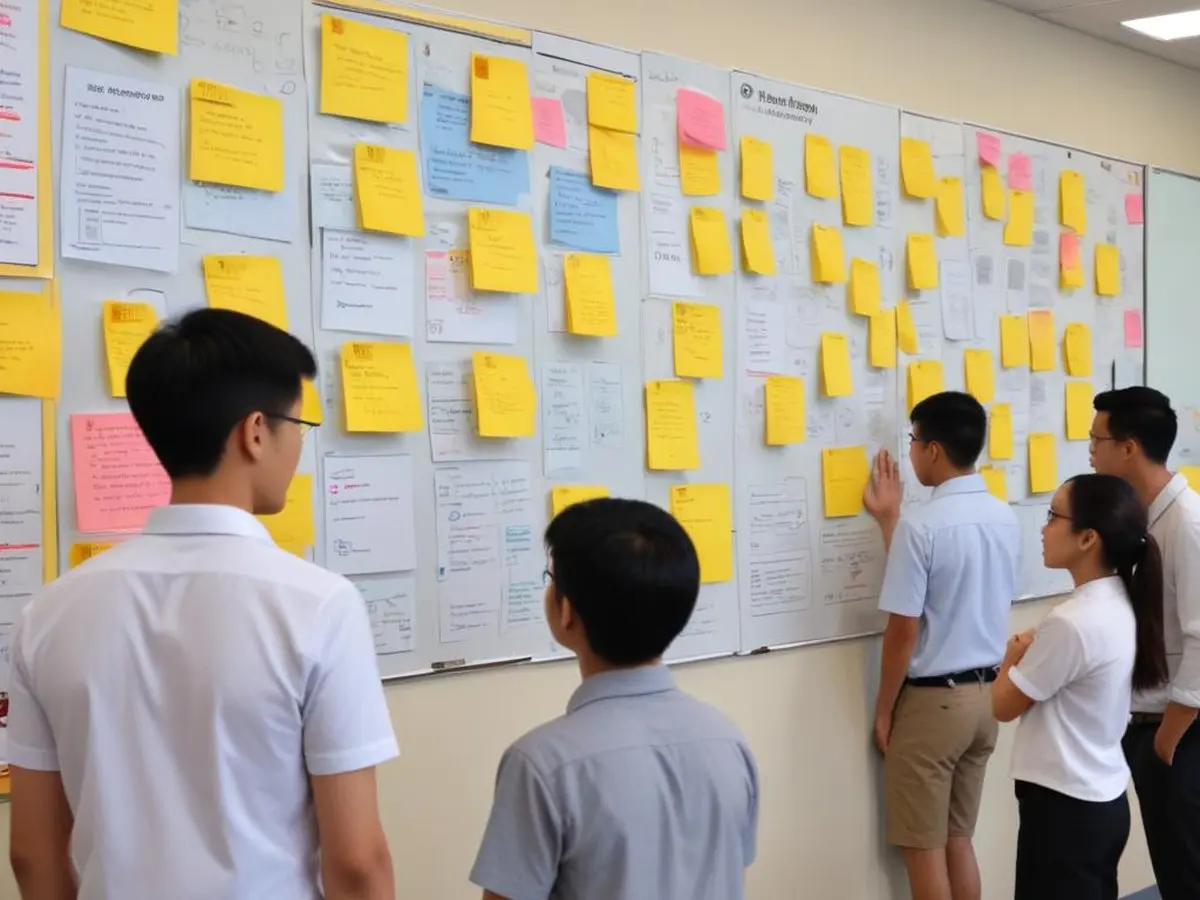
What design thinking adds, specifically, is a method for moving from complaint to proposal. Students who feel that their school environment does not support how they learn best often have no channel for that frustration. Design thinking provides the channel: empathy interviews, problem definition, ideation, prototyping, and presentation to real decision-makers.
From Generic Ideas to Platform-Agnostic Design
C-Academy’s EDIT Design Thinking® methodology — Empathise, Define, Ideate, Test — gives this process a clear sequence that HODs can map onto school programme structures. In practice, this means students are not just generating ideas; they are testing those ideas against real user feedback before committing to a recommendation. That rigour is what differentiates a design thinking workshop outcome from a suggestion box. The approach also produces platform-agnostic design thinking: proposals that are grounded in user needs rather than specific products or vendors, making them more durable and easier for school leadership to evaluate and act on.
For ALP HODs in particular, a Reimagining Learning Spaces workshop offers a strong programme thread: it is applied (students are solving a real problem in their school), it develops 21CC competencies, and it produces tangible outputs — empathy maps, How Might We statements, prototypes, and pitch presentations — that can be documented and reported to school leadership.
3. A Step-by-Step Guide for HODs: Running a Design Thinking Workshop on Learning Spaces
C-Academy structures the Reimagining Learning Spaces workshop across four sessions, each building on the last. HODs do not need to facilitate the content themselves — that is C-Academy’s role — but understanding the structure helps you prepare your students, align with school calendar constraints, and brief your principal on what to expect.
Session 1, Learning Journey: Students visit a space — within or beyond the school campus — that exemplifies thoughtful learning environment design. Past visits have included innovation labs, public libraries, and co-working spaces. The purpose is to disrupt default assumptions about what a “school space” must look like, and to expose students to examples of immersive digital environment design and hybrid collaborative learning classroom configurations they may not have encountered in a traditional school setting.
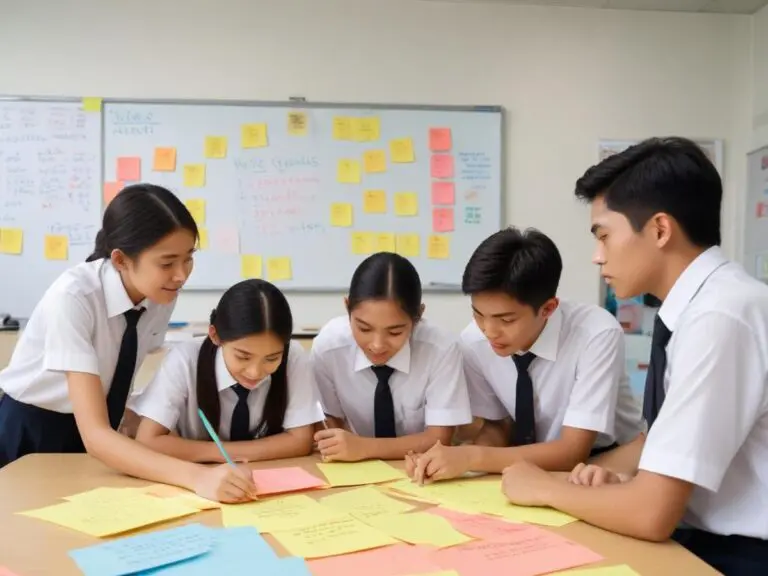
Session 2, Empathise and Define: Students conduct empathy interviews with peers and teachers, create empathy maps, and work toward a precise How Might We statement. The facilitator guides groups to avoid vague problem statements (“our library is boring”) in favour of specific, human-centred ones (“students who need quiet focus during free periods have nowhere to go that feels calm and safe”). This phase builds the kind of professional learning communities mindset — listening before solving — that is central to C-Academy’s facilitation approach.
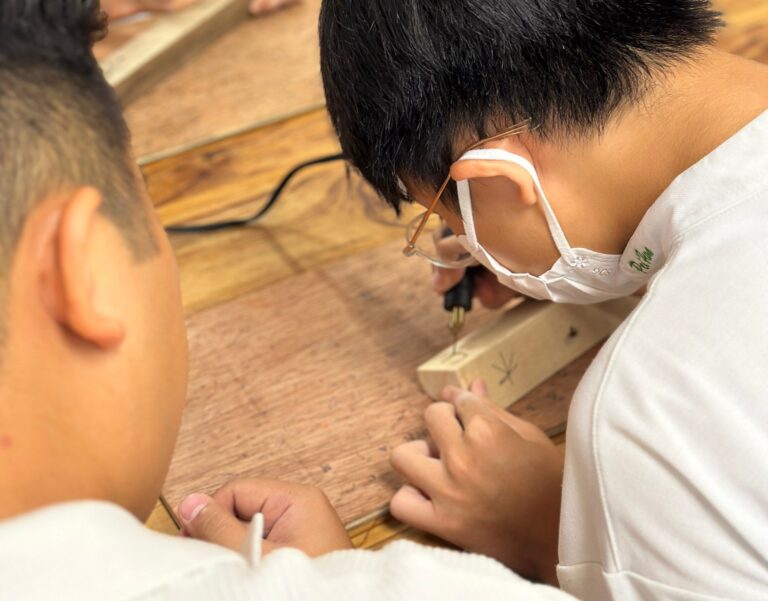
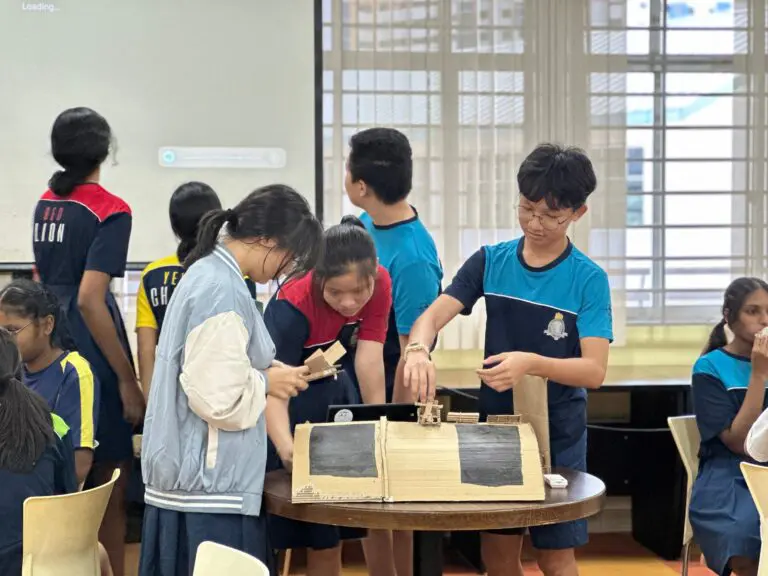
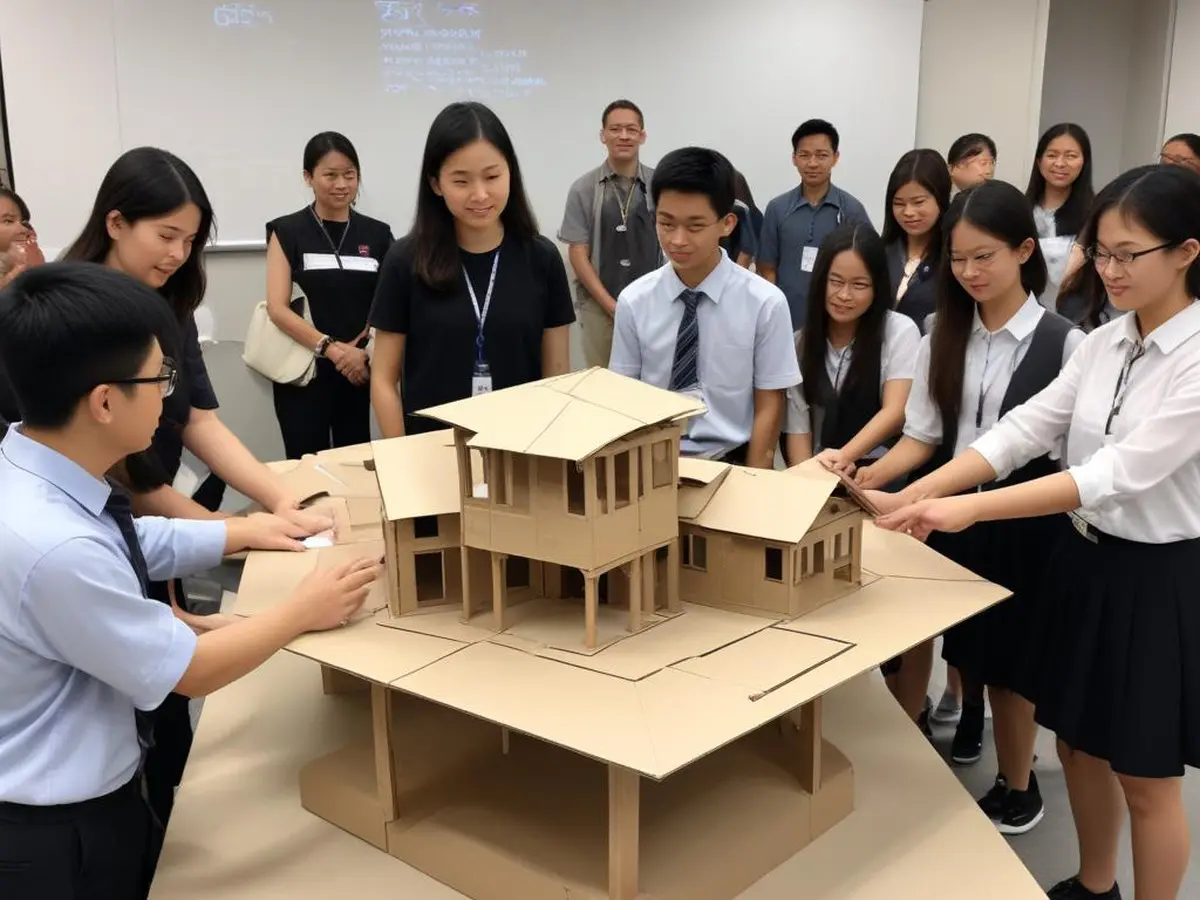
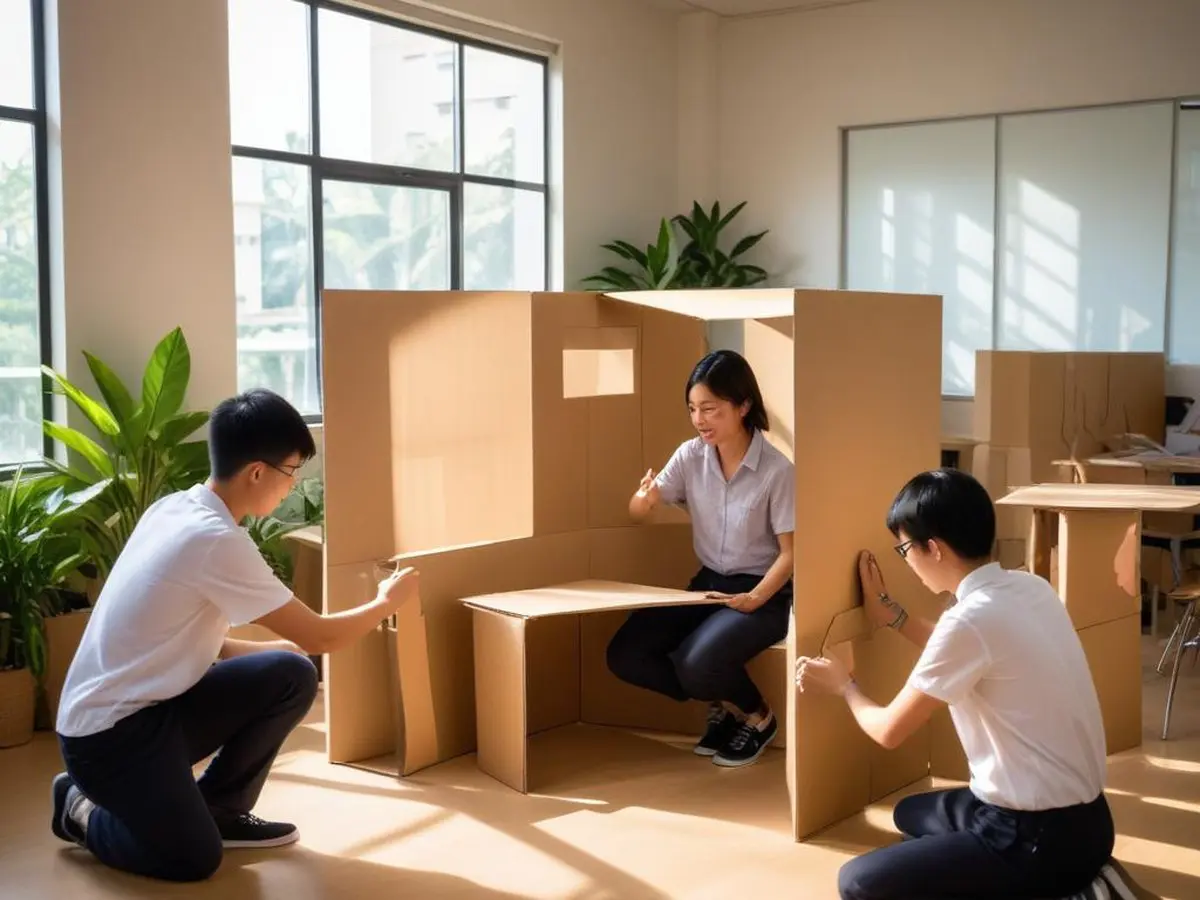
Session 3, Ideate, Prototype, and Test: Using C-Academy’s Random Cards and Idea Dice, students generate divergent ideas before converging on concepts worth prototyping. Prototypes are low-fidelity — cardboard models, annotated sketches, or spatial mock-ups — tested with real users from the school community. The goal is a collaborative learning environment proposal grounded in evidence, not assumption.
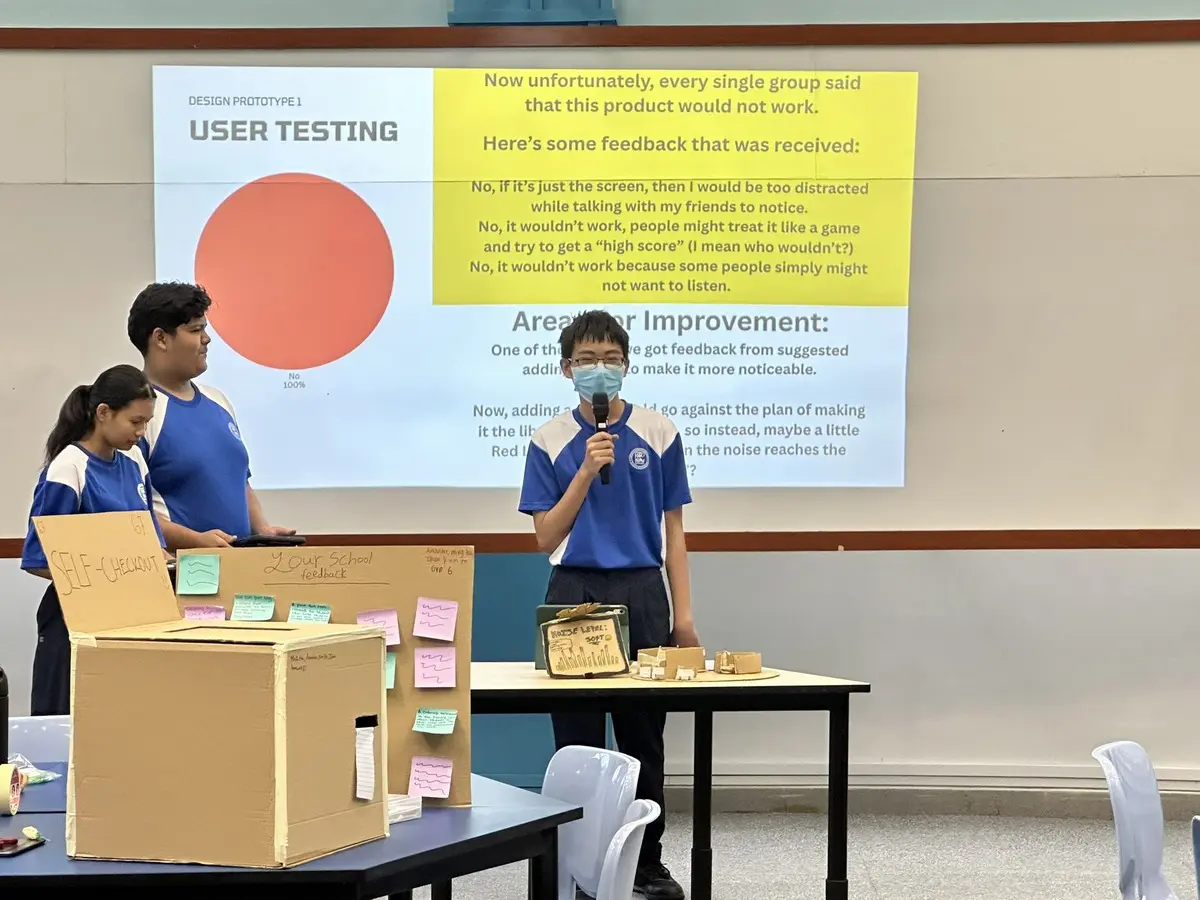
Session 4, Final Presentation: Each group presents their proposal to a panel that typically includes the HOD, a member of school leadership, and sometimes a representative from the estates or facilities team. Presentations are evaluated using C-Academy’s Sweet Spot of Innovation framework, which assesses desirability, feasibility, and viability — ensuring that even the most creative proposals are tested against real-world constraints.
4. What Students Actually Do Across the Four Sessions
People also ask: How can students be involved in redesigning school learning spaces? The answer is more concrete than most HODs expect.
Across the four sessions, students produce a sequence of artefacts that together constitute a full design thinking portfolio. In C-Academy’s delivery at Sembawang Secondary School, student groups identified that informal gathering spaces near canteen areas were underused because students felt conspicuous sitting there without a clear purpose. Their proposed solution — a “flex zone” with moveable partitions and visible signage inviting different uses — addressed both the physical configuration and the social permission to use the space differently.
What makes this level of specificity possible is the Empathise phase. Students are not speculating about what their peers need; they are interviewing them, observing how spaces are actually used across different times of day, and mapping those findings before a single idea is generated. HODs consistently report that this phase produces the most surprising insights — often revealing that the spaces students complain about most are not the ones most in need of redesign.
The Individualised Learning Opportunities That Emerge
The design process consistently surfaces individualised learning opportunities that no facilities audit would have caught: a student who studies best lying on the floor, a group that forms naturally in a particular stairwell landing, a teacher who has quietly converted a storage room into a reading nook. These discoveries do not just inform the final prototype — they reshape how students and teachers understand each other’s relationship to the school environment.
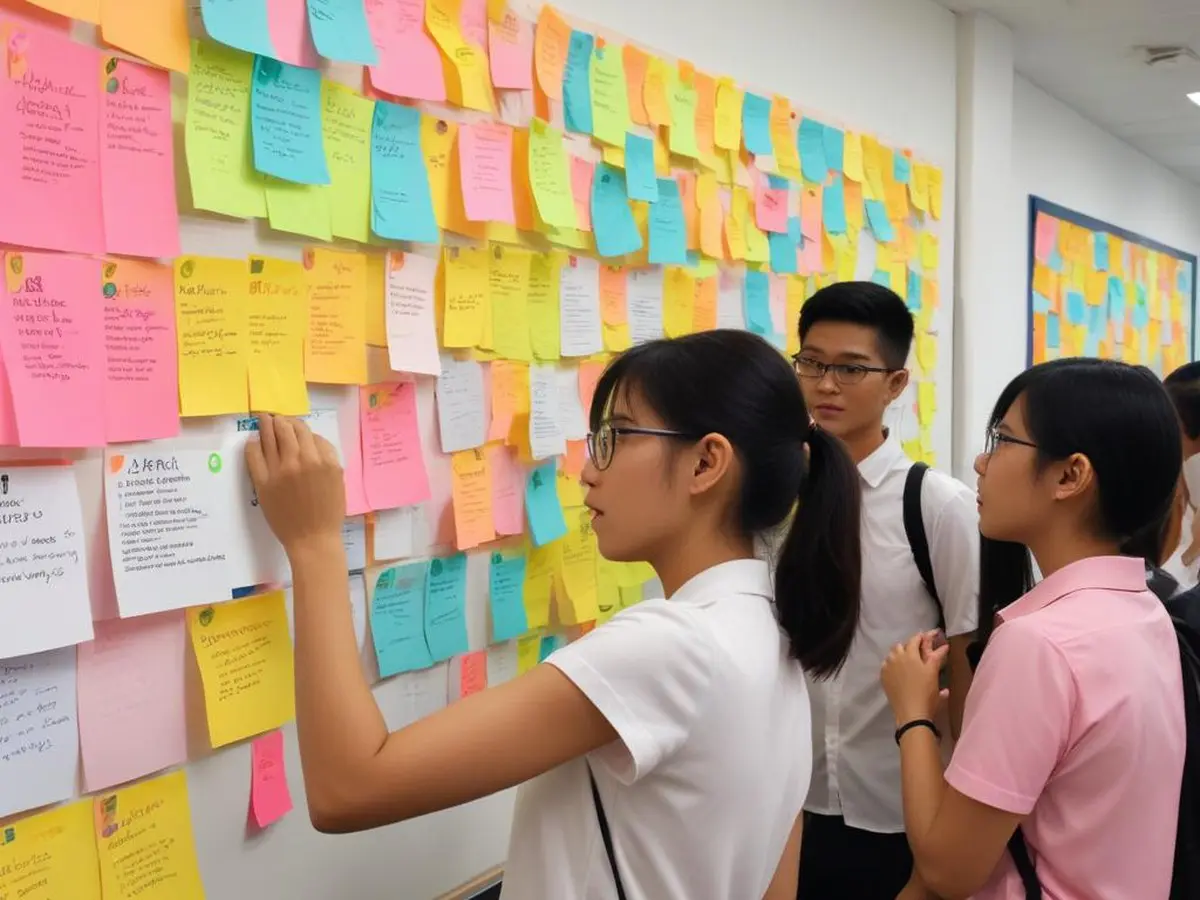
By the end of Session 4, each group has produced: an empathy map, a defined problem statement, at least three ideation outputs, a working prototype, user test feedback, and a refined pitch. These outputs are immediately usable as evidence of applied learning for school reporting purposes.
5. How to Frame the Brief So Students Tackle Real Problems
People also ask: How does design thinking help improve school environments? It helps most when the brief is grounded in reality — not a hypothetical exercise, but a genuine invitation to contribute to decisions the school is actually considering.
HODs play a critical role in framing the brief before the workshop begins. The most effective briefs C-Academy has worked with share three characteristics:
- Specific scope. “Redesign the school” is overwhelming and unactionable. “Improve how students use the covered walkway between blocks B and C during breaks” gives students a bounded, tangible challenge that supports genuine blended synchronous learning between indoor and outdoor environments.
- Real stakes. Wherever possible, brief students with the knowledge that leadership will genuinely consider their proposals. When students know their recommendations may shape real decisions, the quality of their work reflects it — and the workshop becomes a form of professional learning communities in action, with students and teachers working toward shared goals.
- Access to users. Students need to be able to interview teachers, canteen staff, and peers during the Empathise phase. HODs who pre-arrange this access — scheduling brief interview slots with consenting staff — dramatically improve the depth of insight students surface.
A weak brief produces generic proposals. A strong brief, combined with C-Academy’s EDIT Design Thinking® facilitation, produces specific, evidence-based recommendations that HODs can present with confidence.
6. Measuring What Changed: Outcomes HODs Can Report to School Leadership
One of the most practical questions HODs ask C-Academy before committing to a programme is: what can I show my principal afterwards?
The answer operates at multiple levels. First, student competency development: C-Academy’s pre- and post-programme surveys measure overall design thinking competence — including empathy, problem-framing, ideation, and prototyping — using an independent assessment methodology. Across cohorts, C-Academy has recorded an average improvement of 37% in design thinking competence. At Sembawang Secondary School, the improvement was 56% (from 13.5% to 69.5%).
Second, programme outputs: the artefacts produced across the four sessions — empathy maps, How Might We statements, prototypes, and pitch presentations — are tangible evidence of applied learning. These can be photographed, compiled into a portfolio, and presented to school leadership as proof of student engagement and creative capability.
Showcasing Results Through a School Booklet
Because the Reimagining Learning Spaces theme produces tangible, visual outcomes, there is an additional option to showcase student work in a more compelling way: a school booklet in which students’ ideas are reimagined visually. This booklet captures each group’s design proposal — including their empathy research, concept sketches, and prototype photographs — in a format that communicates both the rigour of the process and the creativity of the output. For schools with a strong design culture or a community stakeholder audience, this format is particularly effective as a record of what the programme produced and what the school is capable of enabling.
HODs running ALP programmes will find that these outputs map directly onto ALP documentation requirements. The combination of measurable competency data, documented student work, and an optional visual booklet makes the Reimagining Learning Spaces workshop one of the more reportable enrichment programmes available in the Singapore school context.
7. Taking the Next Step With C-Academy’s Reimagining Learning Spaces Workshop
C-Academy’s Reimagining Learning Spaces workshop is one of six themes within the Let Out Your Creativity programme, designed for secondary school and Junior College students. It is delivered by C-Academy’s core facilitation team using the proprietary EDIT Design Thinking® methodology.
HODs interested in running the workshop can begin by visiting the C-Academy website at c-academy.org/let-out-your-creativity/reimagining-learning-design-thinking-workshop/ to review the programme structure and past school outcomes. From there, C-Academy works with schools to shape the brief, align the programme with existing ALP or 21CC goals, and structure delivery around the school calendar.
The workshop is not a one-size-fits-all product. Every delivery is scoped to the school’s context — which is why the Learning Journey site visit, the brief, and the panel composition for the Final Presentation are all adapted in consultation with the HOD before the programme begins. What remains consistent across every delivery is the commitment to producing a genuine collaborative learning environment outcome: not a display project, but a student-led design proposal grounded in empathy research and tested against real user feedback.