



The quality of a design thinking programme in a Singapore secondary school depends less on the methodology and more on the person in the room. A skilled facilitator can produce transformative outcomes with a simple framework. A weak facilitator can undermine even the best-designed programme.
This is one of the most underweighted factors when schools evaluate ALP providers. HODs often compare syllabi, prices, and credentials — but rarely ask the right questions about who will actually be facilitating their students. Yet the facilitator shapes the entire design thinking process: how the design thinking framework is introduced, how students move through each phase, and whether the learning experience sticks.

WHO RUNS THIS PROGRAMME
C-Academy runs EDIT Design Thinking® workshops and programmes for Singapore secondary schools, aligned to MOE’s 21st Century Competencies, ALP and VIA.
1. Practitioner vs Trainer: Why the Distinction Matters for Design Thinking Quality
There is a meaningful difference between a design thinking trainer and a design thinking practitioner. A trainer has studied the methodology and been certified to teach it. A practitioner uses design thinking as part of their actual professional work — to solve real client problems, develop products, and navigate real organisational challenges.
When a practitioner facilitates a secondary school programme, they bring something a trainer cannot: genuine, current experience of applying design thinking tools to real world problems in professional contexts. When a student asks “but does this actually work in real life?”, a practitioner can answer from direct experience. This changes the quality of the conversation, and the depth of student engagement, considerably.
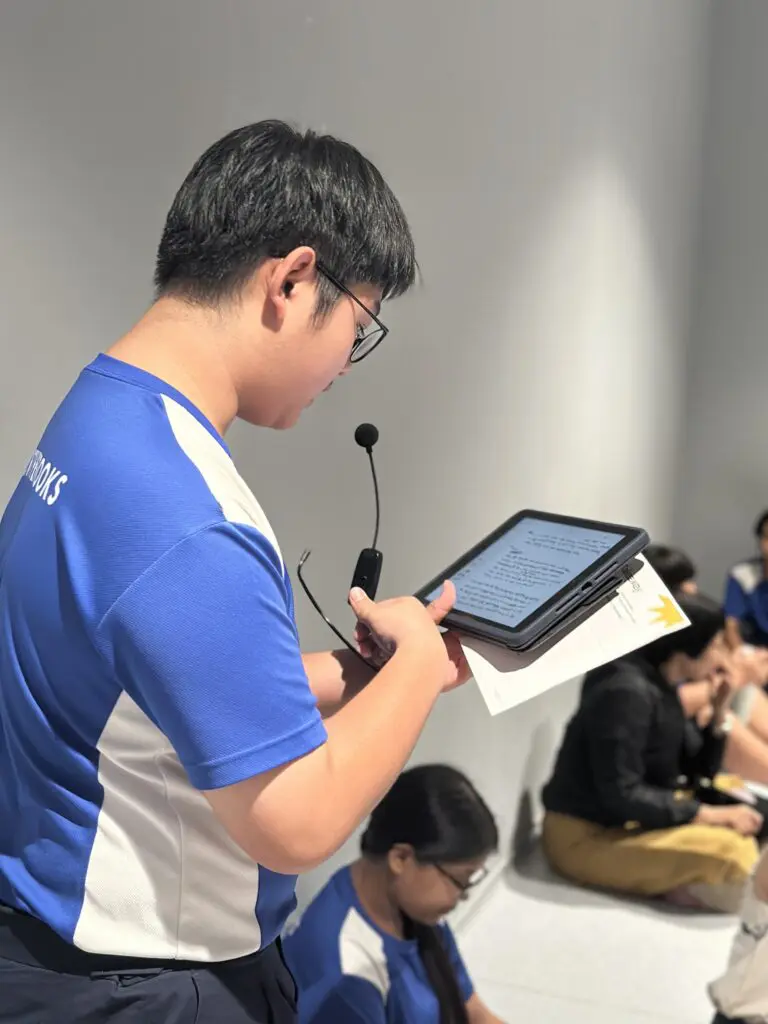
At C-Academy, our facilitators are working design consultants and educators from the Creativeans team. Kimming Yap, Co-Founder and Managing Director of Creativeans, and the broader core team bring more than 15 years of practitioner experience across branding, business design, and organisational strategy. When we facilitate for Sec 2 students at Hougang Secondary or Northbrooks Secondary, we draw on real project experience — not case studies from a textbook.
2. Five Questions to Ask Before Booking a Design Thinking Facilitator
Use these questions when evaluating any design thinking facilitator or provider for your school:
1. What is your professional background outside of training and facilitation?
A practitioner-facilitator should be able to describe real projects where they have applied design thinking professionally — including the brainstorming techniques, structured ideation tools, and ideation sessions they have run in real project contexts. If the answer is primarily training certifications and workshop delivery, you are likely looking at a trainer, not a practitioner. This matters for student-centred learning outcomes — students respond differently to real-world examples than to theoretical ones.
2. Have you facilitated for Singapore secondary school students specifically?
Facilitation skills transfer across contexts, but secondary school cohorts have specific dynamics that differ from corporate workshops or university settings. Ask for examples from Singapore secondary schools, and where possible, contact those schools directly. A provider who has only delivered a generic design thinking course or taught design thinking fundamentals in corporate settings will approach a Sec 2 cohort very differently from one with real secondary school experience.
3. Who specifically will be in the room with my students?
Some providers quote well-credentialled senior staff but deliver with junior or freelance facilitators. Ask for the name and background of the person who will facilitate your sessions. A provider who cannot give you a direct answer to this question is worth questioning further.
4. How do you handle mixed-ability cohorts and disengaged students?
This is a practical facilitation question that reveals real experience. A skilled facilitator should describe specific techniques for drawing out quieter students, managing dominant voices, and maintaining collaborative learning energy when a group loses momentum. Vague answers suggest limited depth.
5. What do you do when a group gets stuck or goes off track?
The answer should be specific and draw on real experience. The best design thinking facilitators use structured recovery tools — reframing the challenge, returning to empathy data, or introducing a creative constraint — rather than generic encouragement. This is where creative confidence and growth mindset facilitation reveals itself.

3. What Good Design Thinking Facilitation Looks Like in Practice
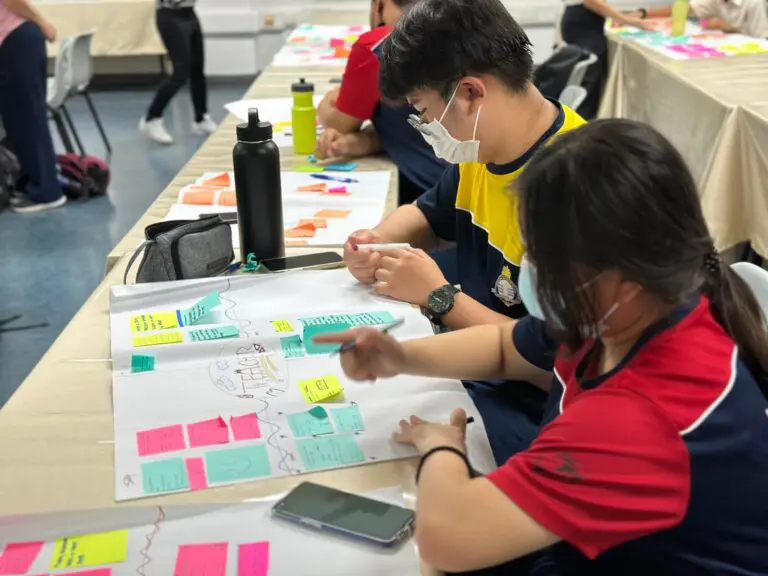
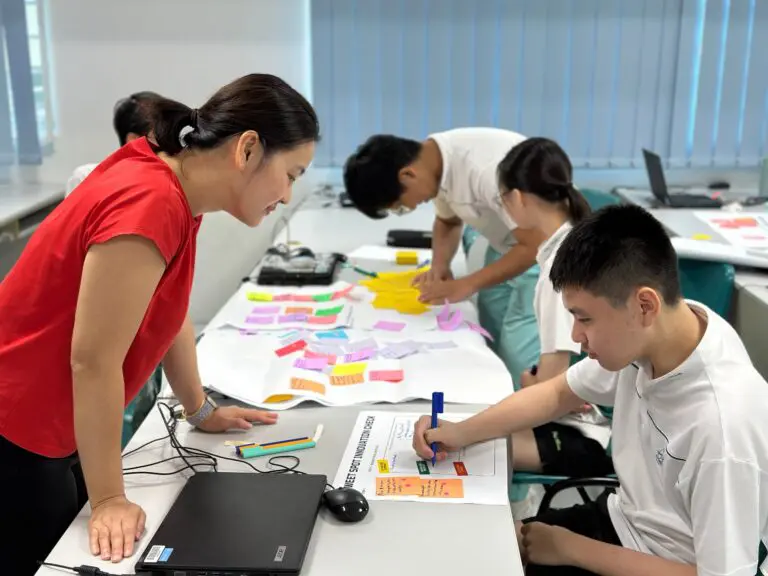
In our experience delivering EDIT Design Thinking® programmes at Singapore secondary schools, a skilled facilitator knows how to switch students between divergent thinking (generating possibilities) and convergent thinking (making decisions) — and when to intervene and when to step back. Intervening too early robs students of the productive struggle that produces real self directed learning. Stepping back too long lets groups stall or default to the path of least resistance.
Good facilitation is also culturally attuned. Singapore secondary school students often need explicit permission to be wrong, to share half-formed ideas, and to disagree with their peers respectfully. A facilitator who does not understand this cultural context will consistently underperform — regardless of their methodology knowledge.
At C-Academy, we also measure what our facilitation produces. Across our programmes, students show an average improvement of 37% in design thinking competence, with empathy scores rising from 44% to 78%. These outcomes are the result of facilitation quality as much as curriculum design — and they are independently assessed, not self-reported.
4. The Facilitator’s Role in Student Leadership Development
One outcome that often surprises schools is how much student leadership development emerges from well-facilitated design thinking. When a facilitator creates the right conditions — psychological safety, clear structure, genuine challenge — students who have never seen themselves as leaders begin to step up.
The facilitator’s role is to notice and name these moments: the student who reframes the group’s problem, the student who advocates for a quieter peer’s idea, the student who stays calm when the group hits an obstacle. These are design leadership behaviours — rooted in a design thinking mindset — that persist well beyond the workshop itself as leadership skills and social emotional learning outcomes.