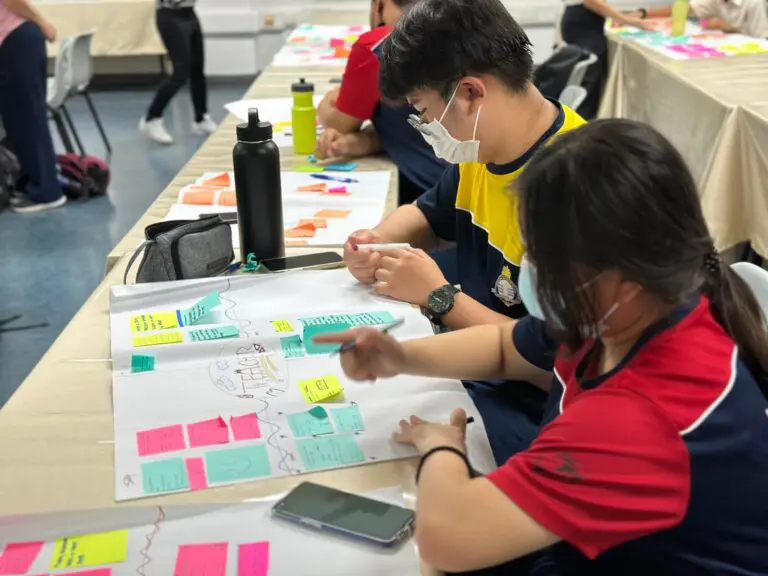




ALP stands for Applied Learning Programme. ApLM stands for Applied Learning Module. In Singapore secondary education, a school’s ALP and the ApLM offerings at ITE or polytechnics are related to applied learning, but they are not interchangeable names for the same programme.
For a school leader, the first question is whether you are developing the school’s own programme or arranging participation in an institution’s published module. That distinction determines which information and arrangements you need to check.
WHO RUNS THIS PROGRAMME
C-Academy designs and delivers Applied Learning Programmes built on EDIT Design Thinking®, including co-developing the ALP curriculum with your teachers.
What ALP and ApLM mean
An ALP connects academic knowledge and thinking skills with authentic situations. For example, Regent Secondary School’s ALP page describes a non-examinable programme focused on applying learning, with resource sustainability as its school context. The theme and delivery should be checked on the relevant school’s own programme page.
ITE’s Applied Learning Modules give secondary school students practical exposure to areas of study and possible career interests. Temasek Polytechnic’s ApLM page describes practice-oriented modules that help students explore interests and experience polytechnic learning. It also explains the transition from the earlier Advanced Elective Modules name to ApLM@Poly.
The practical differences to check
| Planning question | School ALP | ApLM at ITE or a polytechnic |
|---|---|---|
| What are you arranging | Learning within the school’s applied learning programme | Participation in an institution’s specified module |
| Where to verify details | The school’s programme information and responsible staff | The institution’s current module information and contact team |
| What sets the learning focus | The school’s programme objectives and context | The selected module’s published focus and intended participants |
| What to confirm before booking | Cohort, outcomes, timetable, staff responsibilities and any external support | Eligibility, availability, duration, fees, attendance and any assessment or certification conditions |
Do not infer a standard fee, compulsory session count or approval route from the acronym. Check the arrangements for the particular school programme or module.
Planning the timetable and learning sequence
For a school ALP, decide what students should investigate, apply and produce across the learning sequence. Then allocate time for preparation, practical work, feedback and reflection. Confirm what teachers will lead and where an external facilitator could contribute.
For an ApLM, begin with the institution’s current offering. Check which students may attend, what preparation is needed, where learning takes place and how it fits the school calendar. Conditions can differ by institution and module, so use the current listing rather than a general comparison article to make a booking decision.
Where design thinking can contribute
Design thinking can be used as a learning approach within a suitable school project. Students investigate a need, frame a problem, develop ideas and test a response. C-Academy uses EDIT Design Thinking®: Empathise, Define, Ideate and Test.
For example, a school could use a shared-space challenge to help students apply research, communication and problem-solving skills. This is a suggested project format, not a prescribed ALP structure. The school should decide how it fits its existing objectives.
A private design thinking workshop should not be labelled an official ApLM solely because it uses applied learning activities. When referring to an ITE or polytechnic module, use the institution’s published name and arrangements.
What to include in a programme brief
Tell a potential programme partner the student level, cohort size, learning goals, available time, project theme and practical constraints. Specify what students should produce and how teachers will review their learning.
Ask the partner to explain the proposed activities, facilitator responsibilities, resources, evidence of learning and total quoted scope. Review any claims about credentials, school experience or measured outcomes against supporting records. Compare proposals against the same brief rather than the number of activities alone.
For examples of assessable objectives, use our design thinking learning outcomes guide.
Exploring support from C Academy
C-Academy offers design thinking programmes for schools and educators, including formats that can be adapted to a school’s timetable and learning goals. Schools can discuss how EDIT Design Thinking® activities could contribute to their applied learning plans.
Describe the support you need and ask for a tailored proposal. The proposed scope should make clear what C-Academy will deliver and what remains the school’s responsibility.
Choosing your next step
If you are developing the school’s ALP, begin with the learning objectives and the gap you need to address. If you are arranging an ApLM, consult ITE’s current modules or the relevant polytechnic’s current offering, such as Temasek Polytechnic’s ApLM information.
For a school design thinking programme, discuss your brief with C-Academy. If the work involves community contribution, our VIA project guide can help you plan the learning and reflection around it.