




Singapore secondary schools are under growing pressure to deliver on the MOE 21st Century Competencies framework — but for many HODs, the gap between policy language and classroom reality remains frustratingly wide. Adaptive and inventive thinking is not a subject you can teach from a textbook, and the students who need it most are often the ones most resistant to stepping outside structured, answer-driven learning. This article moves past the policy summary and into the practitioner detail: what adaptive thinking development actually looks like session by session, where teenagers consistently get stuck, and what experienced facilitators do differently.
1. What MOE’s 21CC Framework Actually Requires From Secondary Schools on Adaptive and Inventive Thinking
The MOE 21st Century Competencies framework identifies Adaptive and Inventive Thinking as one of its five core competencies, sitting within the Emerging 21CC domain that also includes Communication, Collaboration, Information and Media Literacy, and Cross-Cultural Skills. At its core, adaptive thinking refers to the ability to respond flexibly and effectively to novel, ambiguous, or rapidly changing situations — precisely the conditions students will face in further education and working life.
What the framework actually requires is more demanding than most timetable slots allow for. MOE expects students to demonstrate cognitive flexibility (the ability to shift between different concepts or perspectives), tolerance of ambiguity (the capacity to work productively without a clear right answer), and inventive problem-solving (generating new approaches rather than applying familiar templates). These are not soft skills that develop through passive exposure. They require structured, repeated practice in conditions that genuinely challenge existing mental habits.
For secondary schools, this creates a practical obligation. Applied Learning Programmes and MOE enrichment programmes are among the most common delivery vehicles for 21CC competencies — but only when the programme is designed around active student engagement with real-world challenges, not a one-off activity slot. C-Academy’s work with schools such as Sembawang Secondary School and Northbrooks Secondary School reflects this: their EDIT Design Thinking® workshops are structured specifically to address the cognitive demands MOE describes, not simply to expose students to the vocabulary of design thinking.
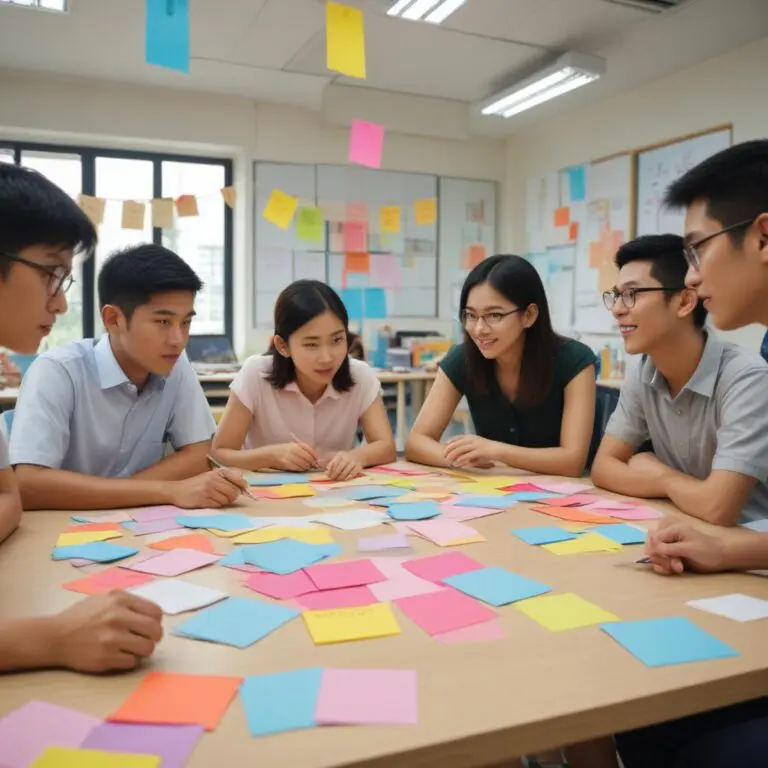
The distinction matters because many schools fulfil the letter of the 21CC requirement without fulfilling its intent. A workshop where students brainstorm ideas on sticky notes meets a scheduling requirement. A workshop where students are forced to discard their first idea, defend an unexpected constraint, and prototype a solution they did not originally conceive meets the competency requirement. The difference lies entirely in facilitation design. Effective pedagogical practices for 21CC development require intentional design, not incidental exposure.
2. Why Passive Instruction Falls Short: Building a Student Learning Space for Adaptive Thinking Singapore
One of the most consistent findings from C-Academy’s programme delivery across Singapore secondary schools is that students who score well academically are often the most resistant to adaptive thinking tasks — not because they lack intelligence, but because their learning habits have been optimised for convergent, answer-driven thinking. When the task shifts to open-ended problems with multiple valid solutions, high achievers frequently freeze, seek reassurance, or default to the most conventional interpretation of the brief.
This is not a student failure. It is a structural outcome of instruction that rewards recall and correct answers over flexibility and experimentation. Passive instruction — lecturing about creative thinking, showing case studies of innovation, or asking students to copy notes on the design thinking process — reinforces the same neural habits that make adaptive thinking difficult. You cannot develop cognitive flexibility by watching someone else be flexible. Similarly, an inclusive learning environment that supports 21CC development requires active, not passive, engagement with design thinking methodologies.
How do you teach 21st century competencies in Singapore secondary schools? The evidence from programme delivery points consistently in one direction: students develop 21CC competencies only when they are placed in situations that require those competencies to be exercised, repeatedly, with structured reflection built in. A learning journey that begins with genuine empathy fieldwork — speaking to real users, not hypothetical personas — immediately creates the kind of productive discomfort that adaptive thinking requires. Students encounter unexpected responses, must revise their assumptions, and have to hold ambiguity while they redefine the problem.
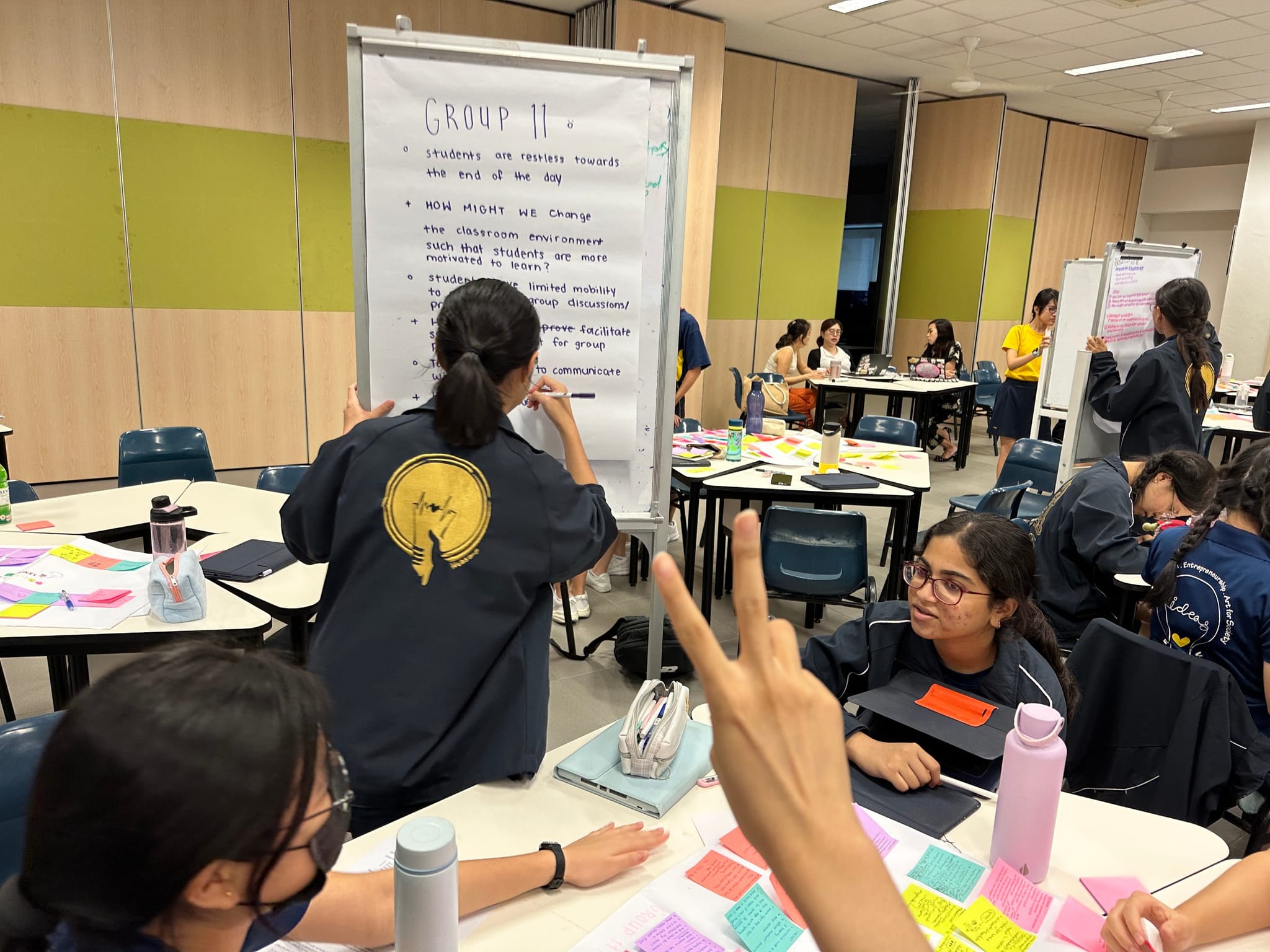
In a half-day Challenge Sprint format, C-Academy facilitators consistently observe that the single most valuable moment for adaptive thinking development is not the ideation phase, but the problem-redefinition moment: when students who have already committed to a solution direction are presented with new user information that challenges their assumptions. Groups that can pivot — revising their How Might We statement and rebuilding their solution direction — demonstrate adaptive thinking under pressure. Groups that ignore the new information and protect their original idea demonstrate exactly the rigidity that the 21CC framework is designed to address.
When designing a student learning space for academic success in the 21st century, ensure that both structured thinking routines and open-ended questions feature prominently in your teaching and learning framework. This pedagogical approach supports future-ready learners who can adapt to real-world challenges.
3. What Adaptive and Inventive Thinking Looks Like in a Real Workshop Setting
What activities develop adaptive and inventive thinking in teenagers? The honest answer is: activities that create genuine cognitive pressure, not comfort. In C-Academy’s four-session Design Thinking Workshop structure, adaptive thinking is not the subject of a single session — it is the thread that runs through every phase of the EDIT Design Thinking® methodology. Through scaffolded support and carefully designed thinking routines, students progress at their own pace.
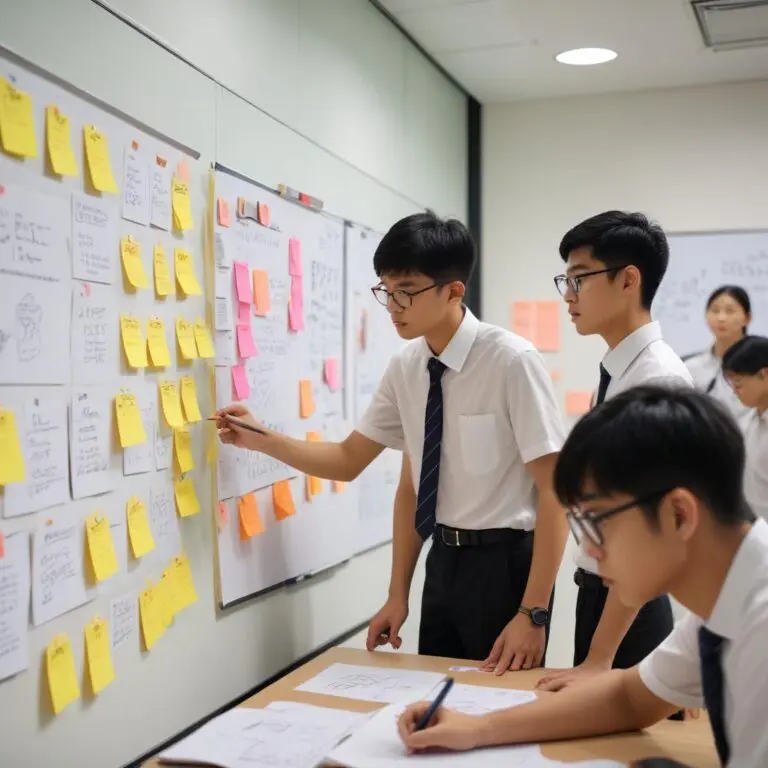
In Session 1 (Learning Journey), students conduct direct user research in the field. The adaptive demand here is immediate: real users do not behave according to student assumptions. A group working on a sustainability brief for Pei Hwa Secondary School discovered during their Learning Journey that the students they interviewed did not care about carbon footprints but cared deeply about the aesthetics of reusable products. The group’s entire empathy map had to be reconstructed. That moment — uncomfortable, disorienting, and ultimately productive — is precisely where adaptive thinking begins to develop.
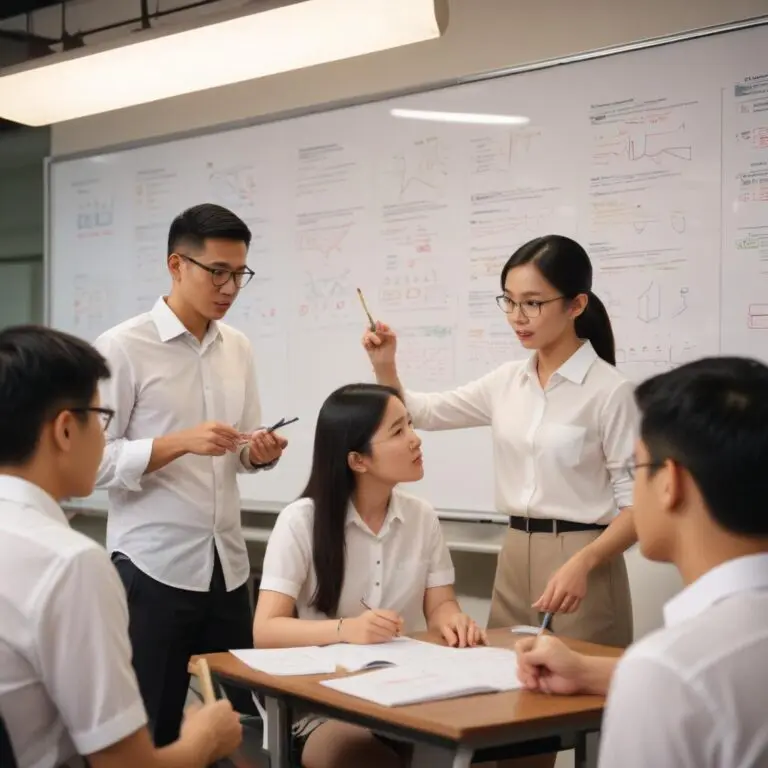
In Session 2 (Introduction to EDIT Design Thinking®, Empathise, and Problem Definition), the adaptive challenge shifts to synthesis. Students must move from a wide range of messy user insights to a single, precise, actionable problem statement. This requires them to hold contradictory information simultaneously, identify patterns, and make judgement calls under uncertainty. Facilitators who intervene too early — offering the right answer or guiding students towards the “expected” HMW statement — remove the adaptive challenge entirely. The right teacher training ensures facilitators understand when to provide scaffolded support and when to let students struggle productively.
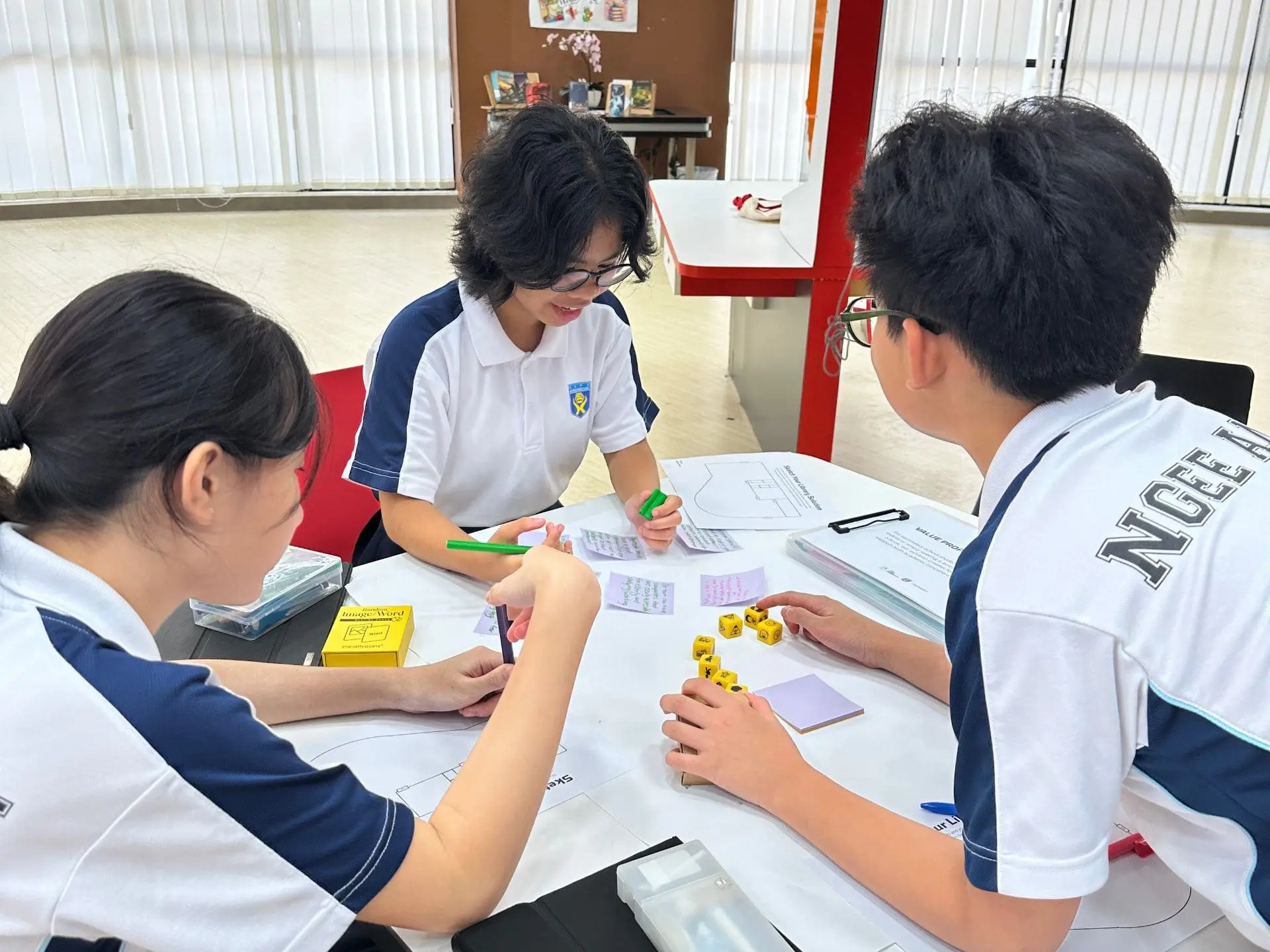
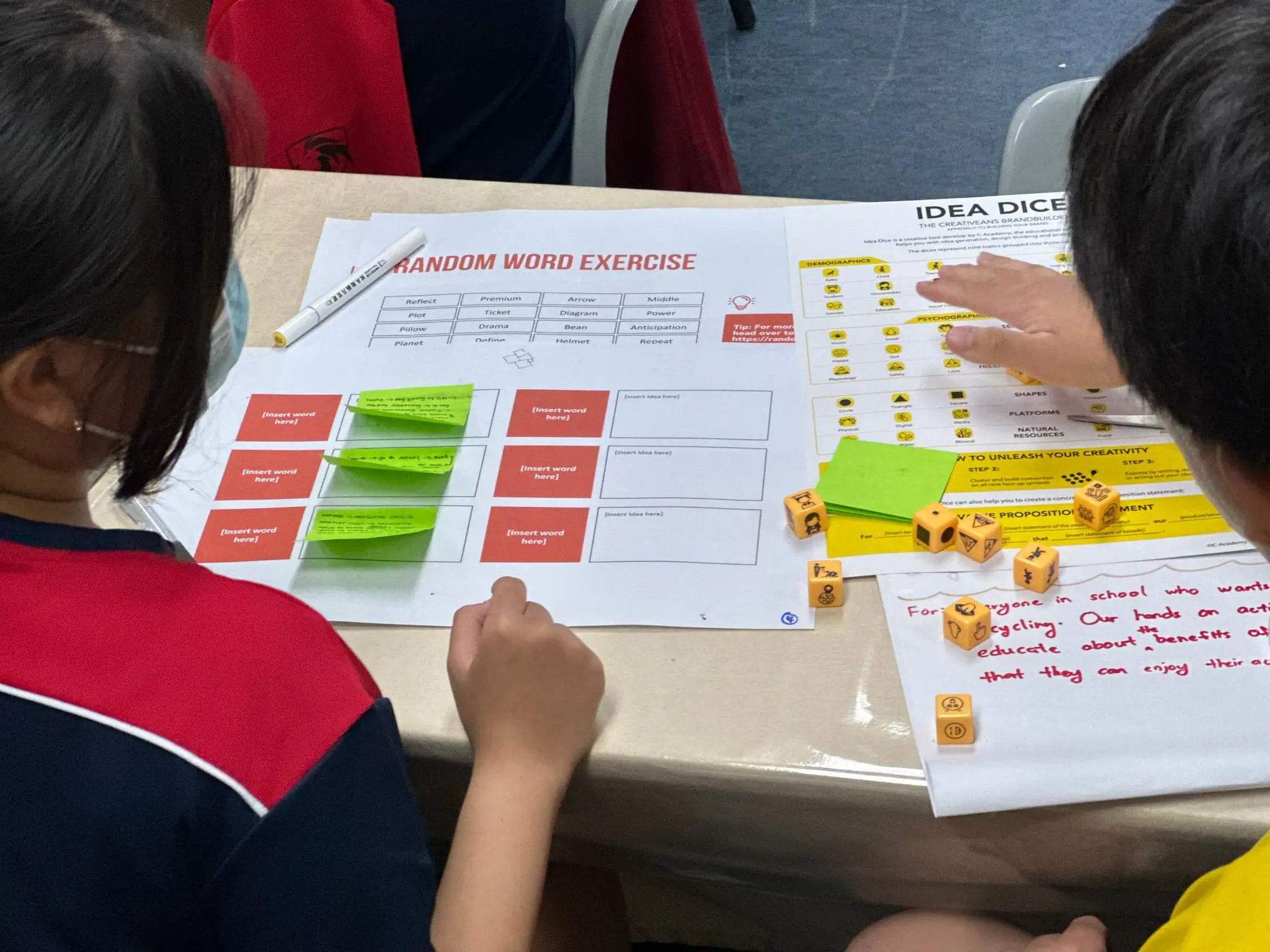
In Session 3 (Ideation, Prototyping, and Testing), inventive thinking becomes explicit. Students are asked to generate a minimum number of ideas before any evaluation begins, using tools such as C-Academy’s Random Cards and Idea Dice to force cognitive range. The inventive challenge is not producing one good idea — it is producing many different ideas, including ideas the student finds uncomfortable or unlikely, and then selecting and combining across them. Prototyping adds a further adaptive layer: when a physical or digital prototype fails during testing, students must respond constructively rather than defensively. This environment fosters creative problem solving and resilience.
In Session 4 (Final Presentation), the adaptive demand is communicative — students must translate their messy, iterative process into a coherent narrative for an audience that was not present for the journey. Developing communication skills through this process allows future-ready learners to articulate their thinking under pressure. This is a different cognitive challenge, and one that many students underestimate.
4. How the EDIT Design Thinking® Methodology Builds Adaptive Thinking Through Structured Thinking Routines
C-Academy’s EDIT Design Thinking® methodology — Empathise, Define, Ideate, Test — is not simply a rebranding of Stanford’s design thinking model. The sequencing and facilitation approach are designed specifically around the cognitive development of secondary school students in Singapore, with attention to the particular ways that MOE-educated students have been trained to think. The teaching and learning framework integrates adaptive thinking naturally throughout.
Empathise builds perspective-taking and assumption-challenging. For teenagers whose academic environment consistently rewards having the right answer, being placed in a position of genuine not-knowing — interviewing a user, listening without an agenda, discovering that their initial assumption was wrong — creates the first adaptive challenge. Facilitators are trained not to rescue students from this discomfort, but to normalise it: “What you’re feeling right now — that confusion — is the beginning of real problem-solving.” This thinking routine, repeated across multiple sessions, develops genuine growth mindset.
Define builds the ability to synthesise under ambiguity. The How Might We statement is the most technically demanding part of the process for most secondary students, because it requires simultaneously narrowing (from a mass of user data to a single insight) and opening (from a problem to an opportunity space). Students who can write a strong HMW statement have demonstrably developed a core adaptive thinking skill: reframing. Open-ended questions guide students through this process, encouraging creative problem solving.
Ideate builds cognitive range and tolerance of unconventional ideas. In C-Academy’s facilitation, quantity precedes quality deliberately — students must generate ideas they do not personally endorse before they are permitted to evaluate. This trains the separation of generation from evaluation, a key component of inventive thinking that is actively suppressed in most assessment-oriented instruction. Within maker education frameworks, this phase is particularly powerful for building confidence in prototyping.
Test builds adaptive response to failure. When a prototype does not perform as expected during user testing, the facilitated debrief asks students to articulate what they learned from the failure, not simply what went wrong. This reframe — from failure as negative outcome to failure as information — is one of the most durable adaptive thinking habits that the workshop develops.
5. Common Sticking Points: Where Teenagers Struggle With Adaptive Thinking (and How to Help)
Across C-Academy’s delivery in schools including Methodist Girls’ School (Secondary), Hougang Secondary School, and Ngee Ann Secondary School, several sticking points appear consistently. HODs and facilitators who anticipate these moments can intervene productively rather than reactively.
Sticking point 1: The first idea trap. Most student groups fall in love with their first idea and construct their entire design process around validating it, rather than interrogating it. This is the most common sign of low adaptive thinking — and the most important to address early. C-Academy facilitators use what they call the “kill your darling” prompt: after a group presents their initial concept, the facilitator asks them to deliberately design its worst possible version. The exercise forces the group to understand the concept’s assumptions, which makes them easier to question. This thinking routine builds growth mindset by reframing critique as opportunity.
Sticking point 2: Persona construction without real empathy. Students who have not conducted genuine user research will construct personas based on stereotypes. These personas feel comfortable because they confirm what the student already believes, but they produce solutions that address imagined problems rather than real ones. When facilitators catch this pattern, the intervention is to send students back to a real user — or to role-play the user with the facilitator adopting an unexpected perspective. Open-ended questions about user motivations force genuine empathetic engagement.
Sticking point 3: Binary evaluation of ideas. During ideation debrief, students frequently evaluate ideas as “good” or “bad” based on immediate feasibility rather than potential. Adaptive thinking requires the ability to hold an impractical idea long enough to extract what is valuable from it. The facilitation technique here is to ban the word “but” during the first round of feedback, requiring students to use “yes, and” to build on every idea before any are set aside. This communication skills practice develops better collaborative thinking.
Sticking point 4: Perfectionism blocking prototyping. Singapore students in academically competitive environments often refuse to prototype until they have a solution they feel confident about — which defeats the purpose of testing. The C-Academy approach is to time-box prototyping strictly (20 minutes, no extensions) and to frame the prototype explicitly as a “question, not an answer.” The prototype exists to learn from, not to display. This approach is central to effective maker education and design sprints.
6. Measuring Whether Students Have Actually Developed Adaptive Thinking
What is adaptive thinking in the MOE 21CC framework, and how do you know if students have developed it? This is where many programmes fall short: activity completion is easy to measure, but competency development requires a different assessment approach entirely. Robust teacher training ensures facilitators understand the difference.
C-Academy uses a pre- and post-workshop survey instrument designed around the four competency dimensions most relevant to the 21CC framework: empathy, problem-framing, ideation, and prototyping. The survey is completed by students before the workshop series begins and again at its conclusion. Critically, the assessment is conducted independently — assessors are external to the facilitating team — to prevent facilitation bias from inflating results.
The data across C-Academy’s school cohorts shows an average improvement of 37% in design thinking competence. In empathy specifically, students move from 44% to 78% pre- to post-programme. The most dramatic single-school result to date is Sembawang Secondary School, where students improved from 13.5% to 69.5% — a 56 percentage point gain — measured against the same rubric. These outcomes demonstrate how scaffolded support, when combined with design sprints and thinking routines, creates future-ready learners.
These numbers matter not because they are marketing figures, but because they demonstrate what structured, facilitation-led adaptive thinking programmes can achieve when the measurement is honest. An HOD evaluating programme providers should ask three questions: What is measured, and how? Who conducts the assessment? What is the average improvement across cohorts? If a provider cannot answer all three clearly, the programme’s impact on 21CC development is unverifiable.
Beyond survey data, observable indicators that adaptive thinking has developed include: students voluntarily revising their problem statement after receiving user feedback (rather than defending their original framing); students generating ideas outside their comfort zone during ideation (visible through idea volume and diversity, not just the final selected concept); and students articulating what they learned from a failed prototype rather than expressing disappointment. These indicators signal genuine growth mindset and communication skills development.
7. Practical Next Steps for HODs Looking to Strengthen 21CC Delivery
For HODs responsible for 21CC delivery in Singapore secondary schools, the practical challenge is translating framework obligations into programme choices that produce genuine student development — not just documentation of activity completion.
A few evidence-based principles from C-Academy’s delivery work:
Programme length matters more than most providers admit. A minimum of four sessions is required for adaptive thinking to develop meaningfully. One-session workshops can introduce vocabulary and create curiosity, but the cognitive habit changes that characterise real adaptive thinking — reframing, tolerating ambiguity, constructive response to failure — require repeated practice across multiple sessions with reflection built in between them. Design sprints offer an intensive alternative when time is limited.
Facilitation quality is the primary variable. Two schools can run the same EDIT Design Thinking® programme with identical materials and produce very different outcomes, based entirely on whether the facilitators are skilled at holding productive discomfort rather than resolving it. When evaluating providers, observe a live session or ask for a detailed facilitation brief — not just a curriculum overview. Expert teacher training ensures facilitators understand both the pedagogy and the adolescent psychology involved.
Integration with school subjects multiplies impact. The strongest adaptive thinking outcomes C-Academy has observed occur when the workshop theme connects to students’ existing learning: a sustainability workshop that connects to Geography content, a cyber wellness workshop that connects to Humanities and Character Development, a reimagining learning spaces workshop that connects to the school’s own development priorities. Cross-disciplinary applicability is not just a curriculum design nicety — it is what makes adaptive thinking transfer beyond the workshop room and creates an inclusive learning environment where all learners can succeed.
Build in reflection time. The session between ideation and prototyping, and the debrief after final presentations, are where the most durable learning happens. Facilitators who rush through these moments to hit activity targets undermine the competency development that the preceding activity was designed to create. Open-ended questions during reflection deepen understanding and reinforce thinking routines.
Create a genuine student learning space where design thinking activities connect to real-world challenges beyond the classroom. When students see how their creative problem solving addresses authentic problems, adaptive thinking becomes intrinsically motivated rather than externally compliance-driven.
HODs who want to move beyond compliance and towards genuine 21CC impact, building a teaching and learning framework that produces future-ready learners equipped for real-world challenges, are welcome to speak with C-Academy.