




The post-exam window is one of the most underused opportunities in the Singapore secondary school calendar. Students are present, the pressure has lifted, and there is genuine space for something different — yet most schools struggle to fill it with student development programmes that students actually engage with. Design thinking, structured well, is one of the few enrichment formats that consistently works in this window. The EDIT Design Thinking® methodology — built around empathy, problem definition, ideation, and testing — is particularly well suited to the post-exam context because it develops creative problem solving and critical thinking without feeling like an extension of academic study. Here is what C-Academy has learned from delivering workshops in exactly this context.
1. Why the Post-Exam Window Is Harder to Fill Than It Looks
On paper, the post-exam period looks like an easy slot to programme. Students are available, teachers have more flexibility, and there is no syllabus pressure. In practice, it is one of the most difficult windows to get right.
The challenge is not logistical — it is motivational. Students arrive in a particular state of mind: relieved, socially energised, and instinctively resistant to anything that feels like more school. A programme that is too structured reads as an extension of term. One that is too loose loses the room within twenty minutes.
Schools often default to one of two approaches: passive entertainment (film screenings, free periods) or compressed academic enrichment (extra lessons, revision workshops). Neither serves students well. The first wastes the window entirely. The second meets resistance because students have mentally checked out of exam mode.
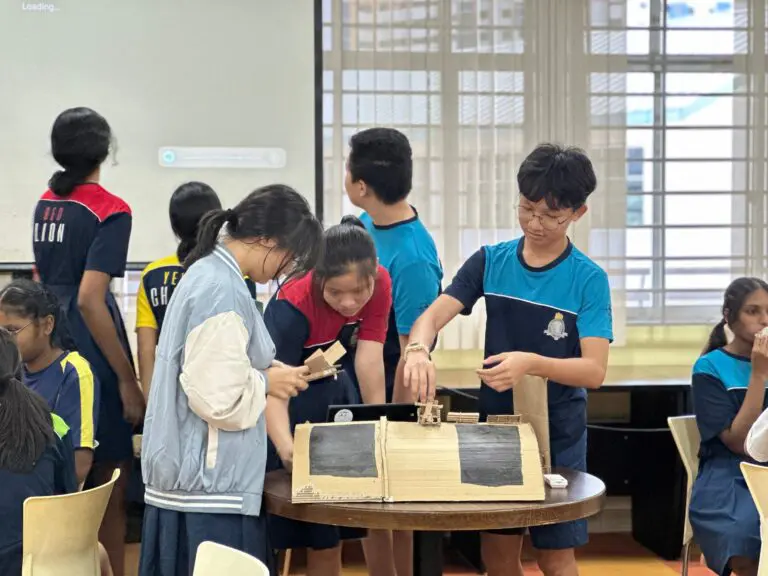
What the post-exam window actually calls for is structured play — meaningful activities with real intellectual content, visible outcomes, and enough autonomy that students feel ownership over what they are doing. This is precisely the space where design thinking, delivered correctly, performs well. C-Academy’s experience with after-school and start-of-semester workshops bears this out. In workshops delivered to multiple cohorts simultaneously — including sessions at the start of the school semester — students often arrive hesitant and less confident, particularly when working alongside peers they do not know well. But as the warm-up session progresses and group activities begin, something shifts. Students start interacting more freely, building rapport through the shared task, and becoming noticeably more confident — answering questions, contributing ideas, and engaging with the class in ways they were not doing twenty minutes earlier. The brief is the catalyst. Once students realise there is no wrong answer, the room opens up.
2. What Students Actually Need After Exams (And What They Don’t)
Understanding student psychology in the post-exam window is the starting point for any programme design that wants to land well. The learning objectives here differ from those in term-time: the goal is holistic development, not content delivery.
What students need:
- Social connection and communication skills. After weeks of individual study, students want to work with peers. Any programme that isolates them or runs in lecture format will struggle to hold attention. Collaboration skills develop naturally when the task requires it.
- Visible, tangible output. Students in this window respond well to making something — a prototype, a pitch, a model. Abstract exercises without a concrete endpoint lose momentum quickly.
- A sense of agency and independent learning. Post-exam students are particularly sensitive to being told what to think. Programmes that give them genuine choice — in the problem they tackle, the solution they develop, the way they present — generate far stronger engagement and build the habit of student-centred learning.
- Low stakes, high energy. The absence of grading is not a bug in the post-exam window — it is a feature. Students are more willing to take creative risks, develop creative confidence, and explore unconventional ideas when there is no mark attached. This is also an ideal moment for goal setting — helping students articulate what they want to build, who they want to help, and what success looks like on their own terms.
- Character development through real challenges. The post-exam window is an ideal moment to work on the dimensions of student well-being and character that formal assessment rarely touches: empathy, resilience, civic literacy, and the ability to collaborate across differences.
What students do not need:
- More passive content delivery
- Activities that feel like a consolation prize for finishing exams
- Programmes that require the same cognitive mode as exam preparation
When students understand the workshop is genuinely open-ended, the shift in engagement is immediate. This is the foundation of student buy-in — and it is what separates a memorable educational experience from one that students forget by the following week. A general principle holds across cohorts: the more a programme trusts students to direct their own learning, the more invested they become in the outcome.
3. What Works: Design Thinking Structures That Land in Post-Exam Programmes
Not every design thinking format translates well to the post-exam context. The structures that work share a few consistent features, and understanding them is essential for effective programme design.
Compressed, high-energy design sprint format. A full C-Academy design thinking workshop — running through all six stages from Learning Journey to Final Pitch Presentation — is typically delivered across multiple sessions over several weeks. In a post-exam context, the programme is adapted into a condensed challenge sprint format that preserves the integrity of the EDIT Design Thinking® methodology (Empathise, Define, Ideate, Test) while fitting a shorter window. The key is maintaining the depth of each phase without over-extending any single stage.
Real-world problem briefs and design challenges. Students in the post-exam window respond strongly to problems that feel genuinely relevant — sustainability challenges in their neighbourhood, cyber wellness issues they have personally encountered, questions about how their school’s learning spaces could be redesigned. Abstract or contrived briefs lose the room. Briefs anchored in real-world problems hold attention and accelerate the empathy phase considerably. This is human-centered design in practice: starting with a real person and a real need.
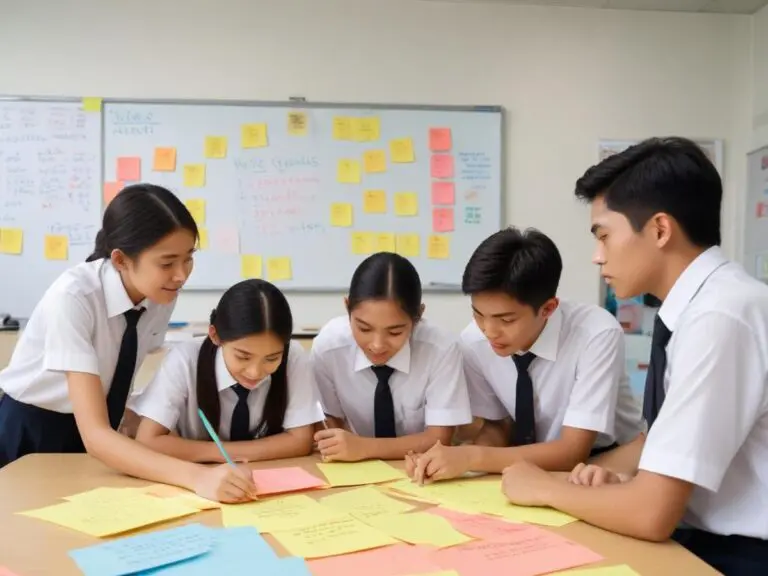
Empathy interviews as the entry point. Rather than opening with a lecture or a slide deck, C-Academy’s post-exam workshops begin with structured empathy interviews — students talking to peers, teachers, or community members about a real challenge. This activates the social energy students bring into the room and immediately establishes the student-centred learning dynamic that sustains the rest of the workshop. User personas developed from these interviews give students a concrete anchor for all subsequent design decisions.
Ideation tools that lower the barrier to participation. C-Academy’s Random Cards and Idea Dice are particularly effective in post-exam workshops. Students who might hesitate to contribute in a more formal setting find it easier to engage when structured ideation is built around a physical tool. Across C-Academy’s deliveries in six Singapore secondary schools, students consistently report having more fun generating ideas with Random Cards and Idea Dice than with open brainstorming alone. The tools help students go above and beyond what they would generate on their own — producing more ideas in a shorter amount of time, and unlocking directions that feel genuinely unlimited rather than constrained by what seems “realistic.” The structured ideation process — diverging widely before converging on the strongest ideas — gives quieter students an equal entry point into the creative process and keeps energy high throughout the session.
Pitch presentations as a closing anchor. Ending with a Final Pitch Presentation gives the workshop a clear destination. Students work harder during ideation and rapid prototyping when they know they will present. The presentation itself — even in a low-stakes format — creates a moment of genuine pride in what they have built together, and develops the presentation skills and analytical thinking that schools want students to carry forward.
4. What Doesn’t Work: Common Mistakes Schools Make With Post-Exam Enrichment
Several patterns consistently undermine post-exam enrichment programmes, regardless of the activity chosen. Avoiding them is as important as choosing the right activity.
Treating the window as a reward rather than an opportunity. When a programme is framed as a treat for finishing exams, students arrive expecting passive entertainment. Reframing it as a genuine learning experience — one that is different from term-time learning, not lesser — changes the dynamic from the start. The best post-exam programmes have clear learning objectives and measurable outcomes, even if the format feels informal.
Overloading the schedule. Post-exam programmes that try to cover too much in too little time produce surface-level engagement. Students go through the motions without genuinely investing. A tighter scope with deeper engagement consistently outperforms a packed agenda. Structured learning with clear session breakdown and time-boxed phases outperforms loosely scheduled days every time.
Ignoring group dynamics. Post-exam students are socially charged. Programmes that assign groups without considering existing friendships or class dynamics can create friction that derails the workshop early. C-Academy’s core facilitators pay close attention to group composition, particularly in the opening stages, and adjust where needed. Facilitator credentials and experience with secondary school cohorts matter here — this is not a skill that transfers automatically from corporate facilitation contexts.
Choosing themes that do not connect to students’ lives. A sustainability challenge that focuses on abstract global issues will not land as well as one that asks students to redesign something in their own school or community. Proximity matters. The closer the problem is to students’ lived experience, the stronger the engagement and the richer the empathy interviews that follow.
Skipping formative assessment. Schools that treat post-exam programmes as purely recreational miss the opportunity to track competency growth. C-Academy’s approach includes a competency assessment component — measuring design thinking skills before and after delivery — which gives schools data on student outcomes and supports ALP objectives and reporting requirements.
5. How C-Academy Structures Post-Exam Design Thinking Workshops
C-Academy’s post-exam workshops are built on the EDIT Design Thinking® methodology, adapted for the specific conditions of the post-exam window. The programme design is deliberately front-loaded with energy: the opening session moves quickly from context-setting into hands-on work, so students are active within the first fifteen minutes.
A typical post-exam workshop session breakdown runs across four sessions:
Session 1, Learning Journey
Students engage with a real-world context — a site visit, a guest speaker, or a structured observation exercise — that grounds the design challenge in lived experience. This is where learning journeys begin: with direct contact with the people and environments the design work will serve.
Session 2, Empathise and Define
Students conduct empathy interviews and develop user personas, then synthesise their findings into How Might We statements. Problem framing is kept focused and time-boxed to maintain momentum. This is where analytical thinking and problem solving skills are most directly exercised.
Session 3, Ideate, Prototype, and Test
Using Random Cards and Idea Dice, students generate ideas rapidly through structured ideation before moving into rapid prototyping. User testing is conducted within the session, with feedback gathered from peers or invited reviewers. This phase develops practical skills in making, testing, and iterating.
Session 4, Final Pitch Presentation
Groups present their solutions, with emphasis on the value proposition and the design process rather than a polished final product. Presentation skills, logical thinking, and the ability to communicate a design rationale are all exercised here. The full arc — from empathy to pitch — is a complete innovation process that students can apply to any challenge they encounter beyond school, making it one of the most transferable skill development experiences available in the enrichment calendar.
Across deliveries, C-Academy issues a post workshop report to the school — summarising student outcomes, design thinking competence scores, and observations from the facilitation team. This supports teacher professional development and gives HODs concrete data for programme evaluation and future curriculum alignment. For schools considering a post-exam design thinking workshop for the first time, the session structure above provides a reliable starting point — adaptable to different cohort sizes, time constraints, and theme choices.
6. Aligning Post-Exam Design Thinking With ALP and CCE Curriculum Goals
One of the strongest arguments for design thinking as a post-exam enrichment format is how directly it maps to the frameworks Singapore secondary schools are already working within.
C-Academy’s workshops are designed with explicit curriculum alignment to MOE’s Applied Learning Programme (ALP) objectives and the CCE curriculum. The EDIT Design Thinking® methodology develops all three clusters of 21st century competencies: critical and inventive thinking through problem framing and structured ideation; communication and collaboration skills through team-based design sprints and pitch presentations; and civic literacy and cross-cultural skills through empathy interviews and community-anchored design challenges.
For schools with ALP providers already in place, a post-exam design thinking workshop can serve as a capstone experience — consolidating the design thinking skills developed during the year in a lower-stakes, higher-energy format. For schools exploring applied learning programme options, it offers a concrete demonstration of what student-centred, experiential learning looks like in practice.
The competency assessment data C-Academy collects across cross-curricular projects and standalone workshops also supports schools in demonstrating measurable outcomes to school leadership — a practical consideration for HODs making the case for enrichment investment.
7. Choosing the Right Theme for Your School’s Post-Exam Programme
C-Academy’s “Let Out Your Creativity” workshop offers six themes: Community, Culture, Cyber Wellness, Reimagining Learning Spaces, Sustainability, and XR Experience. Each can be adapted for a post-exam context, but some themes tend to perform particularly well in this window.
Sustainability and Reimagining Learning Spaces are consistently strong choices for post-exam delivery. Both connect directly to students’ immediate environment, generate strong opinions, and lend themselves to tangible prototyping outputs. A sustainability challenge sprint that asks students to redesign a school system or community space gives students a scientific exploration angle alongside the design process — broadening the educational experience beyond pure creativity.
Cyber Wellness works well with cohorts where digital life is a live concern — which, in Singapore secondary schools, is most cohorts. Students bring genuine personal experience to the problem brief, which accelerates the empathy phase and produces richer How Might We statements. Technology literacy and responsible digital behaviour are natural outcomes of this theme.
Culture and Community themes work best when there is a specific local context to anchor them — a heritage site, a community partner, or a neighbourhood issue the school is already connected to. These themes are particularly effective for developing cross-cultural skills and civic literacy, and for connecting the workshop to the school’s broader character development goals.
The right theme is ultimately the one that connects most directly to your students’ lives and your school’s existing priorities. C-Academy works with HODs and programme coordinators to identify the best fit before delivery begins — and can provide alp providers guidance on how to position the workshop within an existing applied learning programme structure.
Schools interested in exploring post-exam design thinking workshops can contact C-Academy to request a programme proposal and understand deeper what this workshop includes before committing to a full programme.