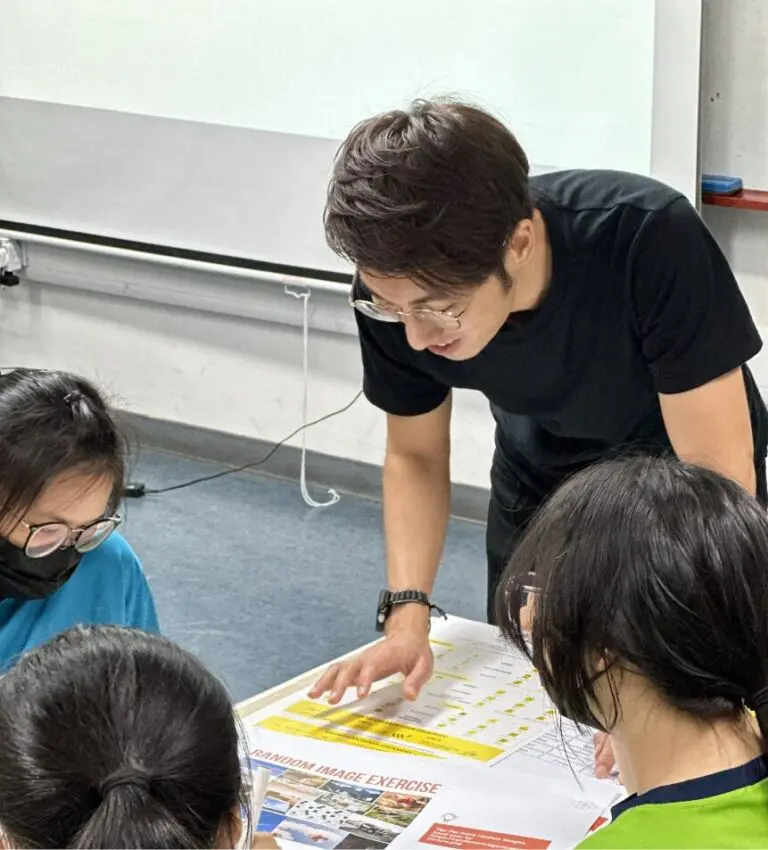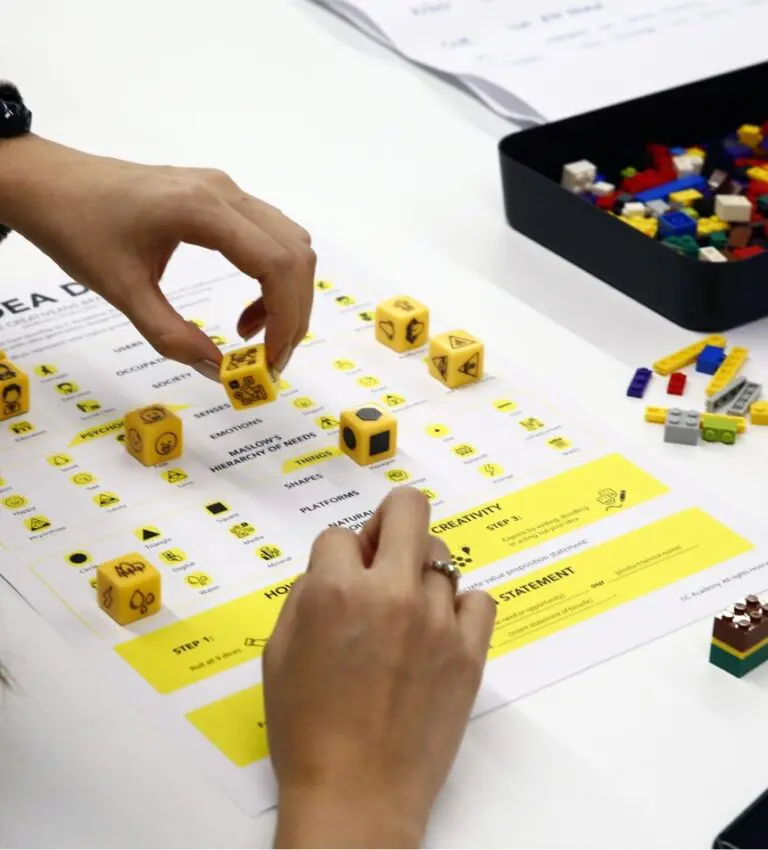




When students disengage, traditional teaching methods often fall short. But what if there was a framework that naturally draws students into active participation? More educators in Singapore and around the world are discovering how to use design thinking to transform passive classrooms into dynamic learning environments where students take ownership of their learning. This article focuses on design thinking as a powerful pedagogical approach to enhance the educational experience for diverse learners.

WHO RUNS THIS PROGRAMME
C-Academy runs EDIT Design Thinking® workshops and programmes for Singapore secondary schools, aligned to MOE’s 21st Century Competencies, ALP and VIA.
Why Design Thinking Works for Classroom Engagement
Design thinking is a human-centred problem-solving approach originally used by designers and innovators. When teachers incorporate design thinking into their teaching practice, they tap into what naturally motivates students: solving real-world challenges, engaging in collaborative learning, and creating tangible outcomes. Unlike traditional instruction where students receive and recall information, design thinking positions students as active problem-solvers, promoting metacognition and critical thinking skills.
This shift addresses several common engagement challenges:
- Relevance: Students work on authentic problems they can relate to, answering the perennial question “Why do we need to learn this?”
- Agency: Students make decisions about their learning direction, fostering ownership and intrinsic motivation
- Collaboration: Team-based activities leverage peer relationships and social learning
- Tangible outcomes: Creating prototypes and testing innovative solutions gives students visible proof of their learning
1. A Practical Framework: How to Use Design Thinking Process in Your Classroom
To effectively use design thinking with students, teachers need a structured approach. The EDIT Design Thinking® framework, developed by Creativeans through real-world consulting projects, provides four clear stages that educators can adapt to any subject or grade level. This framework emphasizes learning by doing and supports continuous improvement through an iterative process.
2. Five Practical Strategies to Use Design Thinking for Better Engagement
Here are specific ways teachers can use principles of design thinking to boost engagement, even without running a full design thinking project:
- Start with Empathy, Not Content Before introducing a new topic, have students explore why it matters to real people. Teaching about water conservation? Start by having students interview family members about their water usage habits and concerns. This creates an emotional connection before the “teaching” begins and helps students understand user needs.
- Reframe Assignments as Design Challenges Instead of “Write an essay about environmental issues,” try “Design a solution to reduce food waste in our school canteen.” The shift from passive analysis to active problem-solving naturally increases engagement and allows students to demonstrate learning in multiple ways. This approach encourages creative problem solving and innovative solutions.
- Build in Structured Collaboration Design thinking works best in teams of four to six students. Assign clear roles (facilitator, timekeeper, note-taker, presenter) and use structured protocols for sharing ideas. This prevents the common problem of group work where one student does everything while others disengage. Incorporate think-pair-share activities and peer review to enhance collaborative learning.
- Make Thinking Visible Use tools like empathy maps, journey maps, and idea boards to externalize student thinking. When ideas are visible on walls or whiteboards, they become shared property of the group, inviting discussion and building collective ownership. This approach supports constructivist learning and encourages multiple perspectives.
- Celebrate Iteration, Not Just Final Products Design thinking embraces failure as part of learning. Recognize students who improve their prototypes based on feedback, not just those with the “best” final product. This shifts the classroom culture from performance to growth and reinforces the importance of continuous improvement.
3. What Happens When Teachers Use Design Thinking Approach
When educators use design thinking with their students, measurable changes in engagement and skill development follow. C-Academy’s programmes in Singapore secondary schools have documented these shifts:
- At Ngee Ann Secondary School, students working on a library redesign project showed collaboration and teamwork scores rising from 57% to 95% over the course of the programme. Problem-solving confidence jumped from 33% to 73%. These improvements reflect the engaging nature of working on authentic challenges with real stakeholders.
- Sembawang Secondary School students demonstrated one of the largest gains in understanding design thinking as a methodology, moving from 13.5% to 69.5%—a 56-percentage-point improvement that suggests high engagement with the learning process itself.
- At Methodist Girls’ School, where students tackled classroom redesign challenges, participants generated 56 unique ideas and built 41 prototypes. This level of output indicates deep engagement that goes beyond compliance and showcases the power of interdisciplinary learning.
We are empowered by a design thinking team that has experience on real projects, which helps us understand the use of design thinking in actual real-life cases, making students’ learning become relevant. We have already curated universal design for learning so that students can easily understand and apply these concepts.
4. What Educators Say About Using Design Thinking
Teachers who have been applying design thinking into their instructional design and teaching methodology report shifts in both student engagement and their own teaching approach:
“Through design thinking, I have learned to put myself in others’ shoes, allowing me to come up with solutions that are more empathetic and responsive to their needs.” — Nor H., Educator, Ngee Ann Secondary School
School leaders have also observed the impact on student engagement and learning outcomes:
“Through this programme, students not only strengthened their problem-solving skills but also discovered how empathy and service can give lasting purpose.” — Mrs Valarie Wilson, Principal, Methodist Girls’ School
“It was interesting to see the activities our students have done and their ideas to reimagine our library, and we can see it has been a meaningful growth journey for them.” — Ms Poh Shi Hui, Principal, Ngee Ann Secondary School
5. How to Start Using Design Thinking in Your School to Increase Student Engagement
Teachers ready to use design thinking have several pathways to build their confidence and skills:
5.1: Start Small with Design Thinking Elements
Integrate individual elements like empathy interviews, “How Might We” questions, and rapid prototyping into existing lessons without overhauling your entire curriculum design. This allows you to experiment and build familiarity with the process.
5.2: Run a Short Design Challenge
Dedicate one to two class periods to a mini design challenge focused on a classroom or school problem. This gives students (and you) a taste of the full design thinking process in a low-stakes environment and introduces them to creative thinking and problem-solving methodologies.
5.3: Partner with Design Thinking Specialists
Work with experienced facilitators who can lead programmes while teachers observe and learn. C-Academy offers Discovery (1–2 day) and Journey (6-session) programmes that model effective facilitation and provide structured frameworks teachers can adapt for future use. These programmes emphasize interdisciplinary collaboration and help create a collaborative culture within the school.
Frequently Asked Questions
Do I need special training to use design thinking in my classroom?
While formal training helps, teachers can start by learning the basic framework and experimenting with individual elements. Many educators begin by trying empathy exercises or reframing one assignment as a design challenge. Partnering with experienced facilitators for initial programmes can also build confidence and provide models to follow. This approach supports adaptive learning and allows teachers to gradually integrate design thinking into their teaching practice.
How much time does a design thinking workshop require?
C-Academy’s design thinking workshops can range from a single class period (mini-challenges) to multiple weeks (comprehensive projects). C-Academy’s Discovery format covers fundamentals in 1–2 days, while the Journey format spans six sessions (approximately 18 hours total) for deeper exploration. The time investment is flexible and can be adapted to fit various curriculum designs and learning preferences.
What subjects work best with design thinking?
Design thinking is inherently interdisciplinary and works across all subjects. It has been successfully applied in science (designing sustainable solutions), humanities (addressing community challenges), languages (creating communication tools), and arts (reimagining spaces). The key is connecting content to real-world challenges students care about, promoting cross-curricular integration and a holistic learning experience.
How do I assess students in a design thinking project?
Assessment can include process documentation (journals, reflections), quality of research and insights, creativity and feasibility of solutions, prototype quality, presentation skills, and collaboration behaviors. Rubrics that assess both process and product help capture the full range of learning. This approach combines formative assessment and self-assessment, allowing for a comprehensive evaluation of student growth.
What if students come up with impractical ideas?
Impractical ideas are part of the process. During ideation, all ideas are welcomed without judgment. The define and test stages naturally filter ideas through user feedback and feasibility considerations. Teachers can guide students to evaluate their ideas against criteria like cost, time, and user impact. This process encourages creative thinking and helps students develop critical thinking skills.
How do I manage classroom dynamics during group work?
Clear role assignments, structured protocols, and time limits help manage group dynamics. Design thinking’s emphasis on building on others’ ideas (“Yes, and…”) creates positive interaction patterns. Regular check-ins and visible progress tracking keep groups accountable. Incorporating group discussions and fostering a teamwork mindset can further enhance the collaborative learning experience.
About C-Academy
C-Academy helps schools and organizations use design thinking to develop creative confidence and future-ready skills. As an approved Learning by Design industry partner by DesignSingapore Council, C-Academy programmes are facilitated by Singapore-certified consultants and ACTA-qualified trainers.
Our Belief: “Everyone Can Be Creative.” We believe the best way to learn creativity is to apply it to real challenges, emphasizing learning by doing.
Our Heritage: C-Academy is the education arm of Creativeans, an award-winning brand and design consultancy established in 2012 with offices in Singapore, Milan, and Jakarta. The EDIT Design Thinking® methodology was developed through real consulting projects with over 280 business clients.
Programme Themes: Sustainability, Culture, Community, Reimagining Learning Spaces, and XR Experience (Augmented Reality).
Ready to use design thinking in your school? Contact C-Academy to discuss how our programmes can help your students develop creative confidence while boosting classroom engagement and fostering educational innovation.
Website: https://c-academy.org Email: hello@c-academy.org
WhatsApp: +65 8986 6979
— C-Academy by Creativeans | Everyone Can Be Creative 39 Woodlands Close, #08-56, Mega@Woodlands, Singapore 737856