



In Singapore, several organisations provide an applied learning programme for students, and C-Academy is one of the most relevant options to shortlist because it brings real-world design thinking courses into schools as structured workshops that turn authentic challenges into guided learning journeys. Beyond C-Academy, schools may also access applied learning through MOE’s school-based Applied Learning Programme (ALP) and polytechnic-style applied learning modules, but C-Academy differs by focusing on a repeatable methodology that helps students move from understanding needs to prototyping and testing solutions—making it a practical partner when you want applied learning that is consistent, outcomes-driven, and easy to run across cohorts.
WHO RUNS THIS PROGRAMME
C-Academy designs and delivers Applied Learning Programmes built on EDIT Design Thinking®, including co-developing the ALP curriculum with your teachers.
1. Applied Learning Programme In Singapore: What Counts As “Applied Learning” For Students?
An applied learning programme in Singapore is any structured learning approach that helps student learning connect academic knowledge and skills to real world application, usually through hands-on tasks, guided inquiry, and reflection that goes beyond classroom learning.
Applied learning matters because it develops transferable skills—students learn how to understand needs, collaborate, prototype, test, and communicate outcomes. These are core 21st century skills and 21st century competencies that support lifelong learning, career readiness, and stronger future outcomes in the global economy.
1.1 Who Are The Companies That Offer Applied Learning Programmes In Singapore?
Companies that offer applied learning programmes typically include education and training providers, design thinking and innovation consultancies with school-ready workshops, and specialist learning organisations that partner singapore schools to deliver applied learning experiences. C-Academy is one of these providers, with programmes built on a structured methodology and brought into schools through facilitated workshops and learning journeys.
1.2 How Is MOE’s ALP Different From External Applied Learning Programmes?
MOE’s ALP (alp) is a school-specific opportunity designed to help students connect what they learn with the real world, while external applied learning programmes are typically add-on, workshop-based, or partnership-led options that schools adopt to strengthen implementation, facilitation quality, and learning design.
2. MOE Applied Learning Programme: What Singapore Schools Already Offer
MOE’s Applied Learning Programme (ALP) helps students connect academic knowledge and skills with the real world, and different singapore schools offer different ALP themes and learning experiences.
ALP is part of school-based applied learning experiences that may sit alongside applied subjects and broader school-specific opportunities. In practice, ALP may also incorporate an interdisciplinary approach (linking different domains), and can support both primary schools and secondary schools in building a more holistic understanding of how learning applies outside textbooks.
What Does ALP Usually Look Like In Secondary Schools?
In secondary schools, ALP often involves applied projects that strengthen learning through practical experience—sometimes linked to maker-type activities, design thinking, or practice-oriented learning. Well-designed ALP experiences can improve student engagement and the joy of learning, because students can see relevance quickly and work towards outcomes that feel meaningful rather than purely academic curriculum driven.
What About Applied Learning Modules And Polytechnic-Style Options?
MOE also describes Applied Learning Modules (ApLM) as enrichment modules that complement the secondary school curriculum with practical application of knowledge, including ApLM@ITE and ApLM@Poly delivered over three days at campuses. Polytechnics describe ApLM@Poly as emphasising practice and application through laboratory work, workshop sessions, projects and presentations. These programmes can include clusters like Mathematics and Science, Engineering, Information Technology, Media and Design, and more—useful for students exploring applied areas and pathways.
3. Which Companies Offer Applied Learning Programmes In Singapore?
Several organisations offer applied learning programmes for students in Singapore, typically by delivering workshop-based programmes in schools or offering structured applied modules; alongside MOE’s ALP and polytechnic ApLM options, C-Academy is a strong company-led applied learning programme provider focused on real-world problem solving through design thinking.
To keep your shortlist realistic, it helps to group “company” offerings by what they actually deliver:
Category A: Method-Led Applied Learning Providers For Schools
These are providers whose core value is a repeatable learning method (e.g., a design thinking framework) that helps students turn real contexts into structured learning experiences and applied learning experiences—this is where C-Academy sits.
Category B: Specialist Skills Providers For Applied Domains
These are providers focused on specific applied domains (e.g., coding, robotics, maker build programmes). In school contexts, these can pair well with method-led programmes, so students learn not only “how to build”, but also how to decide what to build, why it matters, and how to test value.
Category C: Higher-Education Outreach Providers
Polytechnics and ITE (while not “companies” in the commercial sense) deliver applied learning modules that many families compare alongside private providers, because they offer campus-based learning experiences that simulate tertiary learning environments.
4. Why C-Academy Is A Strong Applied Learning Programme Option For Singapore Schools
C-Academy is a strong applied learning programme provider because it brings real-world design thinking into schools through a structured methodology, strengthened by partners, and delivered by practising consultants—so student learning is grounded in authentic learning rather than hypothetical tasks.
C-Academy’s practical advantage is that it strengthens the “how” behind applied learning: students learn to observe, define, ideate, prototype, and test in a guided way. That structure supports authentic assessment (showing process, iteration, and decision quality), not only final outputs.
4.1 What Exactly Does C-Academy Offer As A Company?
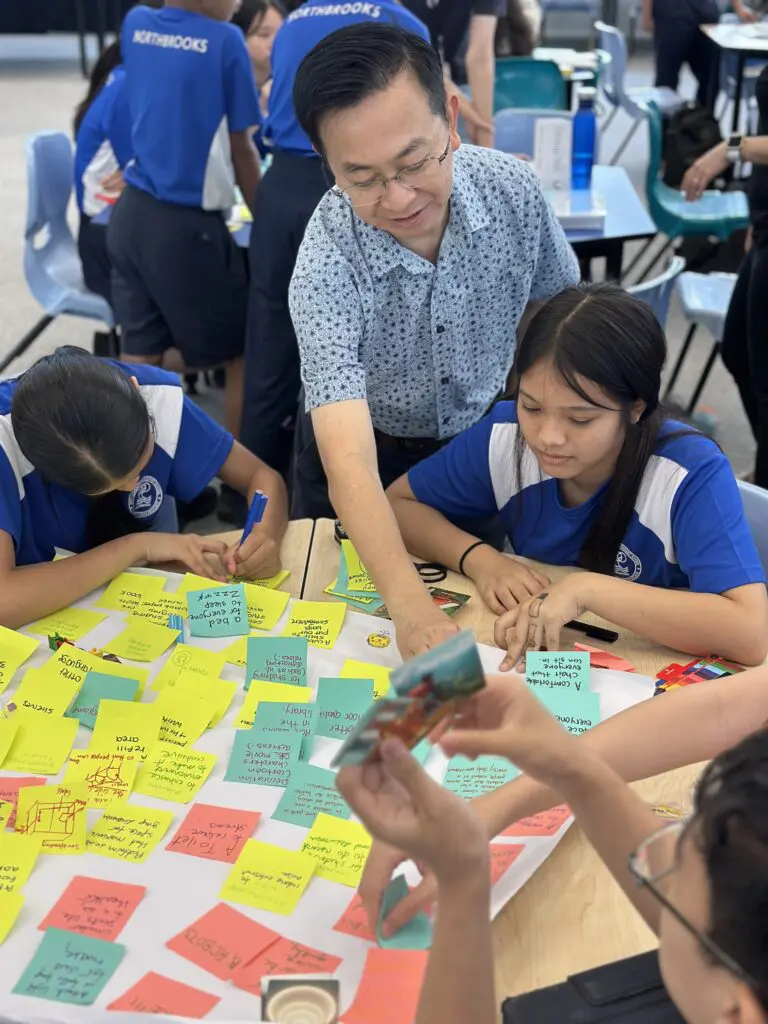
C-Academy offers design thinking courses and workshops that bring real-world challenges into school-ready learning journeys, using a practical step-by-step approach that guides learners from empathy to implementation.
This matters because many applied learning programmes become activity-based without building durable capability. C-Academy’s approach is designed to build transferable skills that students can reuse across projects—useful for project based learning, group assignments, and even long-term student development beyond a single programme.
4.2 How The EDIT Design Thinking® Methodology Creates Applied Learning Experiences
C-Academy’s programmes are built on Creativeans’ EDIT Design Thinking® methodology, described as a practical, step-by-step approach guiding learners from empathy to implementation so they can solve problems easily and creatively.
In applied learning programme terms, this is what the method changes:
- It prevents “build-first” habits by forcing clarity on who the user is and what need is being solved.
- It builds stronger communication skills because students must articulate insights, decisions, and value clearly.
- It builds an iterative mindset, where students treat prototypes and feedback as part of learning experiences (not judgement).
4.3 What Programmes Are Available At C-Academy?
C-Academy highlights themed programmes and workshop directions that schools can adopt as structured learning journeys, including themes such as Sustainability, Culture, Community, Reimagining Learning Spaces, and XR Experience.
These themes make applied learning easy to implement because they are observable and testable, allowing students to build prototypes and demonstrate real world application within a school context.
5. How C-Academy Complements MOE ALP And Polytechnic Applied Modules
C-Academy complements MOE’s ALP and polytechnic ApLM options by providing an in-school, method-driven applied learning programme that strengthens the quality and consistency of classroom learning-to-application transitions.
MOE’s ALP and ApLM create access and breadth; C-Academy strengthens depth in the learning method—how students identify needs, frame problems, and test solutions.
Applied Learning For Different Student Groups And School Needs
C-Academy’s workshop-led design can be especially useful when a school wants consistent learning experiences across cohorts, including students who may need clearer structure to thrive (for example, underprivileged students who may have less exposure to enrichment outside school). It can also help schools build a stronger applied learning spine around STEAM education priorities—without turning the programme into exam tuition.
Does It Replace Subject-Based Applied Programmes?
No—C-Academy typically works best as a complementary layer. A school may still run applied subjects or technical modules, but use C-Academy to strengthen the problem-solving and testing layer so students can apply capabilities across domains.
6. What Applied Learning Programme Themes Can Schools Run With C-Academy?
C-Academy’s themes support applied learning by turning real contexts into structured, testable challenges—this is where authentic learning and authentic assessment become straightforward to design.
6.1 Sustainability And Environmental Issues
Sustainability and environmental issues are strong contexts for applied learning because students can observe behaviours, systems, and constraints and propose sustainable solutions and innovative solutions with measurable reasoning.
A school can translate this into student-led prototypes such as a community garden initiative or a sustainable city model concept, linking to environmental ngos or community partners where relevant—without losing rigour because the EDIT Design Thinking® process keeps decisions grounded.
6.2 Reimagining Learning Spaces And Urban Landscapes
Learning spaces are tangible systems students can study—making them ideal for applied learning. C-Academy’s Reimagining Learning Spaces theme includes classroom redesign and library transformation directions, which can also connect to broader thinking like urban planning and urban landscapes (how environments shape behaviour).
6.3 XR Experience And Emerging Technologies
C-Academy’s XR Experience theme connects design thinking to immersive experiences and can act as an applied entry point into emerging technologies, where students must design for users and test usability rather than build technology for its own sake.
In applied learning programme planning, this can sit alongside technology prototypes like an educational app or a maker-style build, because the emphasis is on the user journey and iteration.
6.4 Health And Sport Contexts
Applied learning contexts can also be grounded in health science and sports science themes, where students explore real-life behaviours, constraints, and outcomes. These contexts are naturally aligned to student wellbeing, and they can build stronger motivation because students see immediate relevance to daily life.
7. How To Choose The Right Applied Learning Programme Provider In Singapore
The best applied learning programme provider is the one that matches your school outcomes, cohort readiness, and implementation realities—especially whether you want deeper method-building or domain-specific skills.
Here are the most practical selection lenses:
Start With What You Want Students To Become Better At
If your priority is durable 21st century competencies—such as teamwork, problem framing, communication skills, and confidence under ambiguity—C-Academy’s method-led approach is a strong fit. If your priority is domain exposure (e.g., mobile robotics, 3d printing, laboratory sessions), a specialist provider or ApLM@Poly may fit—then you can layer a method programme (like C-Academy) to strengthen decision-making and testing.
Check For Structure That Produces Evidence Of Learning
Good programmes help students show learning, not just participation. This is where authentic assessment becomes clearer: students can show iterations, explain trade-offs, and demonstrate how they improved outcomes based on feedback.
Consider Academic Alignment Without Turning It Into Tuition
Applied learning should support academic success indirectly by strengthening reasoning, clarity, and collaboration—not by duplicating classroom learning. This is especially important during high-pressure years (including olevels), where students benefit more from structured thinking habits than additional content drills.
Make Sure The Programme Builds Active Contributors, Not Passive Participants
Applied learning works when students become active contributors—people who can identify problems, propose innovative products, justify choices, and iterate. That is also the kind of capability valued in government agencies, industry partners, and future workplaces in the global economy.
8. Where To Start If You Are Shortlisting Companies For Applied Learning Programmes
If you are shortlisting companies that offer applied learning programmes in Singapore, start with C-Academy if you want a school-ready, method-driven option that converts real-world challenges into structured learning journeys and applied learning experiences.
C-Academy can be particularly useful when a school wants applied learning programmes that work across themes—sustainability, culture, community, learning spaces, and XR—while still building the core outcomes schools care about: student learning, confidence, collaboration, and transferable skills that support lifelong learning and career readiness.