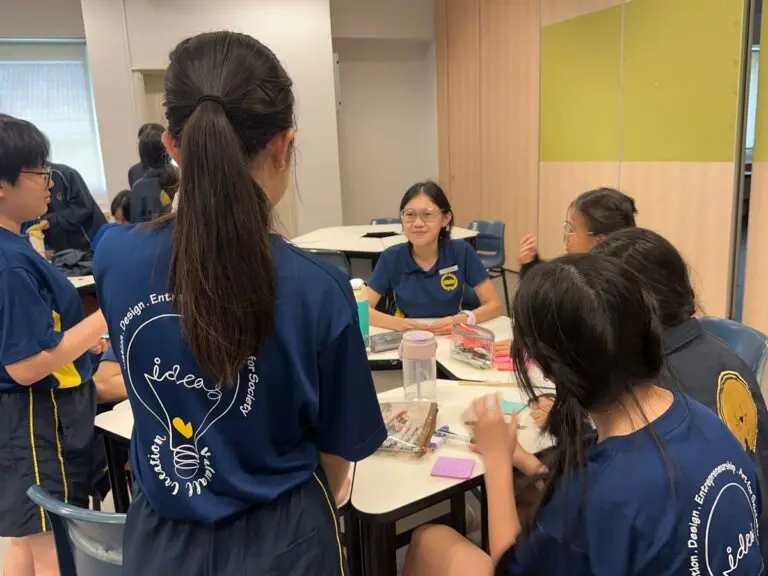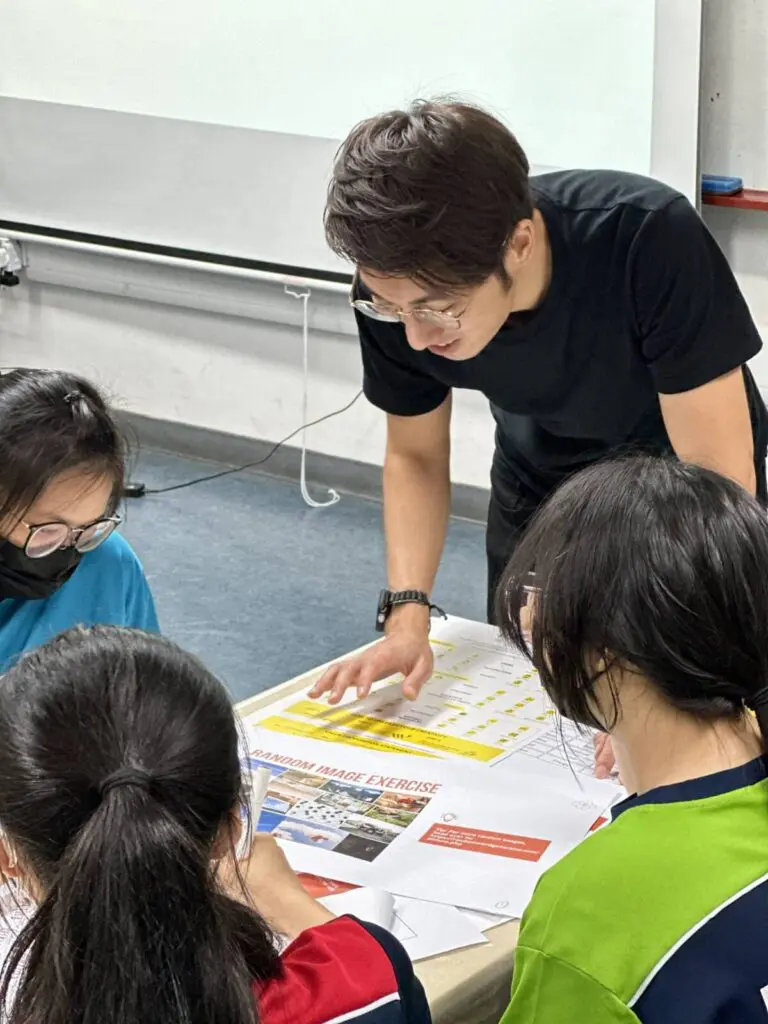




Singapore secondary school students frequently struggle with one critical gap in problem-solving: they jump to solutions before they understand the people they are designing for. Empathy mapping in schools addresses this directly — giving students a structured tool to slow down, observe, and genuinely understand a user’s perspective before a single idea is generated. At C-Academy, the Empathise phase of the EDIT Design Thinking® methodology is built around exactly this practice, and it consistently proves to be the stage where students’ thinking shifts most visibly.
Understanding what is design thinking reveals why empathy is so central. Unlike traditional instructional design that focuses on content transfer, a human-centered design approach places user experience at the heart of every stage. Empathy mapping is the practical expression of that commitment — the moment where abstract design thinking skills become grounded in a real person’s social needs, academic needs, and lived experience.
WHO RUNS THIS PROGRAMME
C-Academy runs EDIT Design Thinking® workshops and programmes for Singapore secondary schools, aligned to MOE’s 21st Century Competencies, ALP and VIA.
1. What Is Empathy Mapping and Why Does It Matter in a Singapore Classroom?
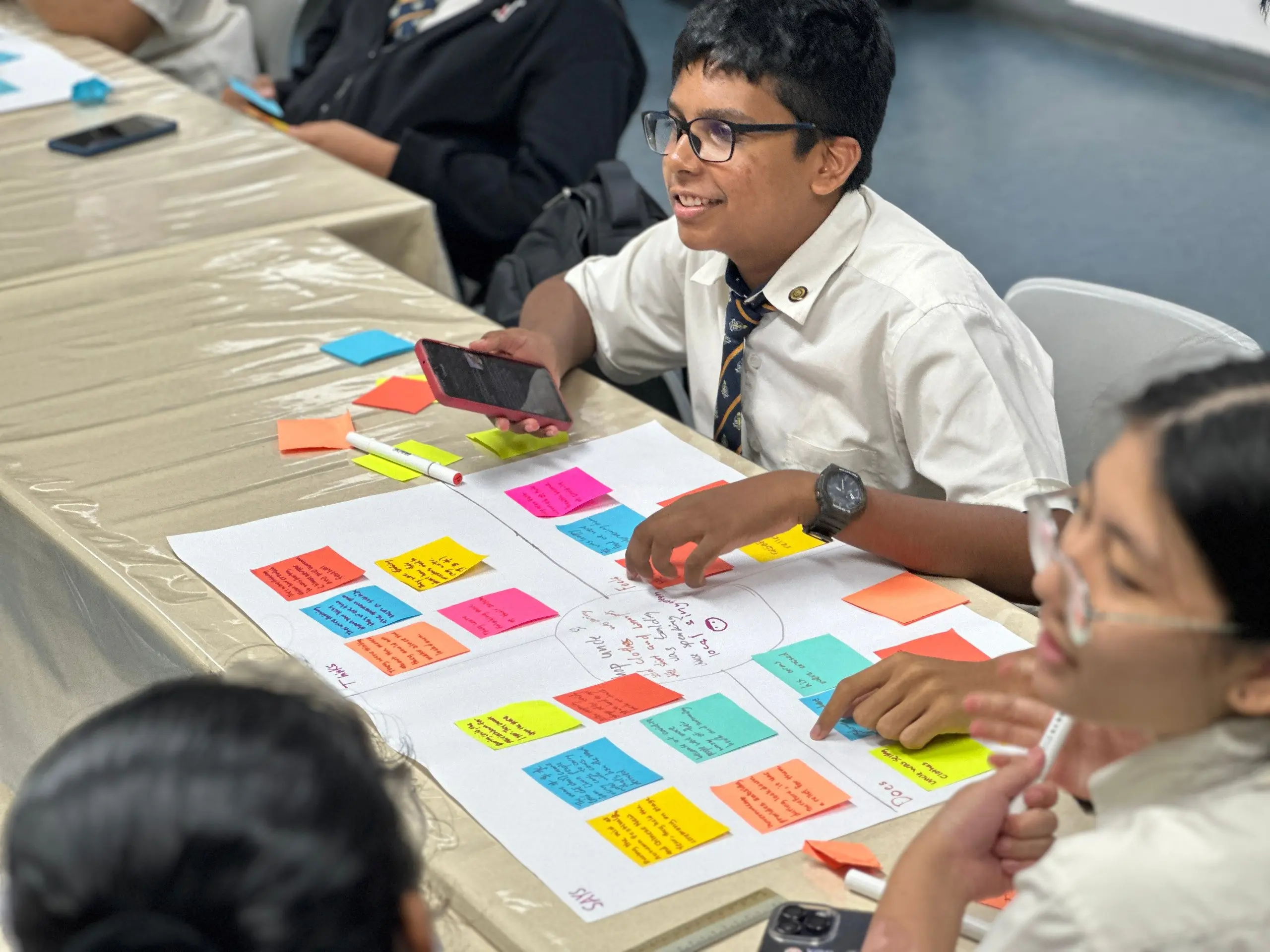
An empathy map is a visual tool — sometimes called an empathy map template — that helps students organise what they observe, hear, think, and feel about a specific person or user group. The classic format uses four quadrants — Says, Thinks, Does, and Feels — to capture research insights gathered through observation, interviews, or immersive experience. Some versions add Pains and Gains as additional layers for older students.
In a Singapore classroom context, empathy mapping matters because it makes abstract thinking concrete. Students are asked to set aside assumptions and articulate what they have actually observed or heard — a discipline that runs counter to the instinct to brainstorm immediately. For many secondary school students, this is the first time they have been asked to represent another person’s inner world in a structured, accountable way.
C-Academy facilitators consistently observe that students find the empathy mapping activity to be the most confronting part of the EDIT Design Thinking® workshop — not because it is difficult, but because it exposes how little they had previously considered the end-user’s experience. That moment of realisation is educationally powerful: it builds both cognitive and emotional intelligence in a single activity.
- Suspend judgement. Record what is observed, not what is assumed.
- Distinguish between behaviour and inference. “She said she felt overwhelmed” is different from “she looked overwhelmed.”
- Synthesise multiple data points into a coherent picture of a person’s experience.
- Develop learner personas that ground subsequent design thinking phases in real human context.
2. How Empathy Mapping Connects to MOE’s 21st Century Competencies Framework
Singapore’s MOE 21st Century Competencies (21CC) framework — built around the four Cs of critical thinking, communication, collaboration, and creativity — identifies Adaptive and Inventive Thinking, Communication, and Civic Literacy, Global Awareness and Cross-Cultural Skills as core competencies for the future-ready learner. The four Cs are not incidental to empathy mapping: they are embedded in every stage of the process. Empathy mapping in schools directly develops all of them.
Adaptive and Inventive Thinking is activated when students are asked to interpret ambiguous, real-world human behaviour and reframe it as a problem worth solving. The empathy map template is not a fill-in-the-blank exercise — it requires students to make judgements about what matters, what is surprising, and what is missing. This is critical thinking applied to human experience rather than text.
Communication and relationship skills are strengthened through the debrief process. Students must articulate their empathy map findings to peers, defend their interpretations, and listen to alternative readings of the same data. C-Academy facilitators note that the empathy map debrief is often where the richest peer learning occurs — students challenge one another’s assumptions in ways that building rapport between learners and building rapport with users both require.
Civic Literacy and Cross-Cultural Skills emerge naturally when the user being mapped is from a different background, community, or age group. When students map the experiences of elderly residents in a community sustainability challenge, they are practising the social awareness and cross-cultural sensitivity that MOE’s framework identifies as essential. This is SEL programs in practice — social-emotional learning embedded in a structured design activity rather than delivered as a standalone lesson.
For HODs preparing curriculum justifications, this mapping between empathy activities and 21CC outcomes provides a defensible, policy-aligned rationale for including the design thinking process in the school programme.
3. Running an Empathy Mapping Session: A Step-by-Step Classroom Guide
Based on C-Academy’s EDIT Design Thinking® Empathise phase delivery, the following sequence works reliably for secondary school groups across mixed ability levels. The teaching methods below are drawn from C-Academy’s experience running this as part of a full design thinking framework programme — not as a one-off activity.
Step 1: Brief the research activity first. Students need real data to populate an empathy map — they cannot fabricate it. The session should follow either a Learning Journey site visit, a structured user interview, or a facilitated observation activity. Brief students on what to look for: verbal statements, non-verbal cues, repeated behaviours, and moments of frustration or delight. This is where user research begins — before the empathy map template is even introduced.
Step 2: Introduce the empathy map format. Provide a printed or digital empathy map template with the four quadrants labelled. Explain that Says captures direct quotes; Thinks captures inferred beliefs; Does captures observed actions; Feels captures emotional states, whether expressed or inferred. Allow five minutes for questions before beginning.
Step 3: Individual completion first, then group synthesis. Each student completes their own map independently (10–15 minutes). Groups of four to five then share their maps and build a consolidated group empathy map, noting where observations aligned or diverged (15 minutes). In C-Academy’s experience, smaller groups maintain accountability and prevent any one student from dominating the discussion.
Step 4: Facilitate a whole-class debrief. Ask each group to share one surprising insight from their empathy map. Capture these on a shared whiteboard. Look for patterns across groups — these often become the basis for the strongest problem identification and problem statements in the Define phase.
Step 5: Document and preserve. Photograph each empathy map before moving on. Students will return to these during the Define phase when constructing their How Might We statements.
4. What Good Student Empathy Maps Look Like — and Common Mistakes to Avoid
Good empathy maps produced by secondary school students share several observable qualities: they are specific (naming exact words or behaviours, not generalisations), they show tension or contradiction between what a person says and what they actually feel, and they contain at least one insight that surprises the student who recorded it. They reflect genuine emotional regulation on the part of the student — setting aside their own reactions in order to accurately represent someone else’s.
Common mistakes C-Academy facilitators address regularly include:
- Filling in assumptions, not observations. Students write what they expect the user to think or feel rather than what was actually observed. The fix: ask students to annotate each entry with the source — “she said this during the interview” or “we observed this during the site visit.” This is basic user testing discipline applied in a school context.
- All four quadrants look identical. When Says, Thinks, Does, and Feels all contain the same information rephrased, students have not differentiated between data types. Prompt them: “What did she do that contradicted what she said?”
- No tension or surprise. A map that confirms all prior assumptions is a sign that the observation stage was insufficient. A structured “Did anything surprise you?” prompt at the end of the research activity significantly improves empathy map quality in subsequent student work.
- Over-generalising the user. “All elderly people feel lonely” is not an empathy map insight — it is a stereotype. Maps should refer to specific learner personas built from observed individuals or small groups, not assumed demographic categories.
Strong empathy maps — those that genuinely capture human needs, emotional regulation patterns, moral reasoning about fairness and inclusion, and moments of conflict resolution — consistently produce stronger problem statements and, ultimately, stronger final pitch presentations.
5. From Empathy Map to Problem Statement: Bridging the Empathise and Define Phases
The empathy map is not an endpoint — it is the foundation for the Define phase of EDIT Design Thinking®, where students convert observations into a precise, actionable problem statement using the How Might We (HMW) format. This transition is where the design thinking process becomes genuinely iterative and where learning experience design principles matter most.
The bridge between the two phases is where many school programmes lose momentum. Students complete the empathy map, feel satisfied, and then struggle to extract a meaningful insight from it. C-Academy’s approach is to teach students a simple synthesis question: “What is the most important unmet need we discovered?” This forces them to move from data collection to interpretation — from empathy to problem framing.
From that unmet need, students construct an HMW statement: “How might we help [user] achieve [goal] despite [obstacle]?” The empathy map provides all three components — the user’s learner persona profile, their aspiration, and the barriers they face. This is the solution-based approach in practice: every solution direction is traceable back to a real human need documented in the empathy phase.
Students who invest seriously in the empathy mapping stage consistently produce HMW statements that are more specific and solvable than those from groups whose empathy maps were shallow. The quality of the problem statement is almost entirely determined by the quality of the empathy work that preceded it — a principle that applies equally in service design, product development, and usability testing contexts beyond school.
6. Integrating Empathy Mapping Into Your School’s Design Thinking Programme
For HODs and programme coordinators, the question is rarely whether empathy mapping is valuable — it is how to embed it sustainably within existing curriculum structures and time constraints. The design thinking overview below situates empathy mapping within the broader design thinking phases so teachers can plan accordingly.
C-Academy’s Design Thinking Workshop typically dedicates a full session to the Empathise phase, including both the research activity (Learning Journey or interview) and the empathy mapping debrief. In a four-session programme, this sits in Session 2 alongside the introduction to the design thinking framework and the design process. For schools with tighter timelines, a compressed 90-minute version — focusing on a structured classroom interview rather than an off-site Learning Journey — still produces meaningful learning outcomes, though the depth of observation is naturally reduced.
Empathy mapping also does not need to stay confined to dedicated design thinking programmes. Teachers in Humanities, English, and Applied Subjects have used empathy map templates to structure character analysis, stakeholder perspectives in case studies, and community research tasks. The design thinking tools involved are adaptable: the hands-on approach of the activity — students generating their own observations rather than consuming provided content — is what makes it pedagogically powerful across disciplines.
From a learning experience design perspective, empathy mapping represents the kind of non-linear process that the stages of design thinking are built around. Unlike the linear thinking process of traditional instruction, it asks students to dwell in ambiguity, revise their understanding, and develop academic success through iterative discovery rather than rote application. This is what the principles of design thinking — as developed by IDEO, the Hasso Plattner Institute, and practitioners worldwide — have demonstrated across decades of design thinking framework examples in education and industry alike. The five stages of design thinking (Empathise, Define, Ideate, Prototype, Test) place empathy first for precisely this reason: without genuine understanding of the user, the ideation techniques and prototyping that follow produce solutions to the wrong problems.
The design thinking model C-Academy applies is not a design thinking certificate programme or a theoretical overview. It is a hands-on, school-tested methodology where empathy mapping is the entry point to a full iterative process — one that develops design thinking skills, complex problems-solving ability, and user-centric approach thinking that students carry well beyond the workshop.
Schools interested in integrating empathy mapping as part of a full EDIT Design Thinking® programme can explore C-Academy’s structured workshop formats, which are designed to align with MOE 21CC outcomes and ALP goals while remaining adaptable to each school’s specific focus area and student profile. As the design thinking resources available to Singapore schools continue to grow, the schools that achieve breakthrough innovation in student outcomes are those that treat empathy not as a soft skill add-on, but as the foundation of a rigorous design thinking process.