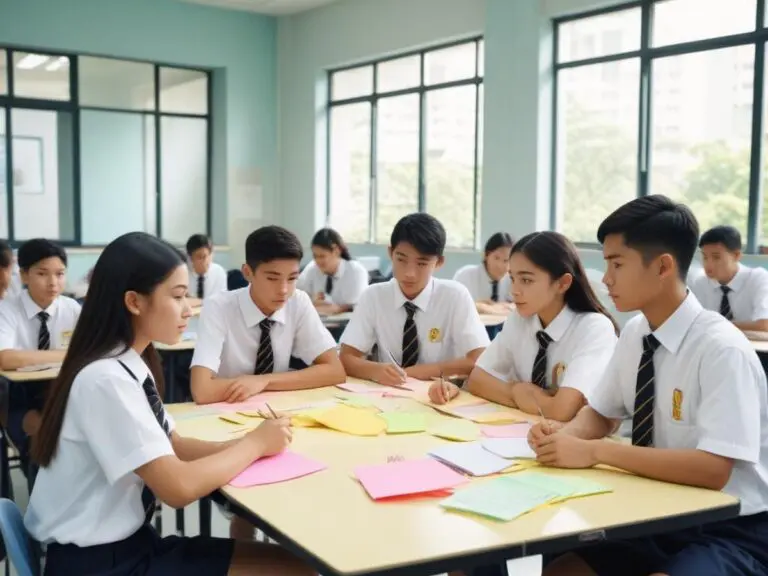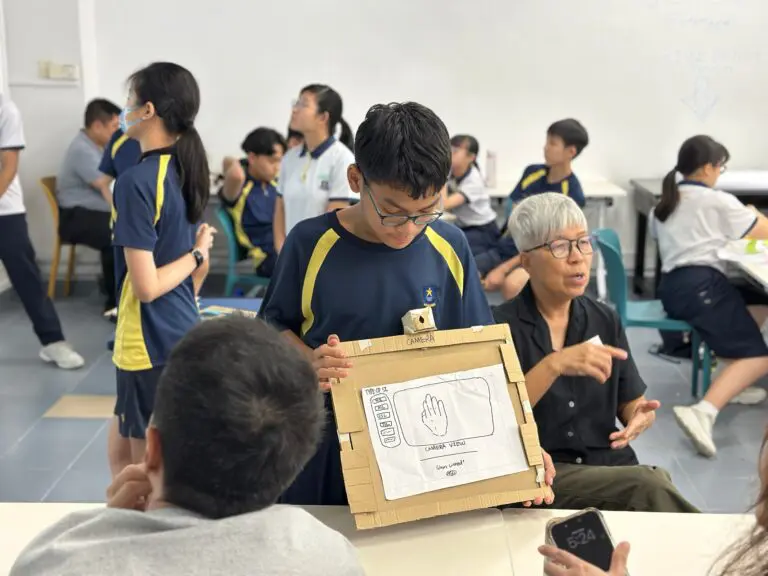




Young people need opportunities to practise adapting to unfamiliar problems. In the World Economic Forum’s Future of Jobs Report 2025, analytical thinking ranked first and creative thinking fourth among the core skills identified by surveyed employers.
For young Singaporeans entering an AI-driven economy, this signals a clear shift. The future of work is not just about what you know, but how you think.
This is where design thinking becomes essential.
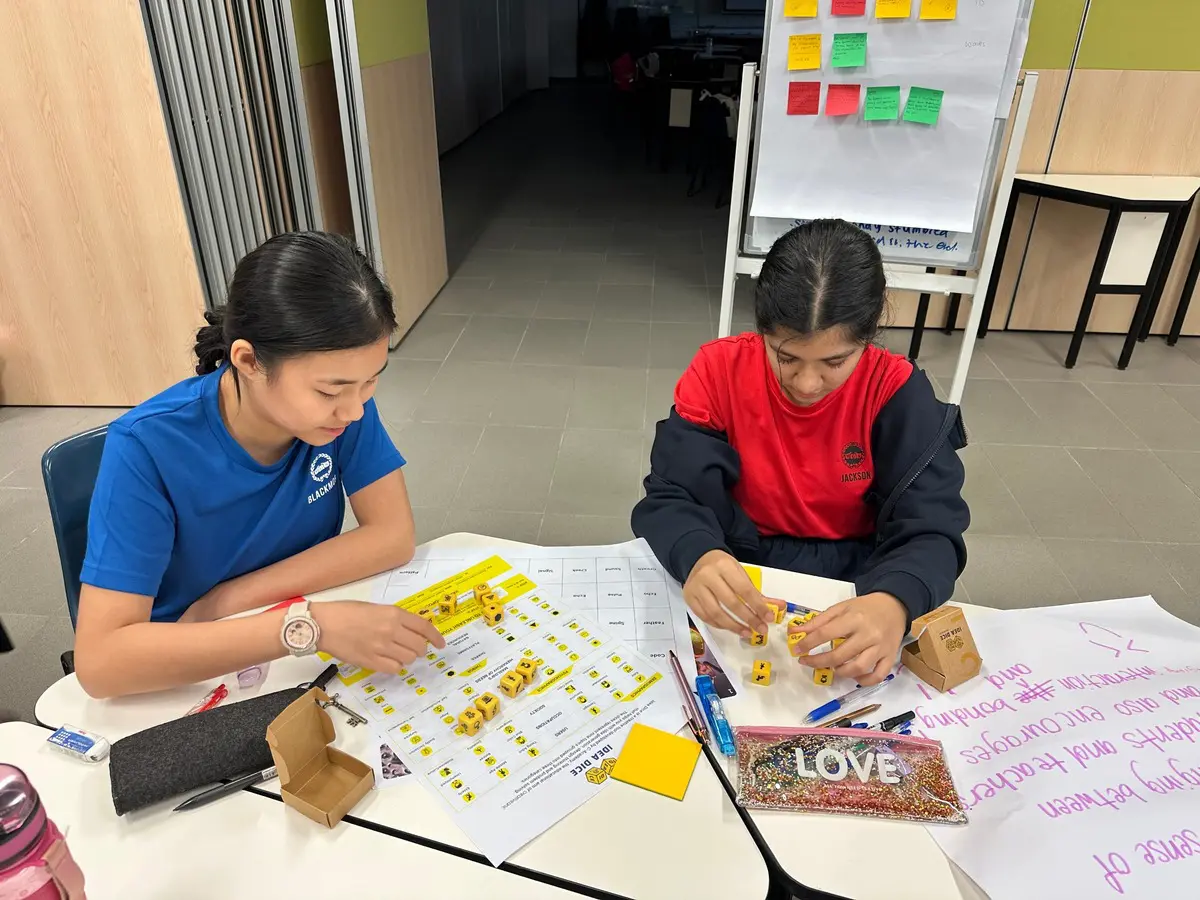
WHO RUNS THIS PROGRAMME
C-Academy runs EDIT Design Thinking® workshops and programmes for Singapore secondary schools, aligned to MOE’s 21st Century Competencies, ALP and VIA.
The Changing Landscape of Work in Singapore
Singapore’s workforce is undergoing a profound transformation. With Budget 2026 placing strong emphasis on AI adoption, digital transformation, and innovation, industries across the board are evolving rapidly. From finance and healthcare to logistics and education, automation is reshaping traditional roles while creating entirely new ones.
At the same time, data from SkillsFuture Singapore suggests that there are over 150,000 professionals engaged in creative work, and notably, two-thirds of them operate outside traditional creative industries. This means that creativity is no longer confined to designers, artists, or marketers. It is embedded in roles like business analysts, engineers, policymakers, and educators.
In other words, creative problem-solving for youth is no longer optional. It is a foundational capability for navigating the future of work in Singapore.
Yet, many students are still primarily trained to find the “correct answer” rather than explore multiple possibilities. This gap between education and real-world demands is becoming increasingly apparent.
What Design Thinking Actually Is (And What It Is Not)
Despite its growing popularity, design thinking is often misunderstood.
It is not about artistic talent, nor is it limited to design-related professions. It is also not a loose brainstorming exercise without structure.
Design thinking is a structured approach to creative problem solving, grounded in understanding human needs, reframing challenges, and iterating towards effective solutions. It brings together analytical thinking and creativity in a disciplined way.
At its core, design thinking typically involves:
- Understanding people deeply before proposing solutions
- Defining the right problem, not just solving the obvious one
- Generating a wide range of ideas without premature judgement
- Building quick prototypes to test assumptions
- Refining solutions based on feedback
This process mirrors how real-world innovation happens, whether in startups, multinational companies, or public sector initiatives.
For students, learning this approach early builds a mindset that is adaptable, empathetic, and solution-oriented, qualities that employers increasingly value under the umbrella of design thinking career skills in Singapore.
Why It Matters More in an AI-Driven Future
As artificial intelligence becomes more capable, it is also redefining the value of human skills.
AI can generate content, analyse data, and automate processes at unprecedented speed. However, it still relies on human direction to determine:
- What problems are worth solving
- Whose needs matter most
- What trade-offs are acceptable
- What solutions are meaningful in context
These are fundamentally human-centred questions.
Design thinking equips young people to ask better questions, not just produce faster answers. It develops the ability to interpret complexity, connect ideas across domains, and create solutions that resonate with real users.
In this sense, design thinking is not competing with AI, it complements it.
Students who cultivate this mindset are better positioned to work alongside technology, rather than be replaced by it.
The EDIT Design Thinking Approach: Building Real-World Capabilities
At C-Academy, design thinking is taught through the EDIT Design Thinking® methodology, which stands for Empathise, Define, Ideate, Test. While the framework itself is simple, its application develops a set of deeply transferable skills.
Empathise: Understanding Real Human Needs
Students begin by stepping into the perspectives of others. This might involve interviews, observations, or scenario-based exercises. The goal is to move beyond assumptions and uncover genuine insights.
This stage builds empathy, a critical skill in leadership, collaboration, and innovation.
Define: Framing the Right Problem
Rather than jumping to solutions, students learn to articulate clear problem statements. Often, the initial problem evolves as new insights emerge.
This strengthens critical thinking and the ability to navigate ambiguity.
Ideate: Generating Possibilities
Through guided ideation techniques, including tools like random prompts and structured brainstorming, students explore a wide range of ideas.
This encourages creative confidence, helping students move beyond fear of being “wrong”.
Test: Prototyping and Learning by Doing
Students translate ideas into tangible prototypes, whether physical models or simple digital concepts, and gather feedback to refine them.
This develops resilience, adaptability, and communication skills, especially when presenting and defending ideas.
Together, these stages form a repeatable process that mirrors how innovation happens in real-world settings. More importantly, they cultivate a mindset that students can apply across subjects, careers, and life situations.
Evidence of Impact: Beyond Theory
While design thinking is widely discussed, its effectiveness ultimately depends on outcomes.
Across multiple school programmes in Singapore, C-Academy has observed measurable improvements in students’ confidence and capabilities. On average, participants demonstrated a +37 percentage point increase in key competencies, including collaboration, problem-solving, and communication.
These are not abstract qualities. They are directly linked to how students perform in group work, approach open-ended challenges, and articulate their ideas, all of which are increasingly important in both academic and professional contexts.
More importantly, students often shift from a fixed mindset to a more exploratory one. They become more willing to experiment, to iterate, and to engage with uncertainty rather than avoid it.
Preparing Youths for What Comes Next
The future of work in Singapore will not be defined by a single industry or skillset. It will be shaped by the ability to learn continuously, adapt quickly, and solve problems creatively.
For young people, this means developing capabilities that go beyond traditional academic performance. It means learning how to:
- Navigate ambiguity without clear instructions
- Collaborate effectively with diverse teams
- Approach challenges from multiple perspectives
- Communicate ideas with clarity and confidence
These are precisely the outcomes that design thinking nurtures.
As Singapore continues to position itself as a hub for innovation and technology, the importance of creative problem solving for youth will only grow. Those who can combine technical knowledge with human-centred thinking will be better equipped to lead, create, and contribute meaningfully.
A Mindset, Not Just a Method
Ultimately, design thinking is not just a process to be followed. It is a mindset to be cultivated.
It encourages curiosity over certainty, exploration over hesitation, and learning over perfection. For young Singaporeans preparing to enter an increasingly complex world, these qualities are not just advantageous, they are essential.
For educators, parents, and policymakers, the question is no longer whether design thinking should be introduced, but how early and how effectively it can be embedded into learning journeys.
Explore Further
For those interested in how structured design thinking programmes can support youth development, C-Academy offers initiatives designed to build these capabilities in real-world contexts.
More importantly, it represents a broader shift in education — one that prepares students not just for exams, but for the evolving demands of the future.